FREE EXPRESS INTERNATIONAL DELIVERY
- Residencial Les Moles, Canillo AD100, Andorra
Discover authentic Japanese swords, carefully selected for collectors.”
Each piece in our collection has been carefully selected for its history, craftsmanship, and authenticity.
Discover unique swords that embody the spirit and tradition of the samurai.



1 in stock
1 in stock
Add to Compare
Add to Wishlist

Order above 1.000,00 € gets free shipping.

Secure and hassle-free payment process.

Hassle-free returns with a money-back guarantee.

Have questions? Contact us via WhatsApp.
ITEM DESCRIPTION:
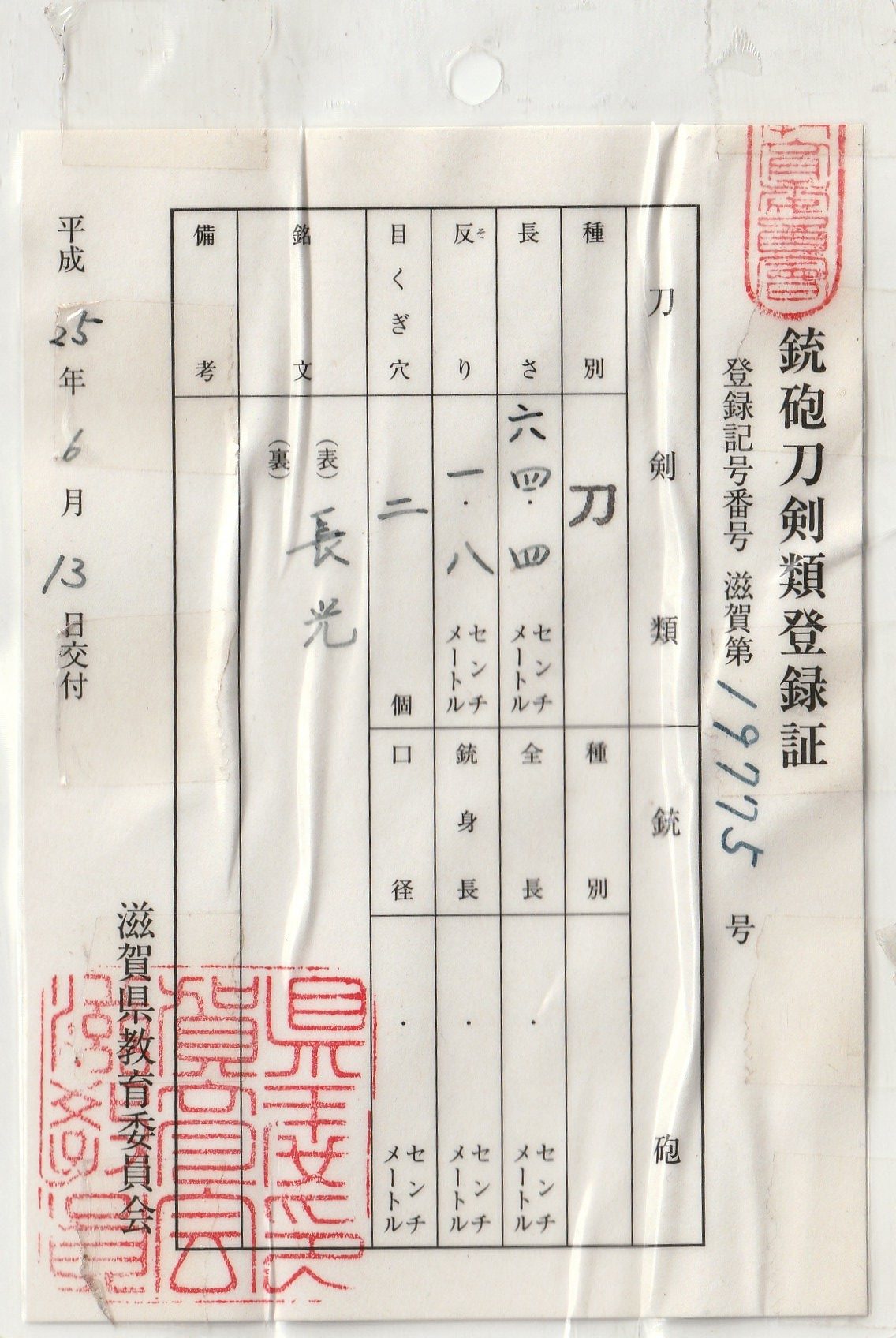
Comes with kimono or cotton bag. Comes with certificate of supein Nihonto. Comes with copy of Tokosusho.
銃砲刀剣類登録証 (Jūhō Tōkenrui Tōrokushō) – Japanese firearms & swords registration certificate.
Recorded specifications:
種別:刀 – Type (administrative category): Katana.
長さ:64.4 cm – Nagasa: 64.4 cm.
反り:1.8 cm – Sori: 1.8 cm.
目くぎ穴:2 – Mekugi-ana: 2.
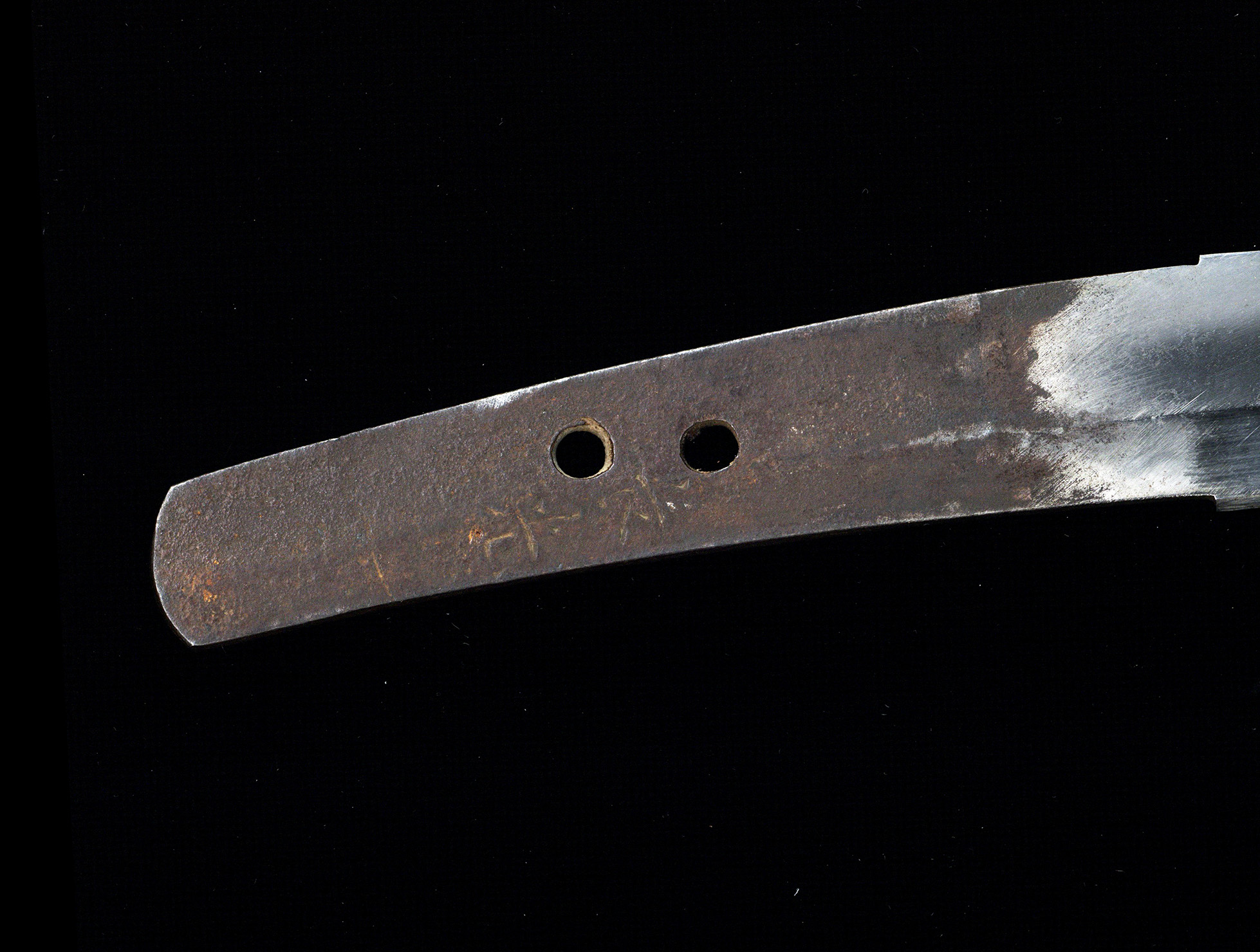
銘文(表):長光 – Mei (omote): 長光.
銘文(裏):記載なし – Mei (ura)
The name 長光 (most commonly read Nagamitsu, and also encountered as Osamitsu as a name-reading) belongs to one of the most instantly recognizable signatures within the broader koto landscape—and, by extension, to the ethos of the true war tachi: blades conceived for service, not for polite conversation.
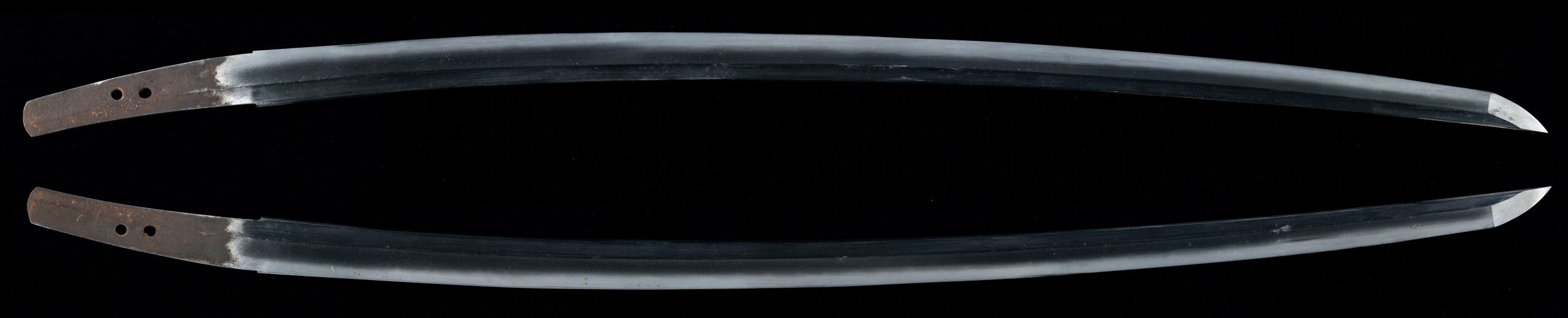
By proportion and presence—64.4 cm nagasa with 1.8 cm sori and an unmistakable tachi bearing—this piece sits coherently in a koto framework, broadly 14th–15th century, when swords were expected to deliver efficient cutting, control on the move, and hard reliability. In that historical setting, “tachi” is not a ceremonial whim: it is the format built to hang with proper fittings, travel with the wearer, and answer quickly when the day turns violent.
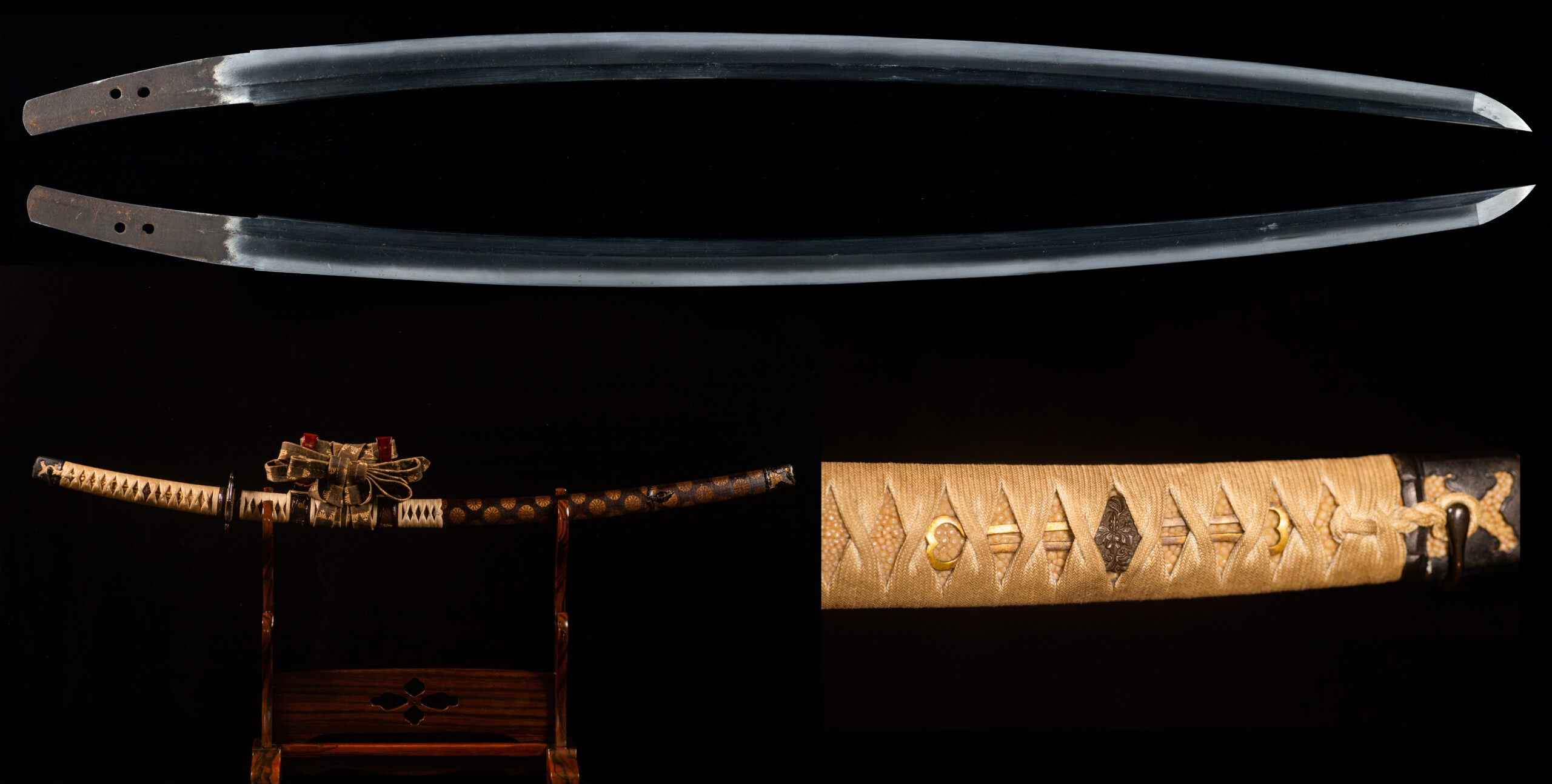
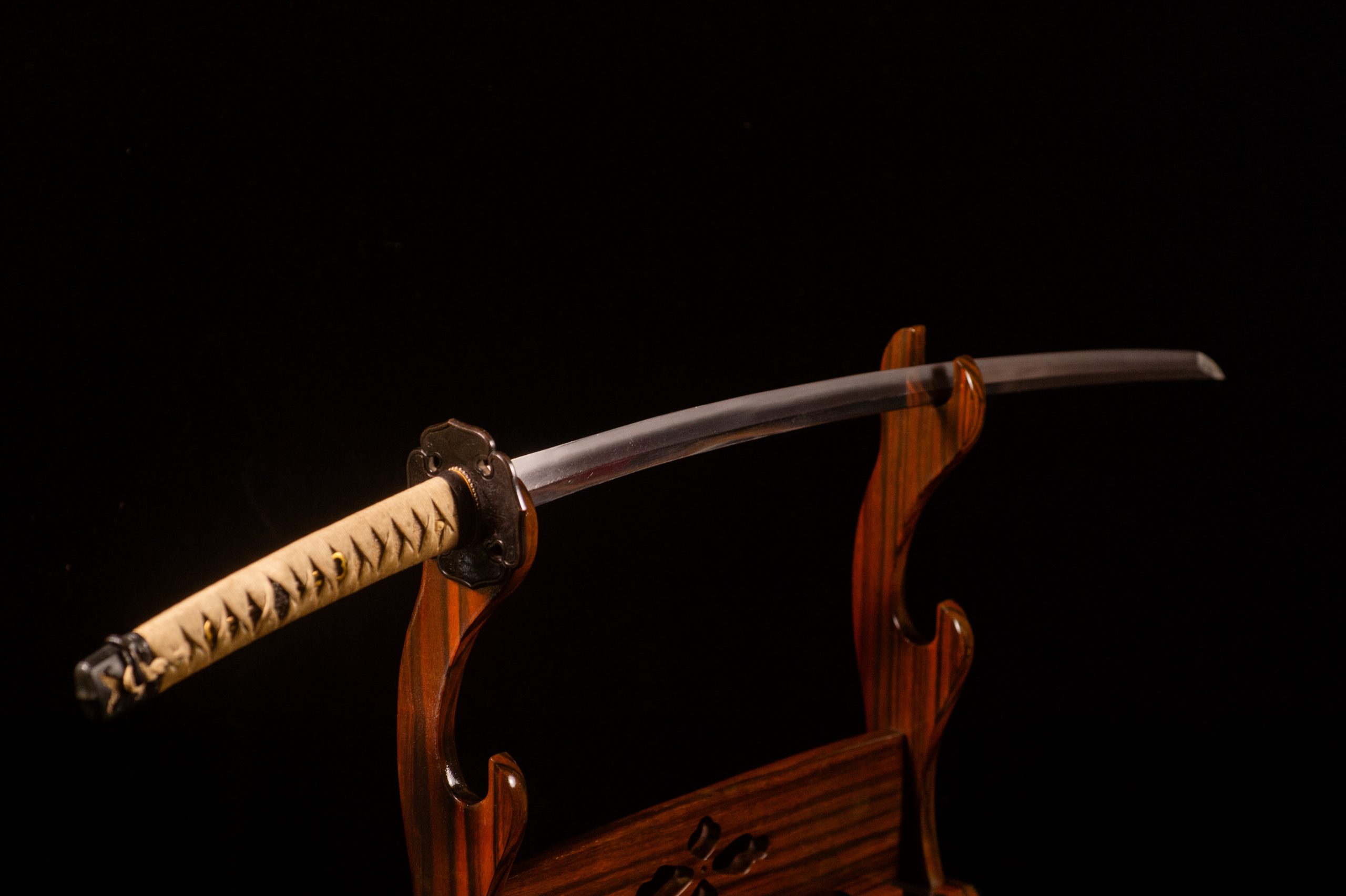
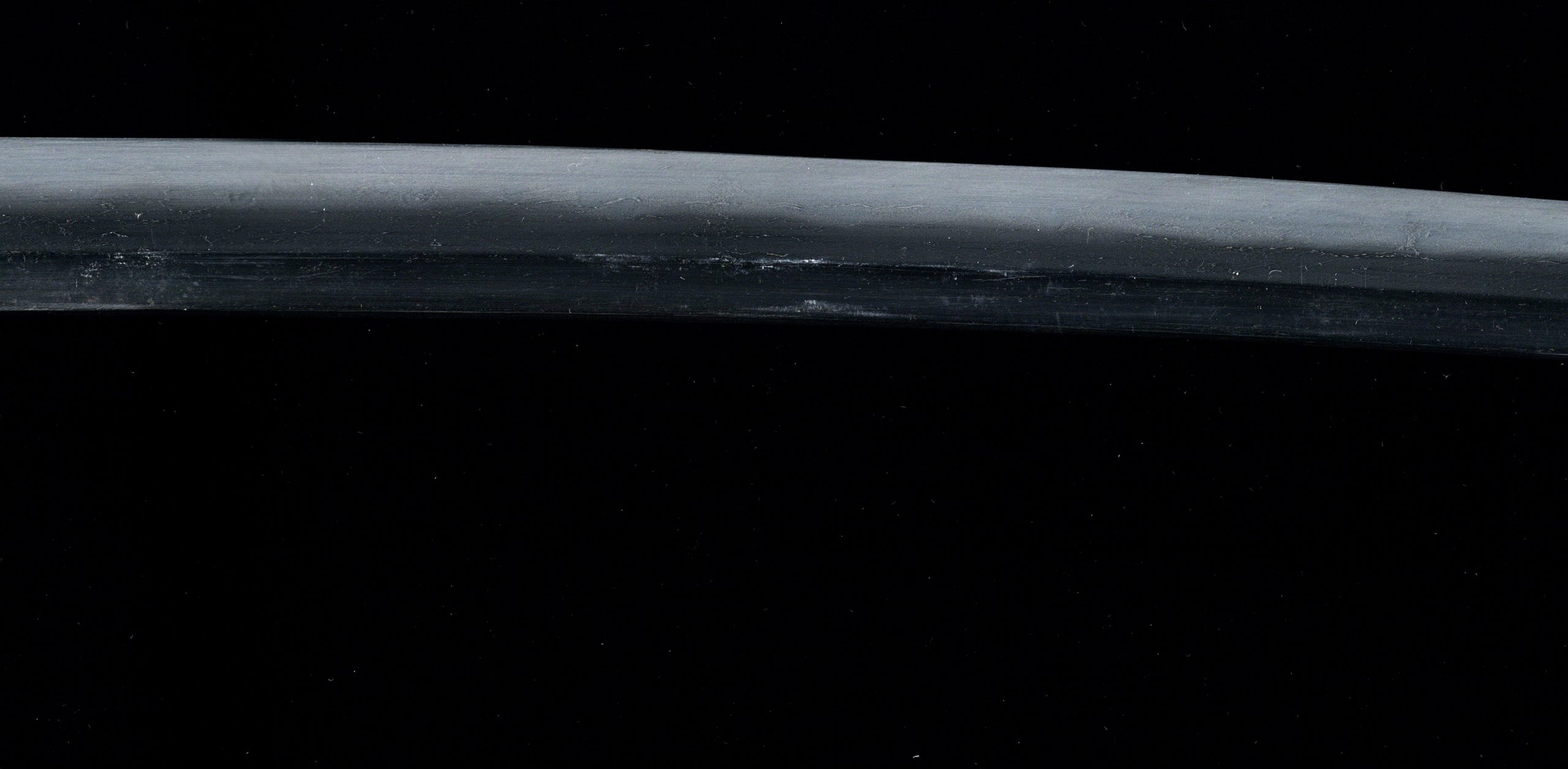
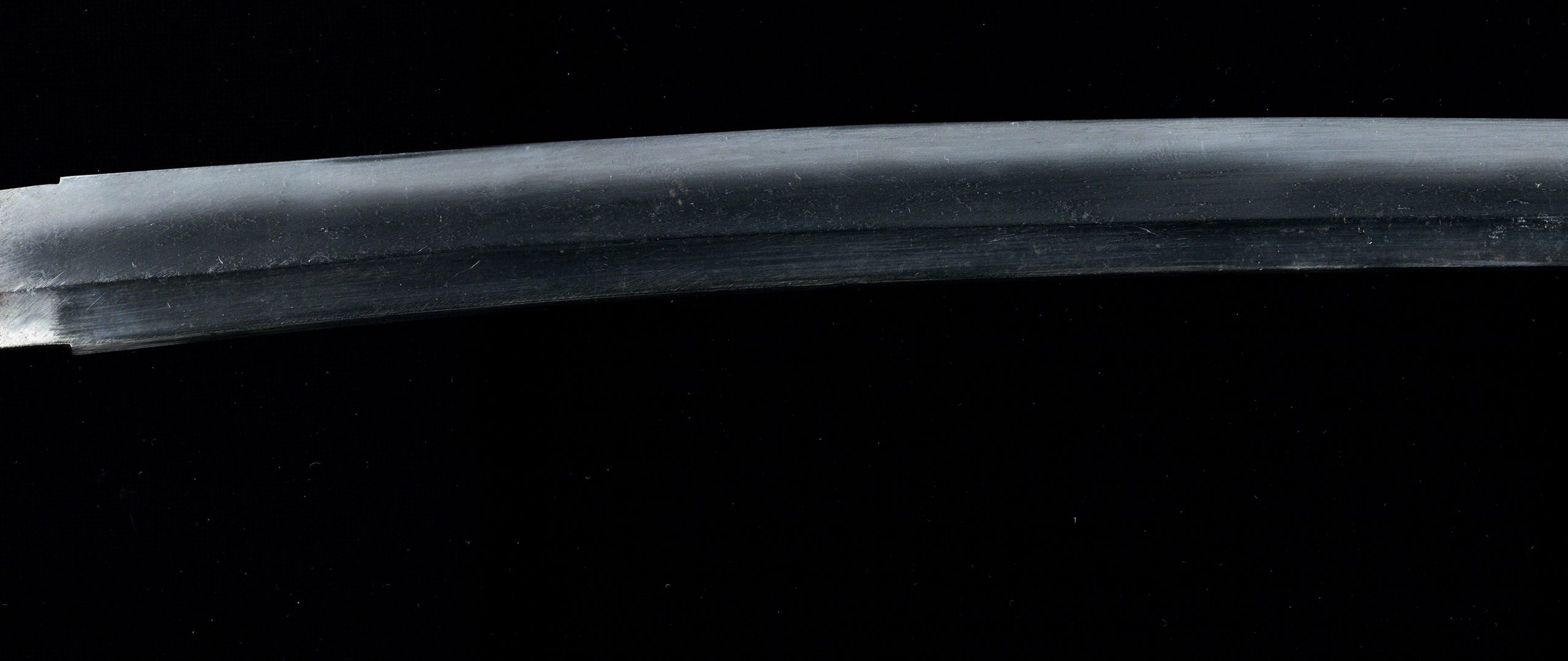
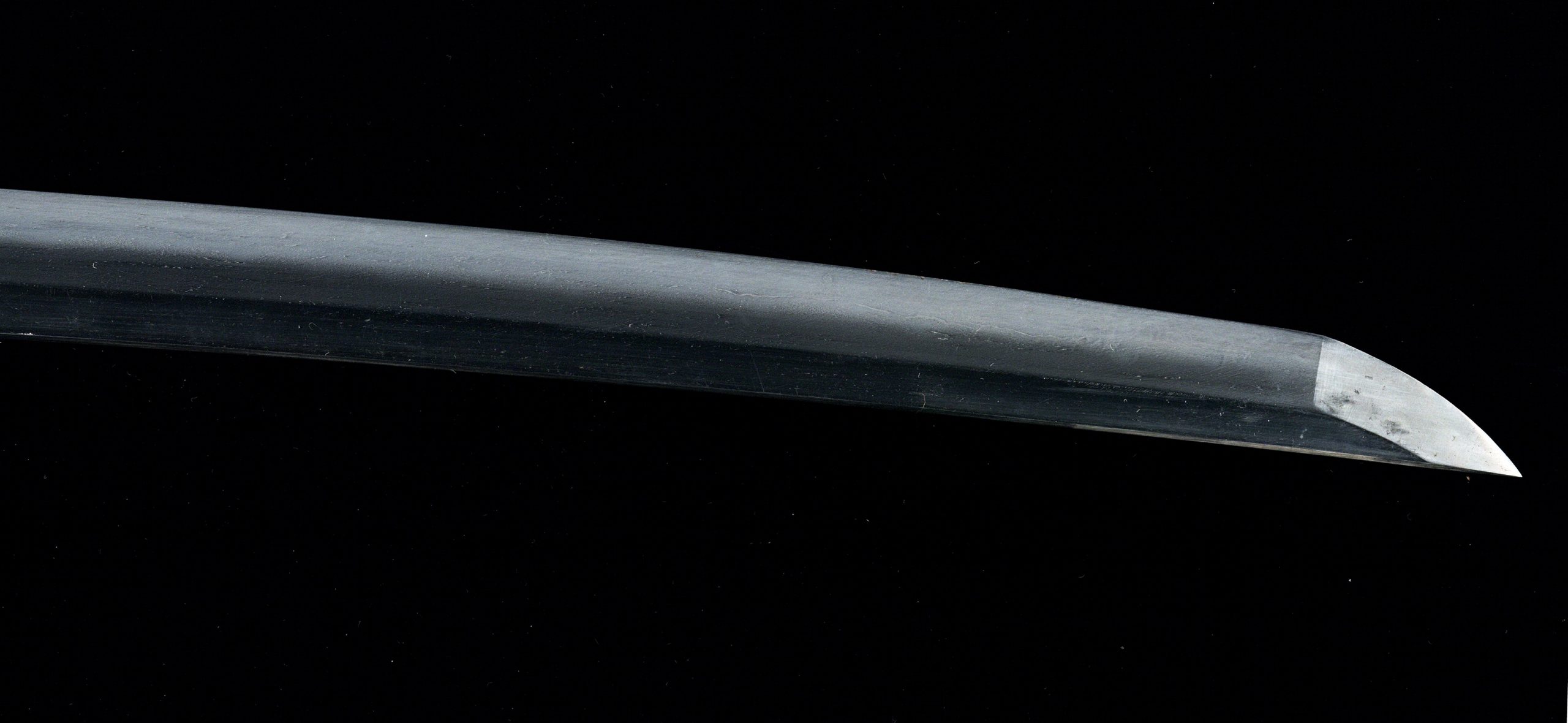
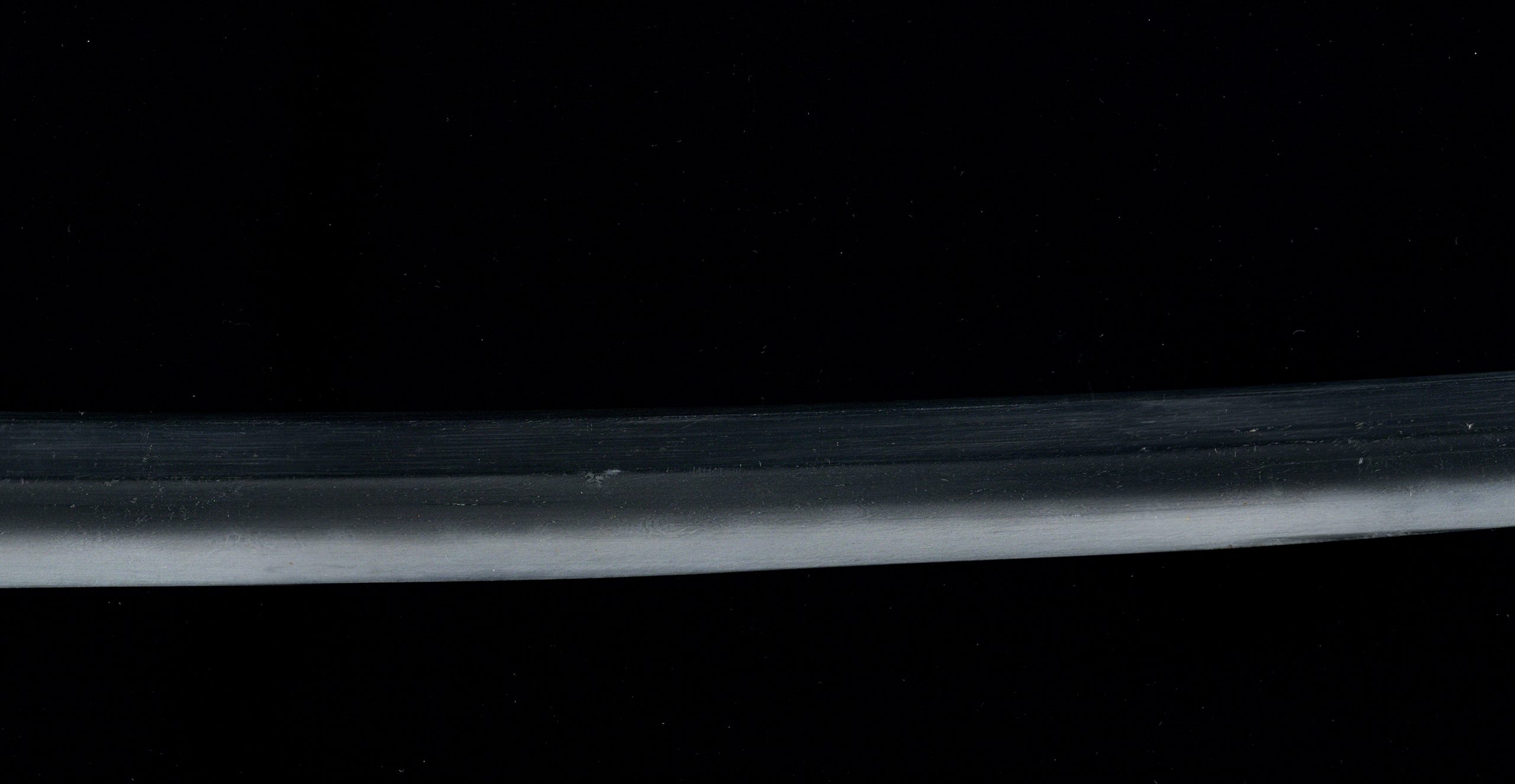
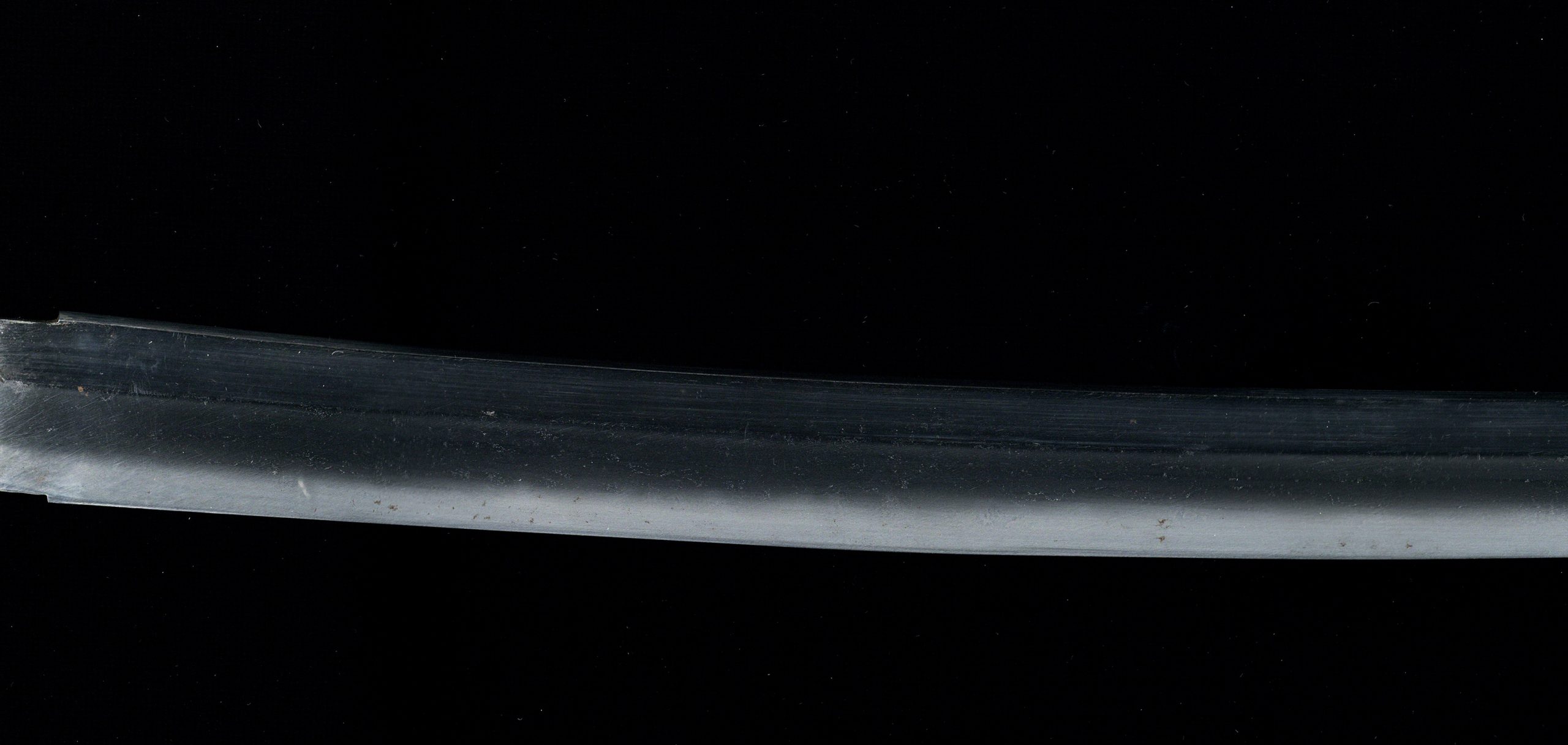
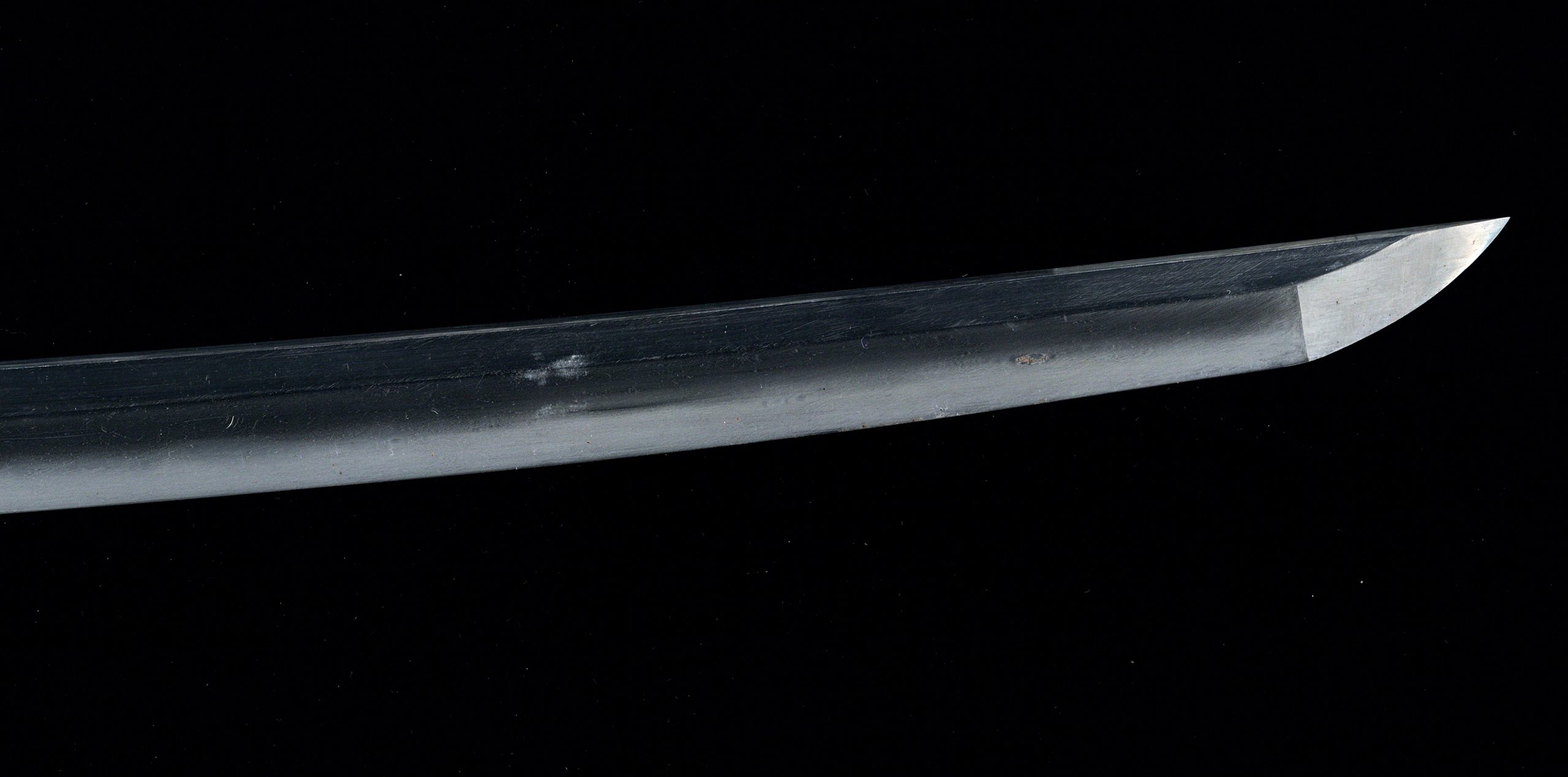
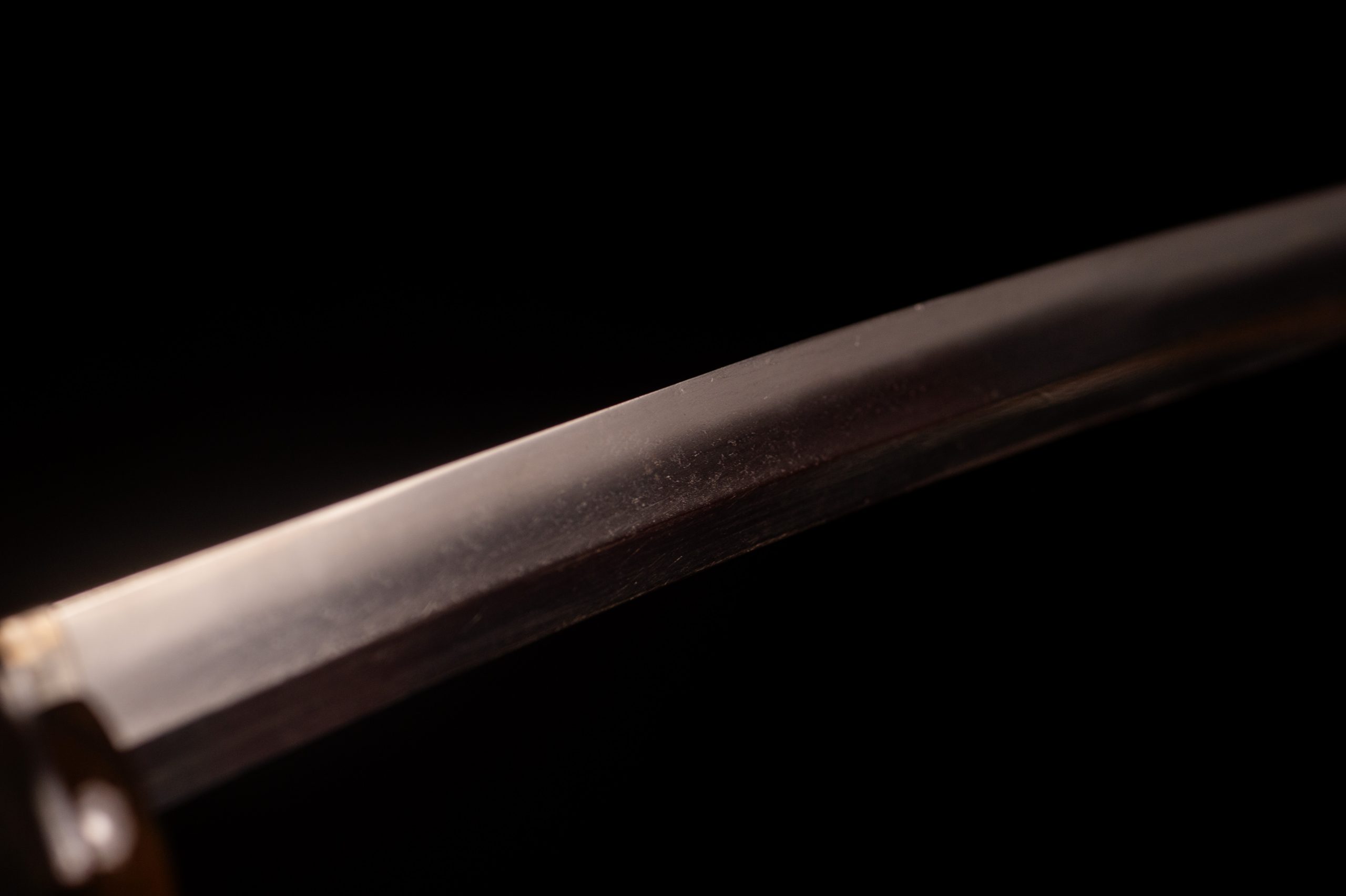
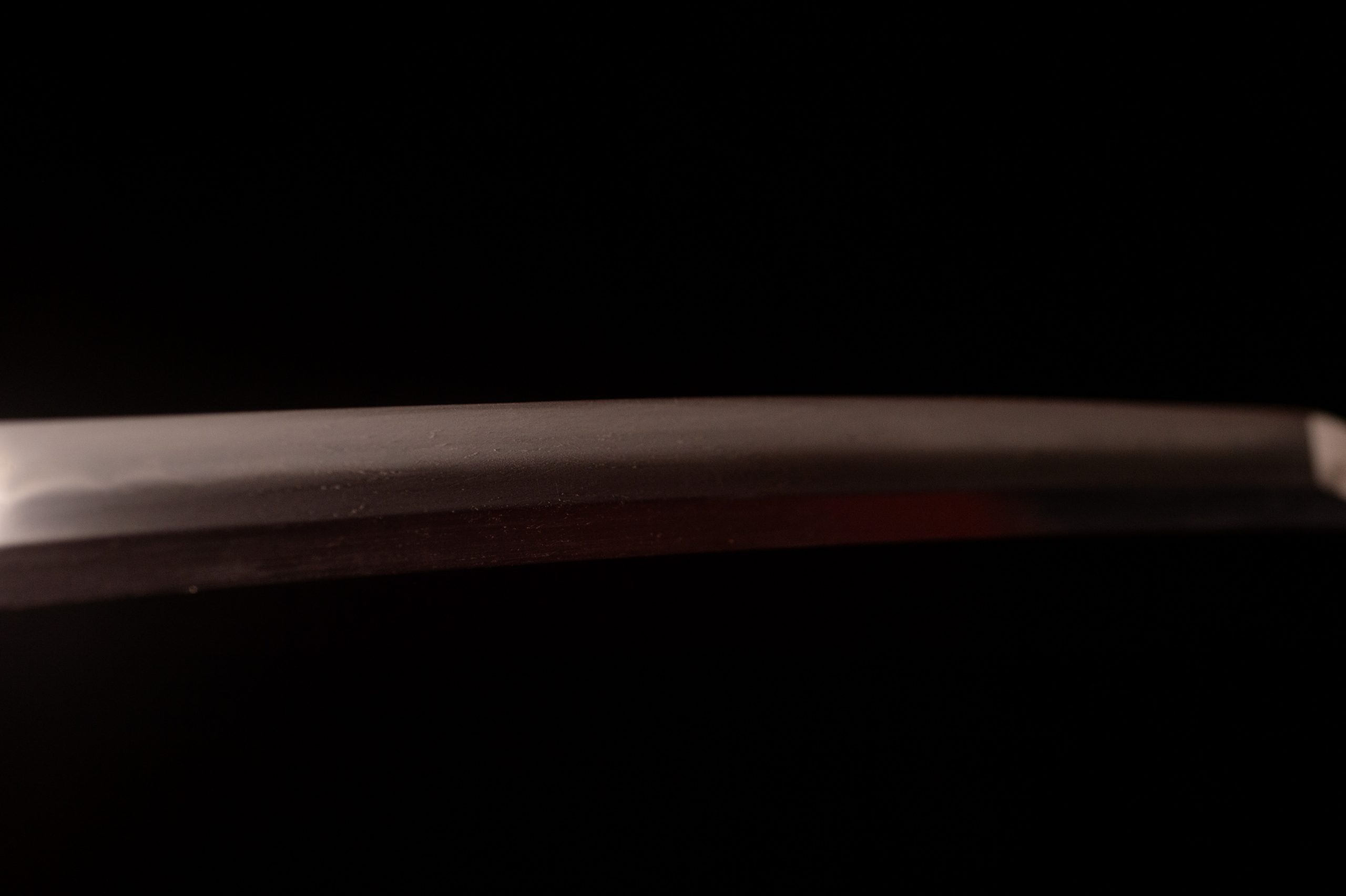
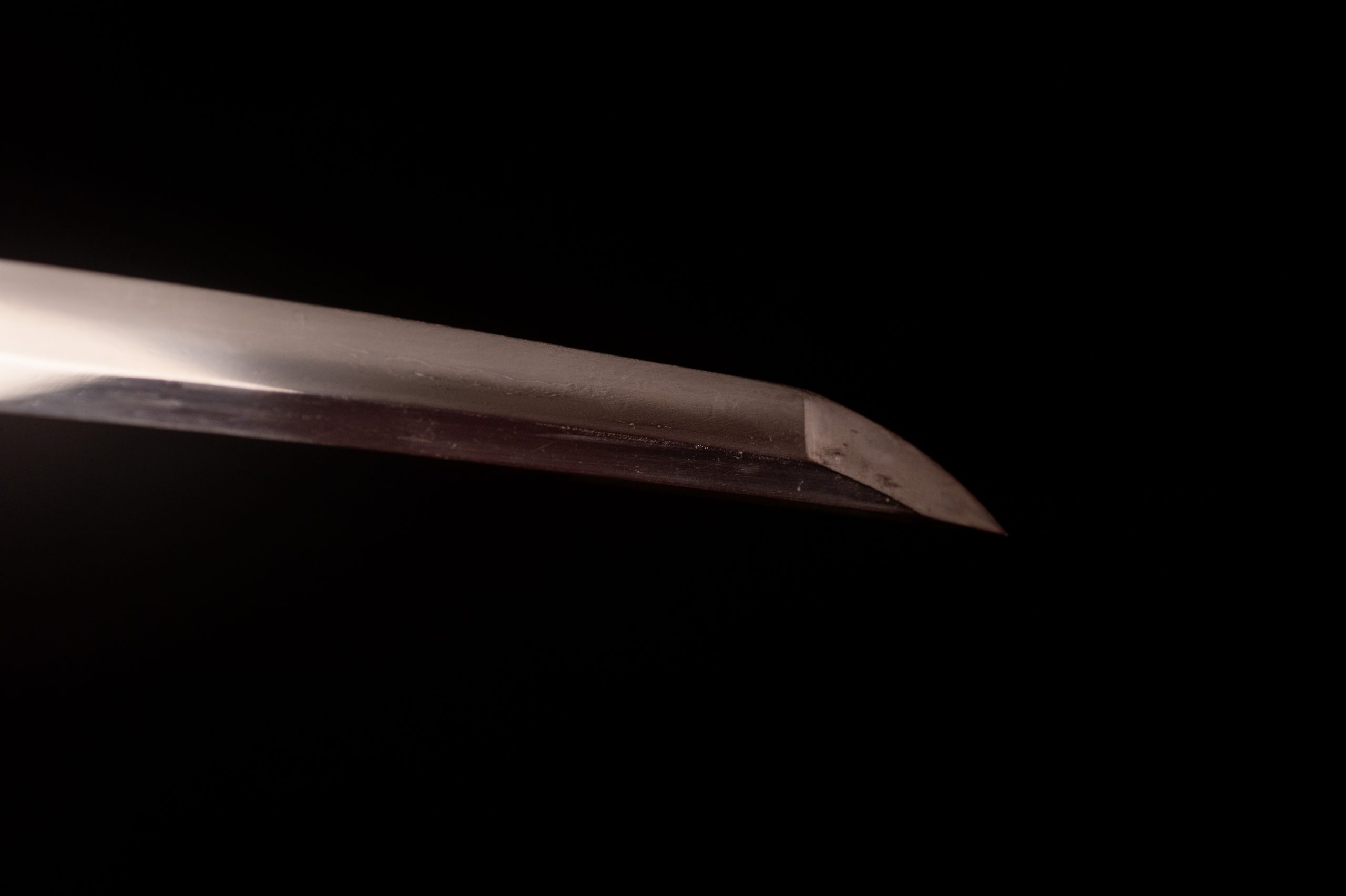
The blade shows a clear tachi sugata, with lively, well-judged curvature that favors cutting through trajectory and a balance aimed at martial use rather than static display. The temperline reads clean along the edge, with an overall impression of a straight-based hamon with gentle undulation, giving continuity and a practical, “serious” edge—stable and convincing without relying on theatrics.
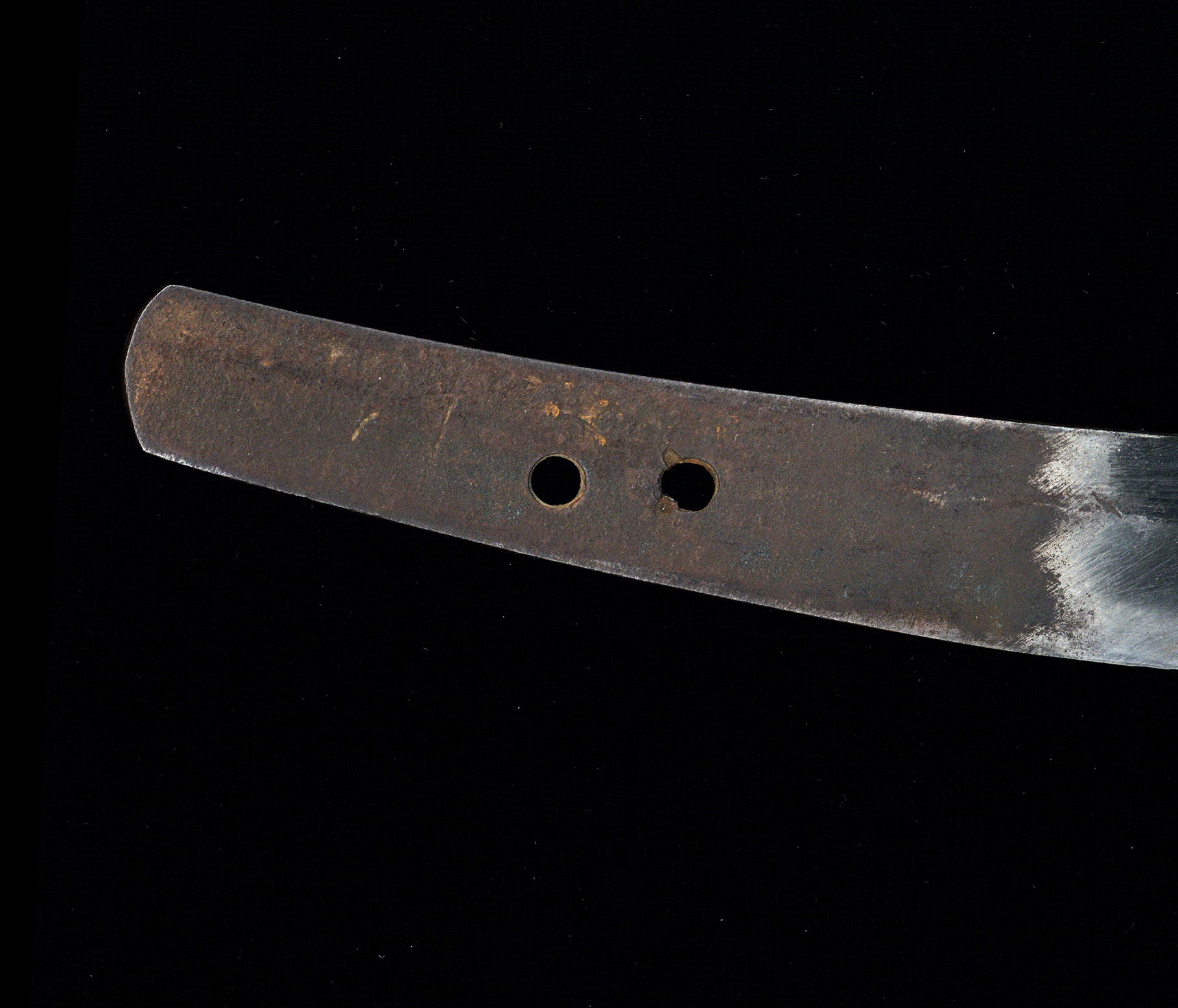
The nakago is recorded with two mekugi-ana, a detail often seen on blades that have lived a long, working life through demanding mounts; the patina is deep and sober, exactly the kind of surface that reads as honest rather than newly made.
Found original tachi koshiraes is very rare, as they were reserved exclusively for high-ranking feudal lords, daimyos and aristocratic samurai. It is therefore a very rare and popular item among collectors, many of whom snap them up whenever the opportunity arises.
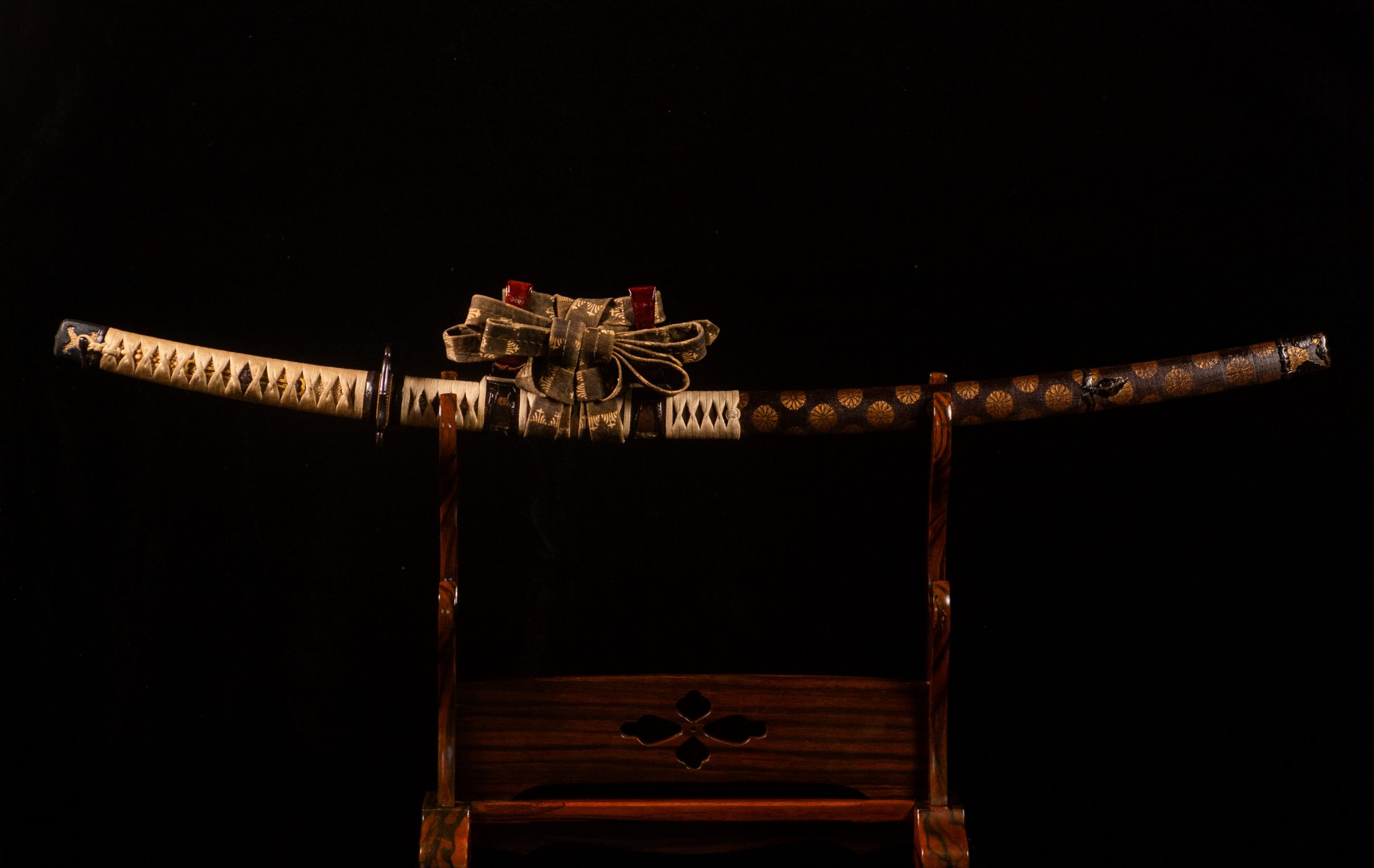
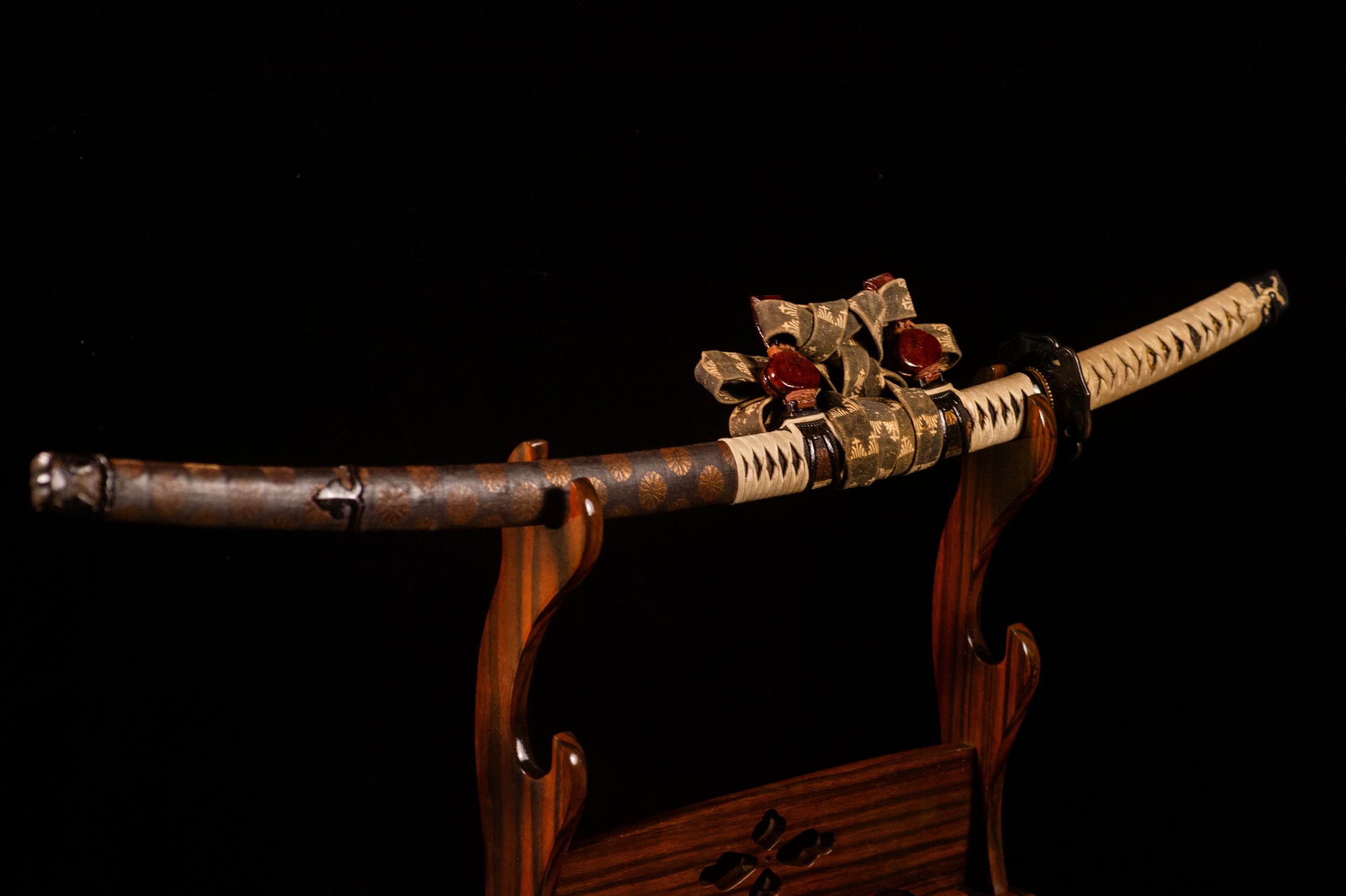
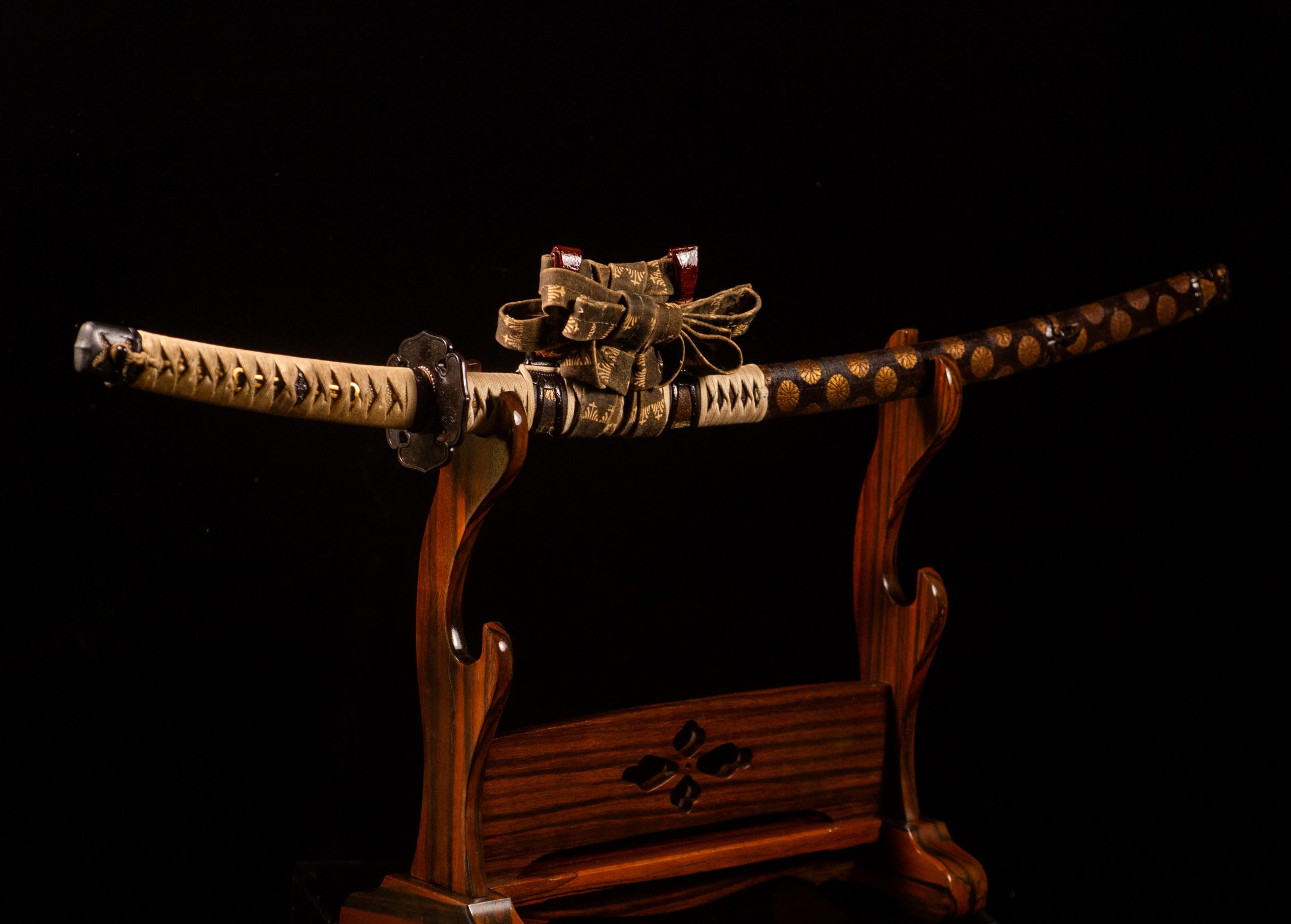
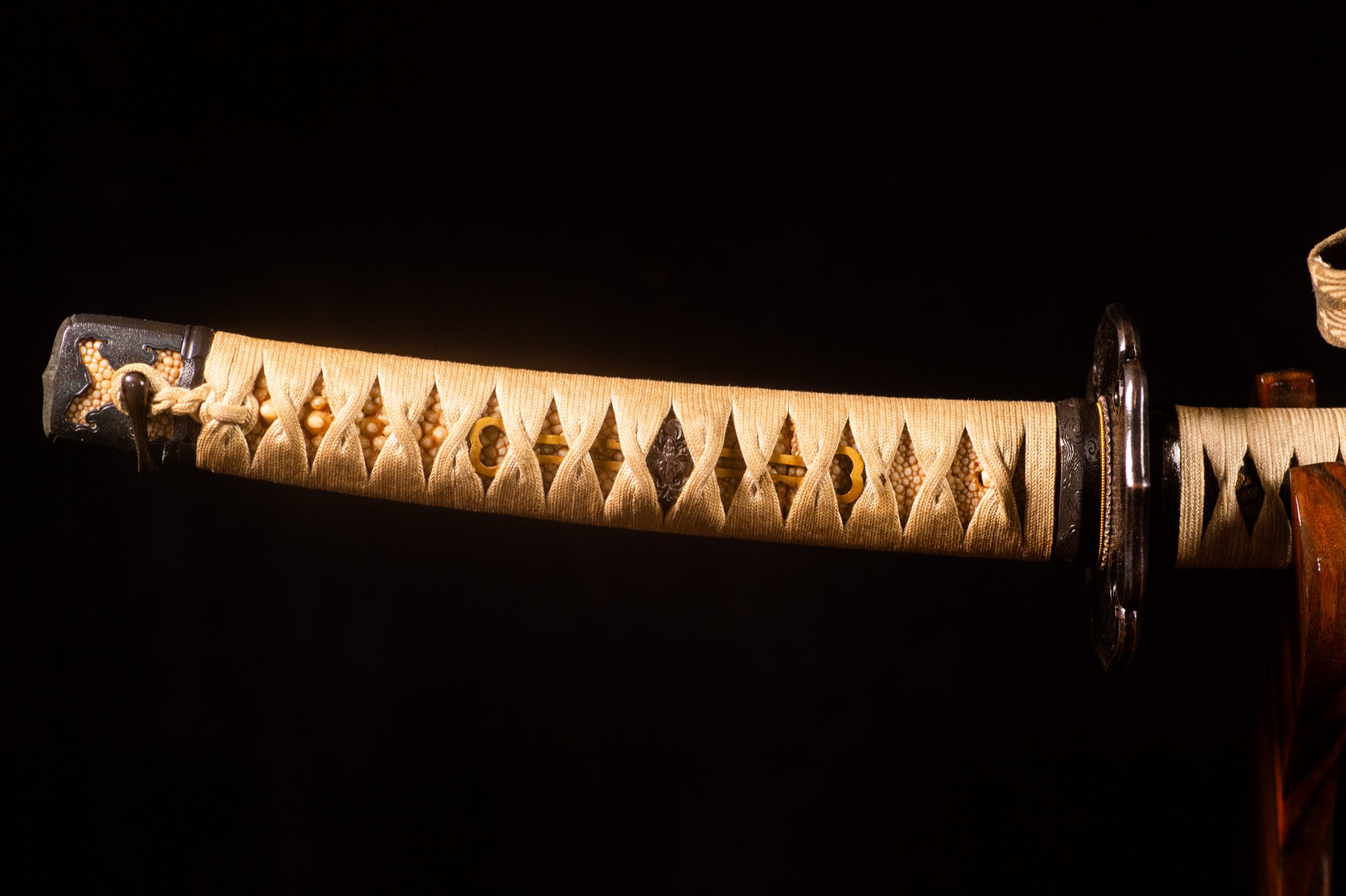
This is where the ensemble shifts into “museum-grade” presence without losing the pulse of a weapon: a original tachi-koshirae from edo period with strong visual authority, designed to read at distance and reward inspection up close.
Saya
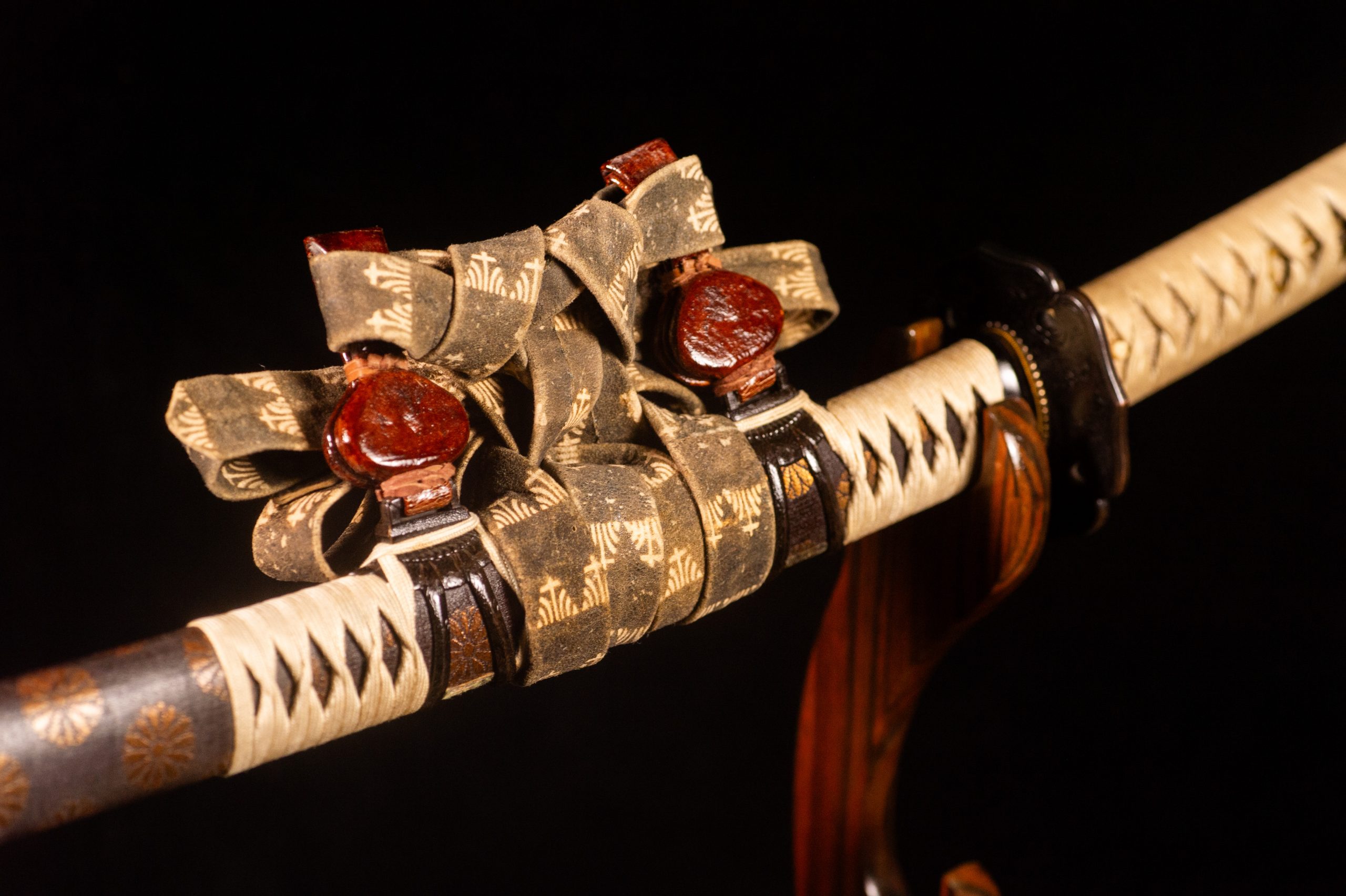
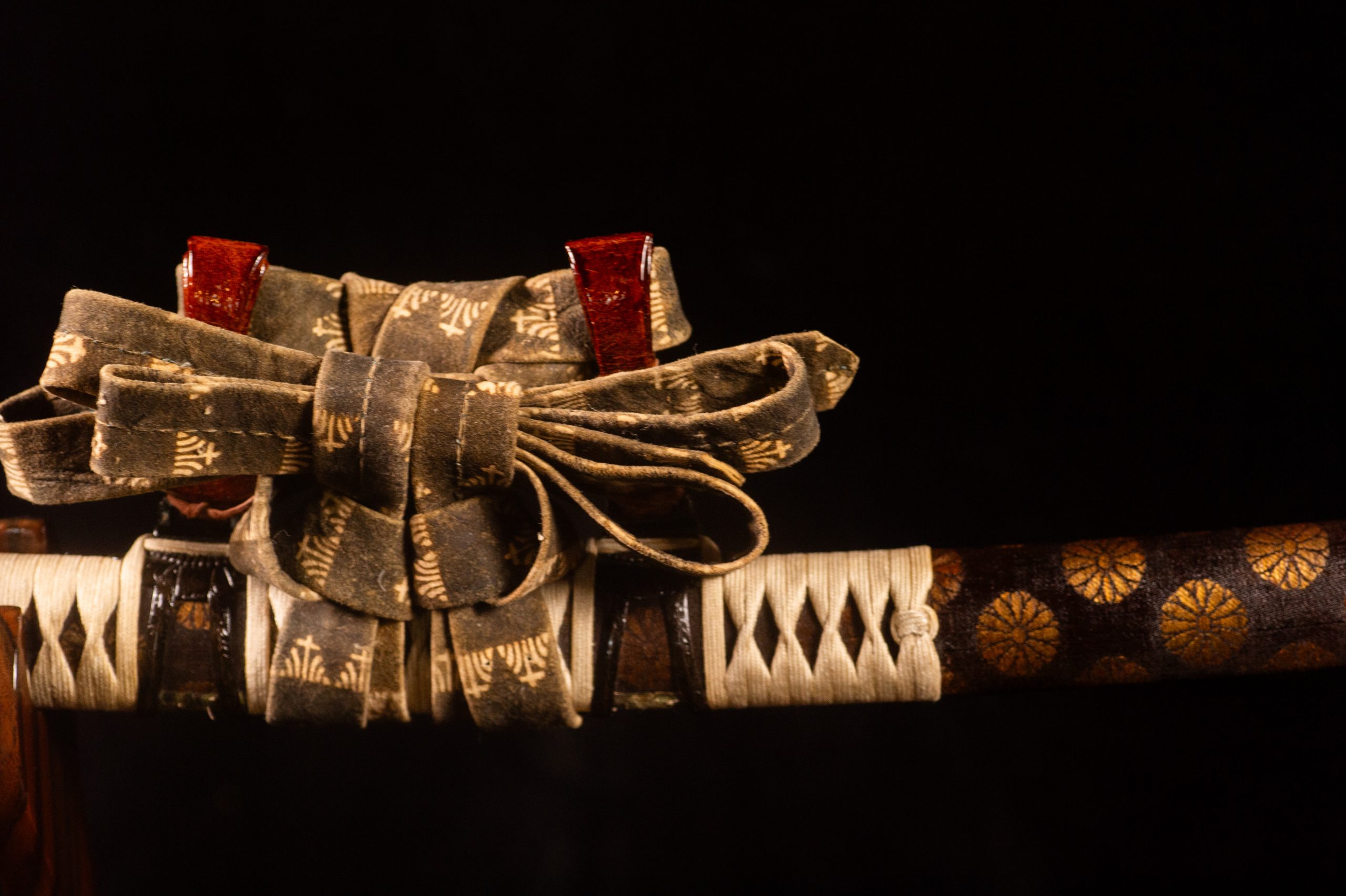
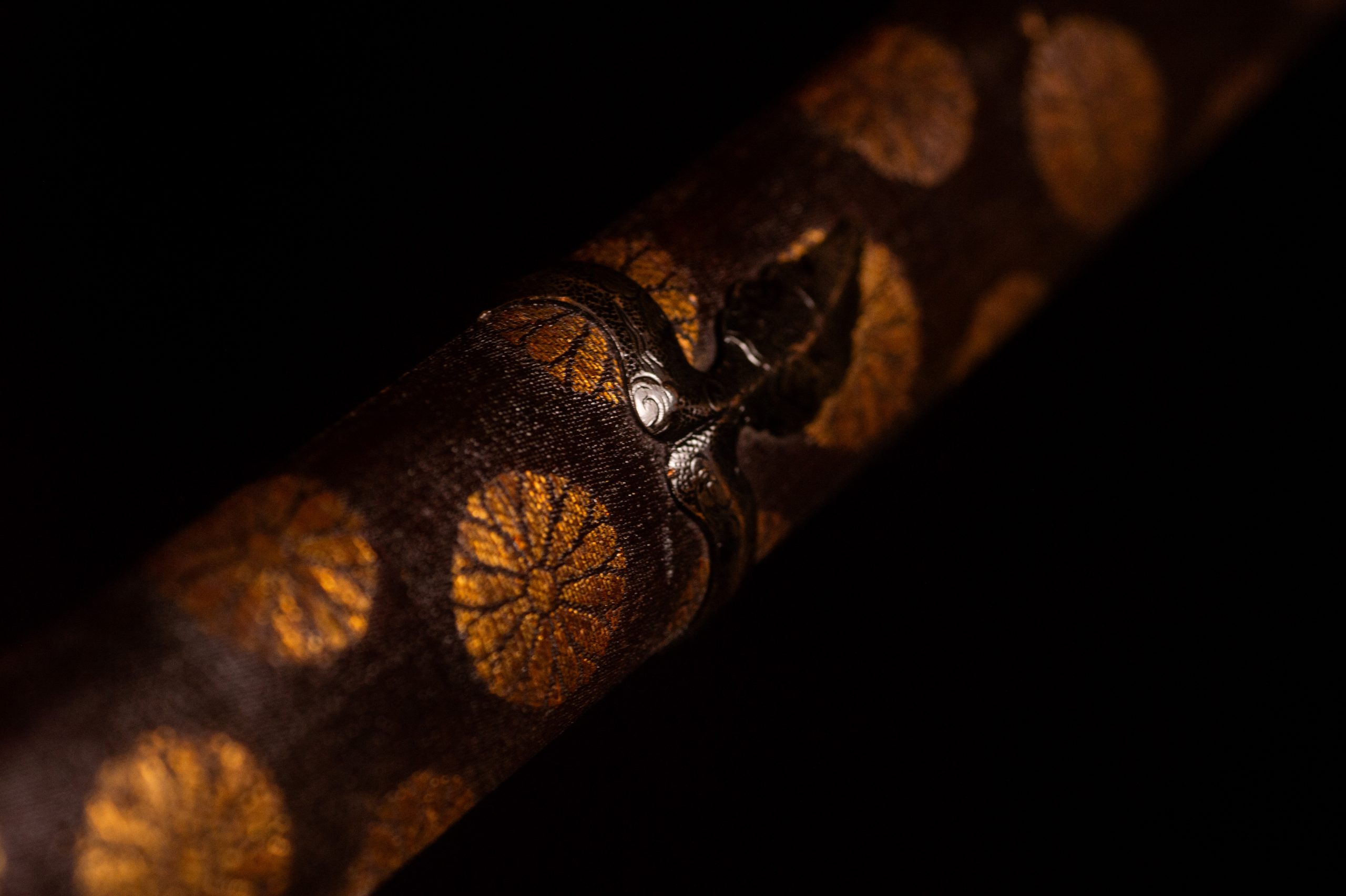
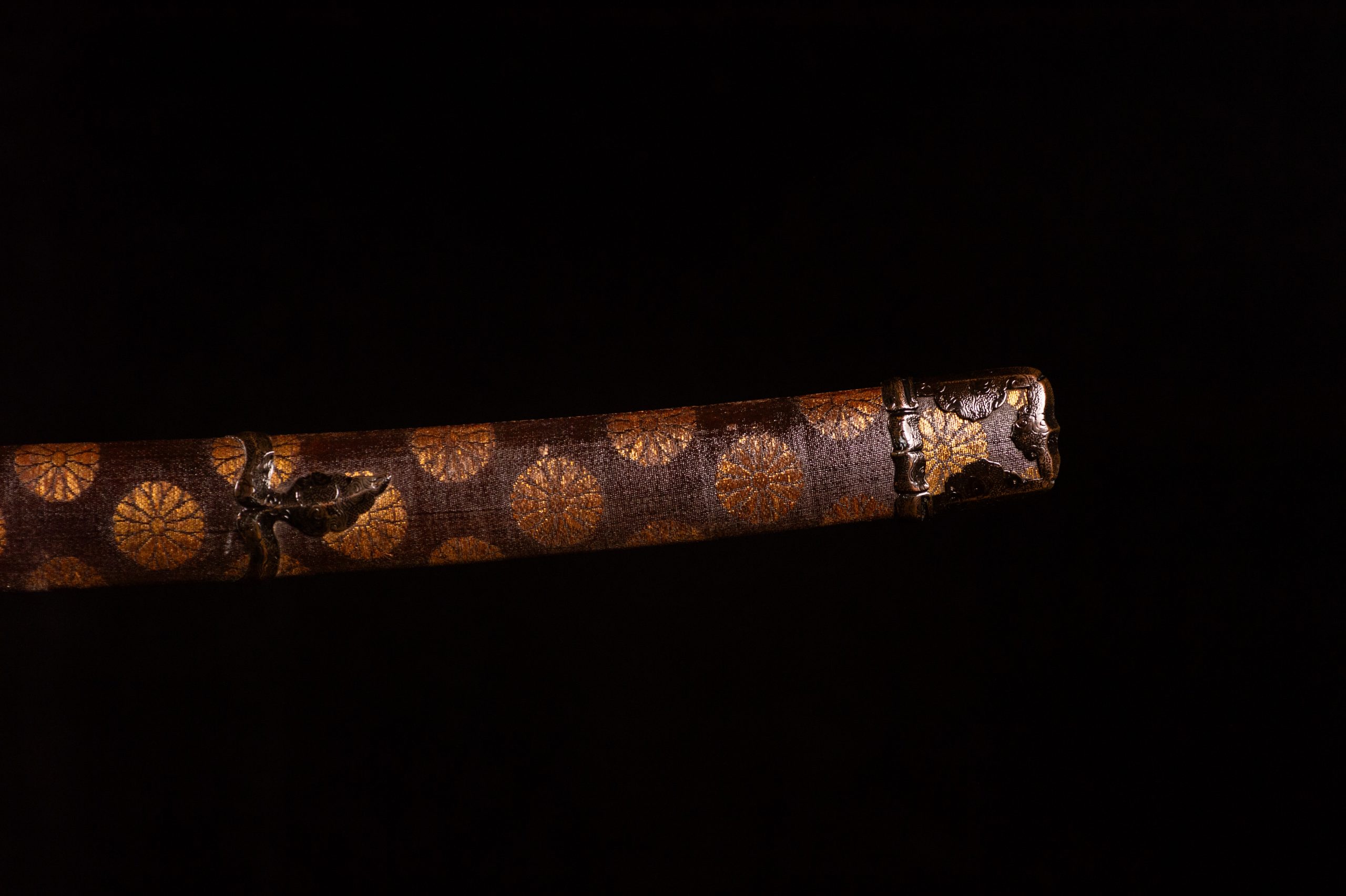
The saya is clad in dark brown fabric patterned with repeating gold chrysanthemum roundels (kiku)—immediate impact, unmistakably aristocratic in tone. The texture and controlled gold sheen achieve a rare effect: luxury without noise. Tachi hardware (ashi) in dark-patinated metal is clearly present, organically modeled and executed with the assurance of skilled work.
Tsuka
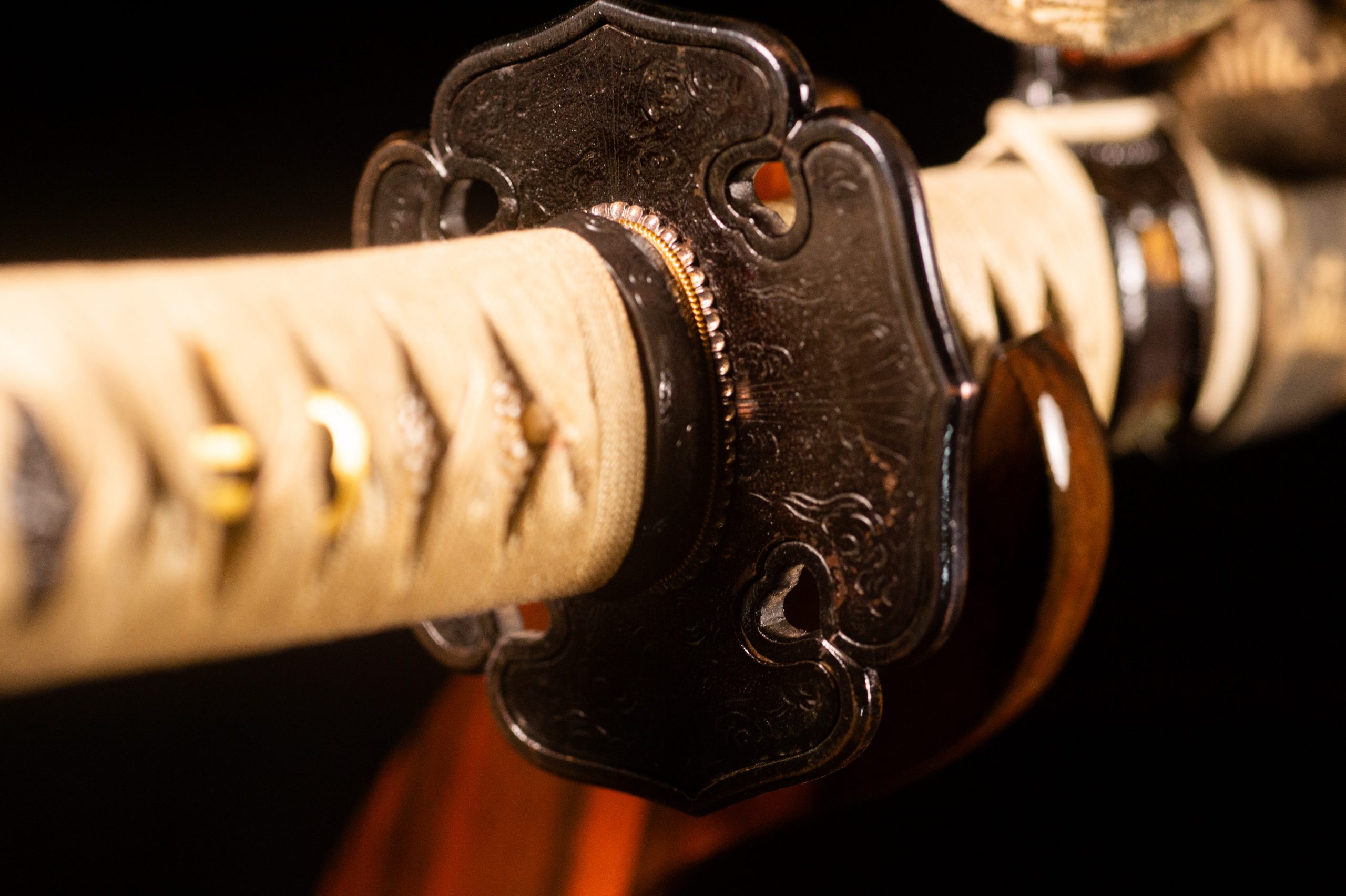
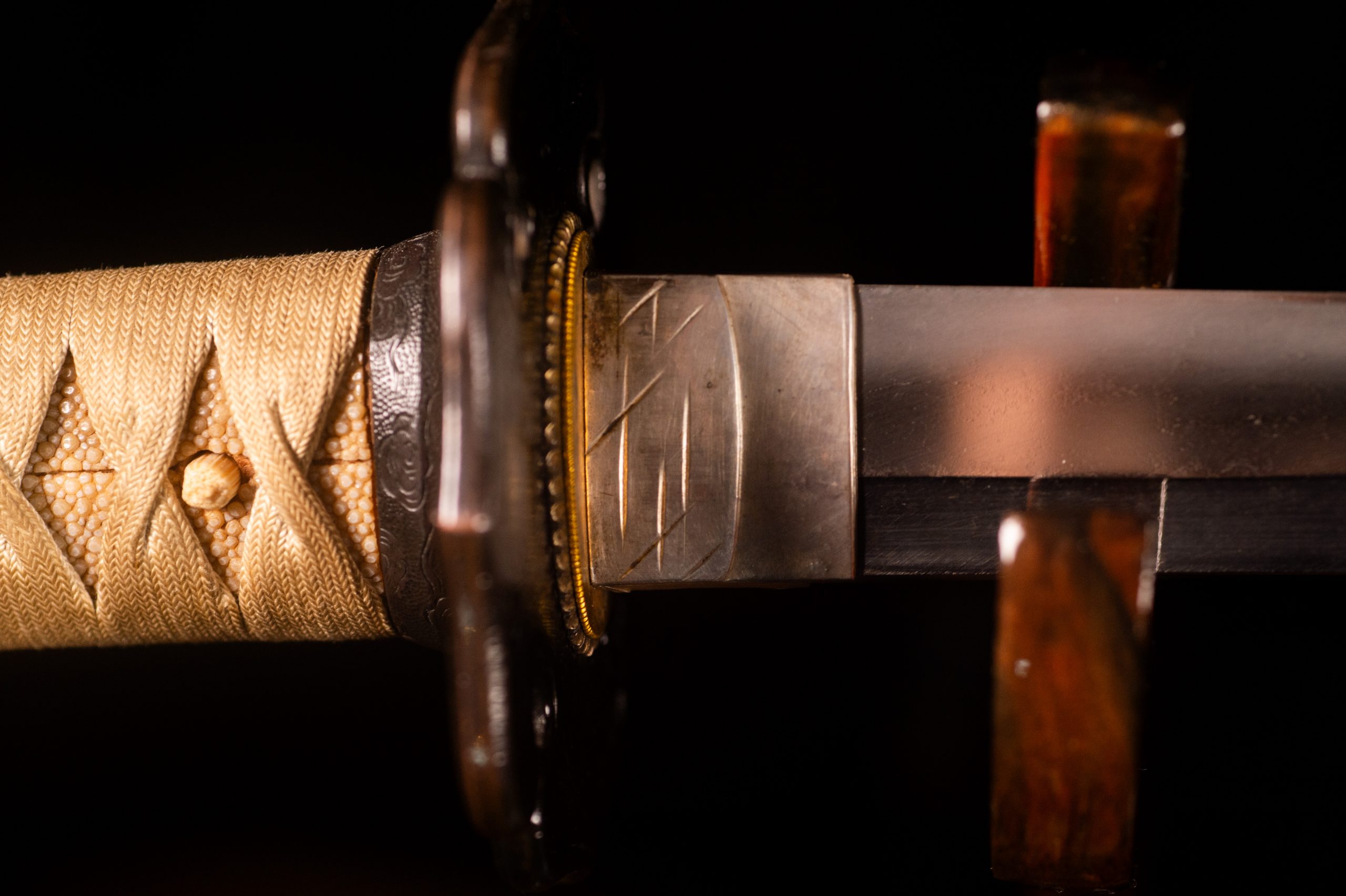
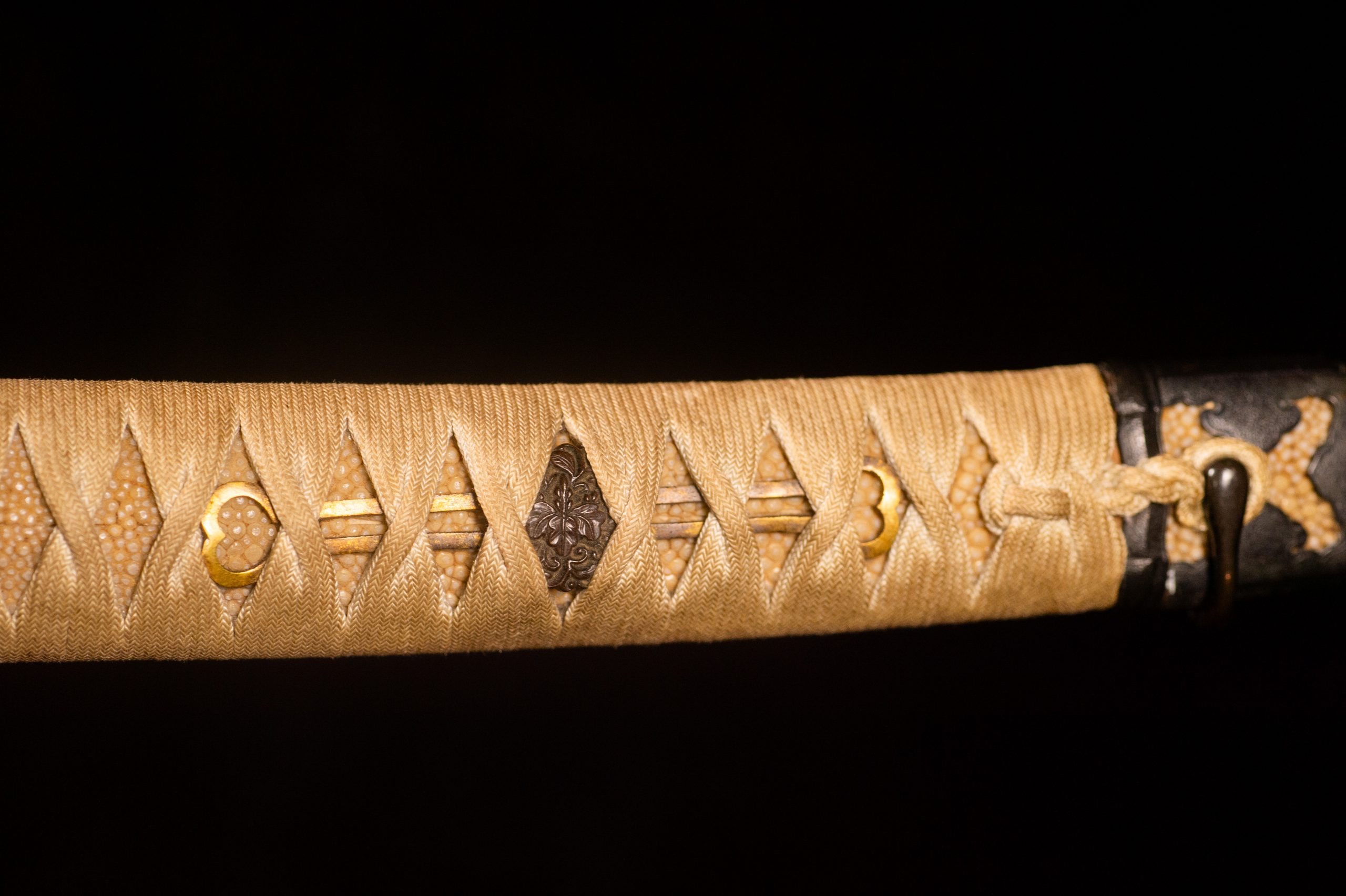
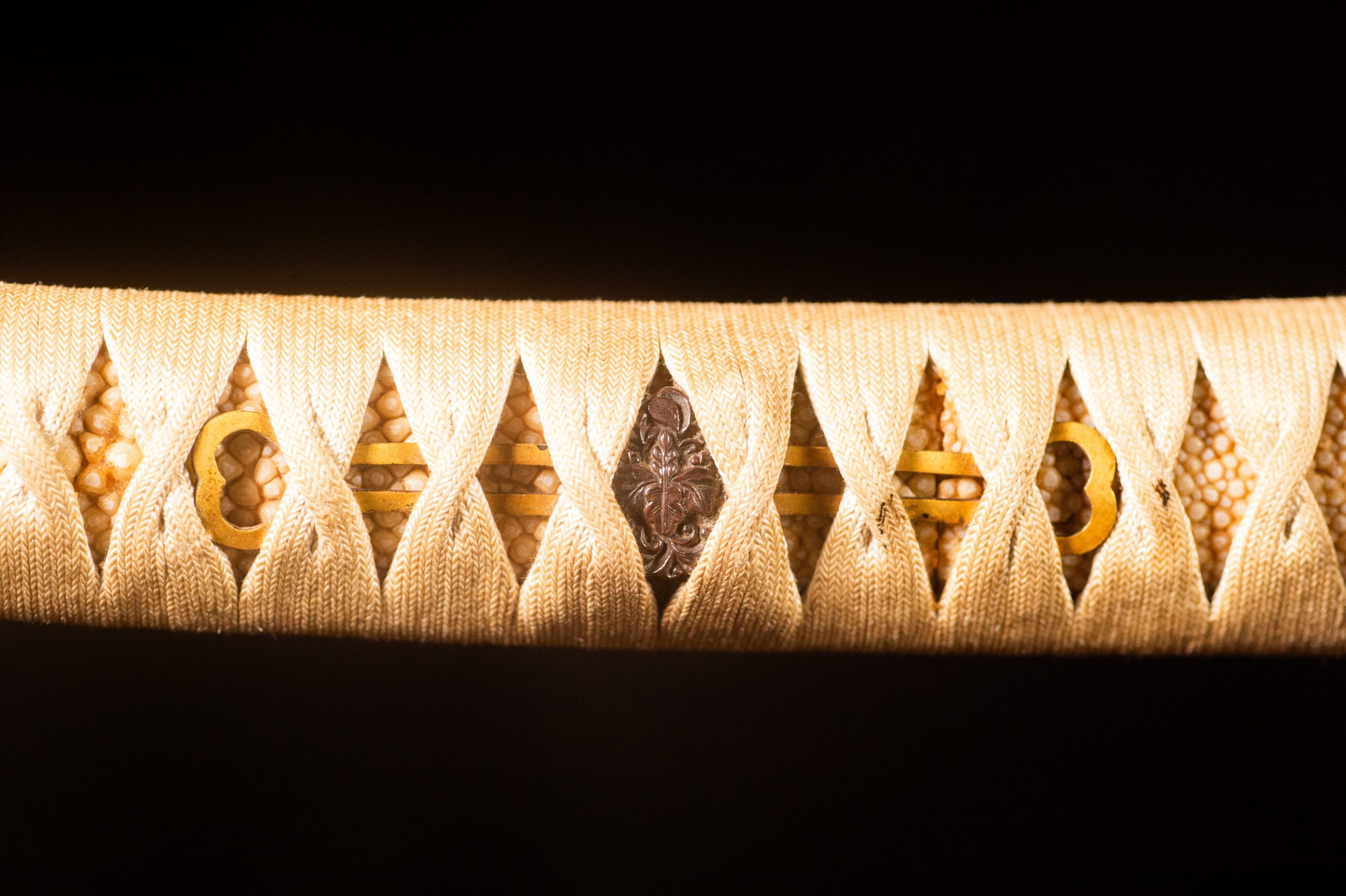
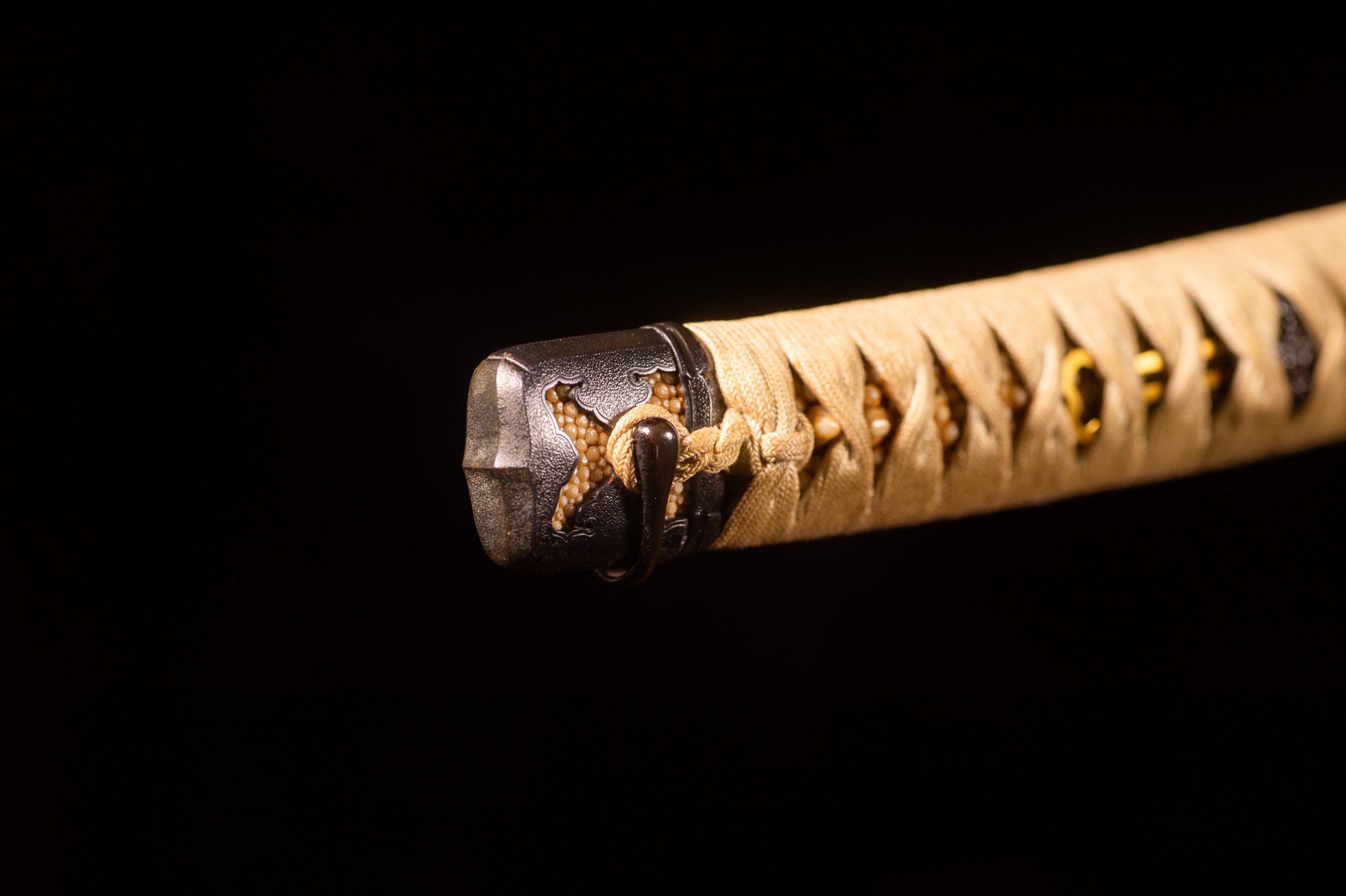
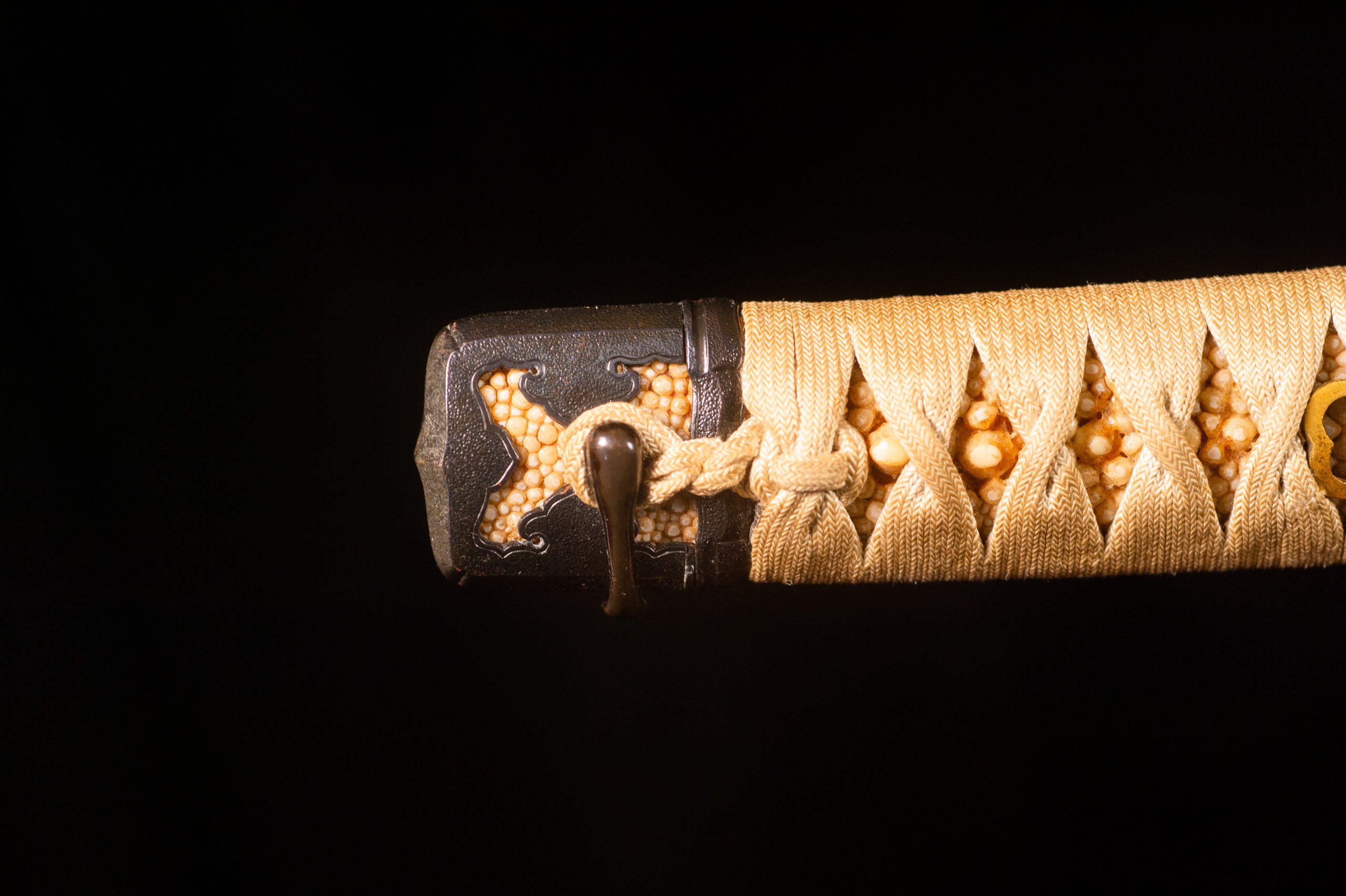
The hilt combines pale samegawa with pronounced nodes and ivory-toned tsuka-ito, tight and even. The defining statement—and the element that pushes this koshirae into serious “collector vitrine” territory—is the exceptionally large menuki: long, bold, and sculptural under the wrap, dominating the visual rhythm of the grip. They are not a minor accent; they are the hilt’s aesthetic center of gravity. Dark fittings provide a controlled contrast, and a functional sarute is integrated at the end.
Tsuba
The lobed tsuba features inome sukashi and restrained surface work, finished in a uniform patina that reads as authoritative. It does not fight for attention; it does its job: closing the composition with the quiet confidence of a warrior’s taste.
Cordage
The upper cordage—patterned textile tied in a generous knot—reinforces the identity of a hanging tachi, meant to be worn and presented as an insignia as much as a tool.
Type (registration): Katana (刀)
Configuration: tachi (tachi-koshirae)
Mei (omote): 長光
Nagasa: 64.4 cm
Sori: 1.8 cm
Mekugi-ana: 2
Issuing authority (seal): Prefectural Board of Education
Order above 1.000,00 € gets free shipping.
Secure and hassle-free payment process.
Hassle-free returns with a money-back guarantee.
Have questions? Contact us via WhatsApp.

© 2024 Created with Royal Elementor Addons