Description
A Fine Japanese Armour (Tōsei Gusoku)
Edo Period, 17th–18th Century
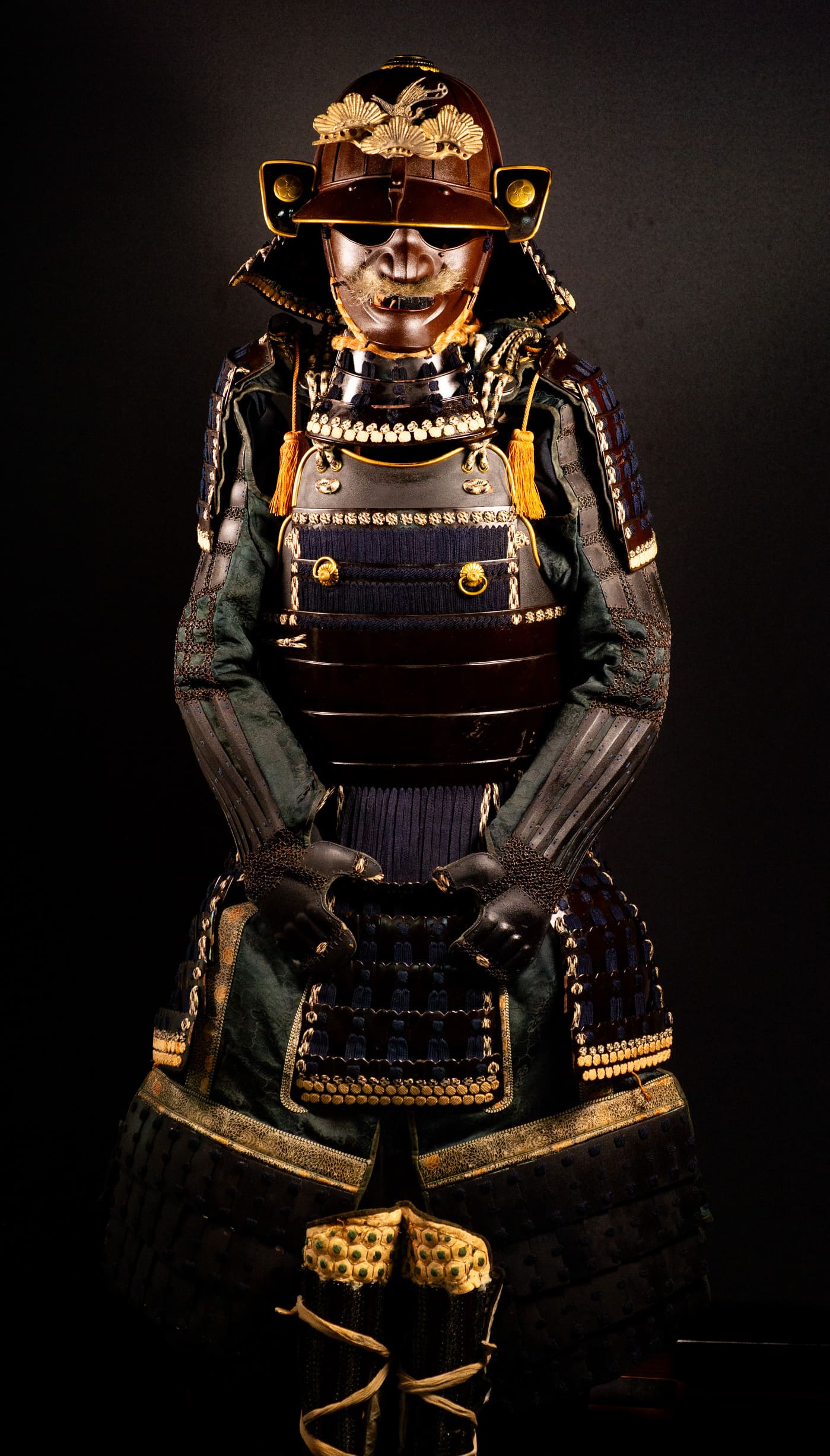
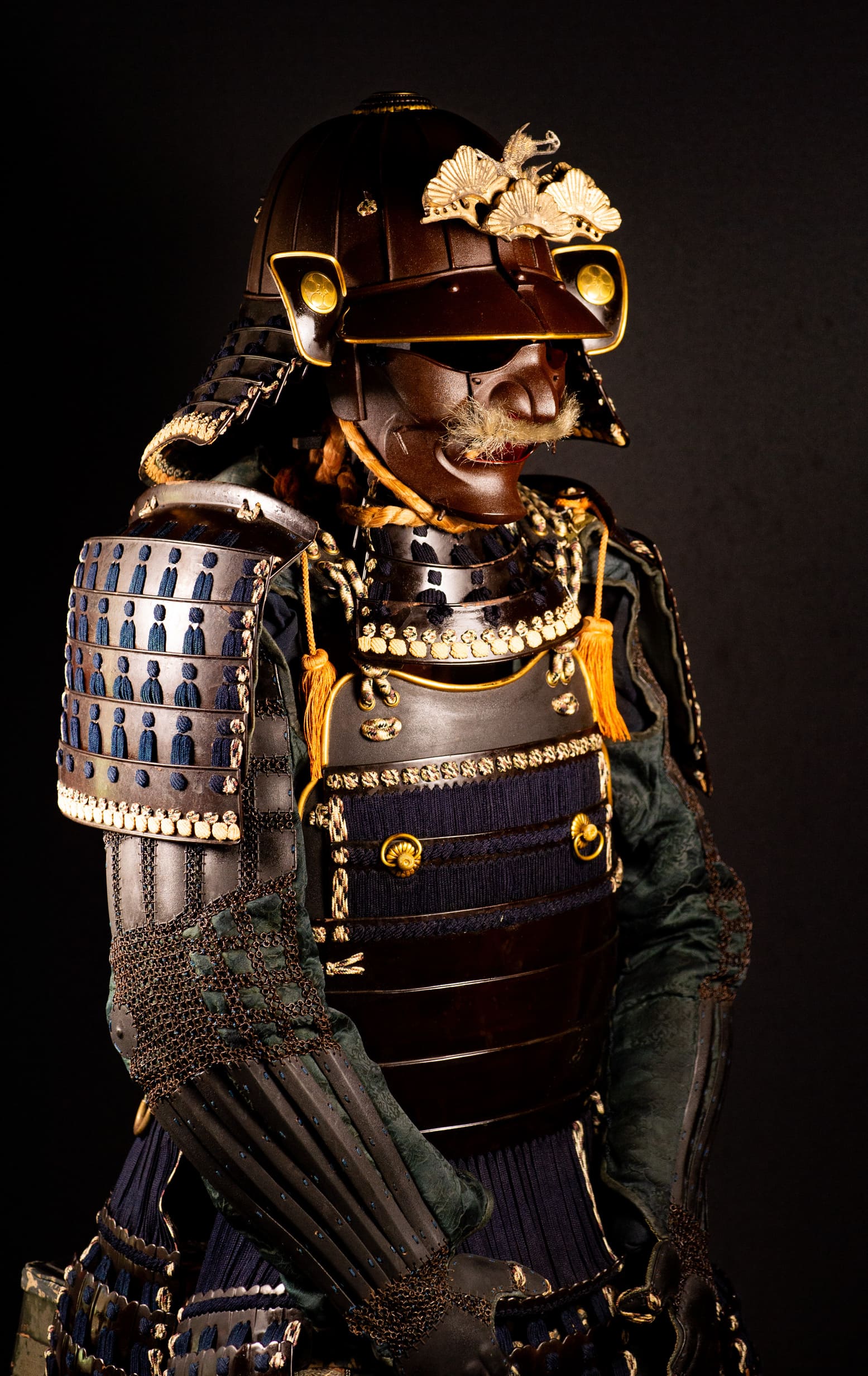
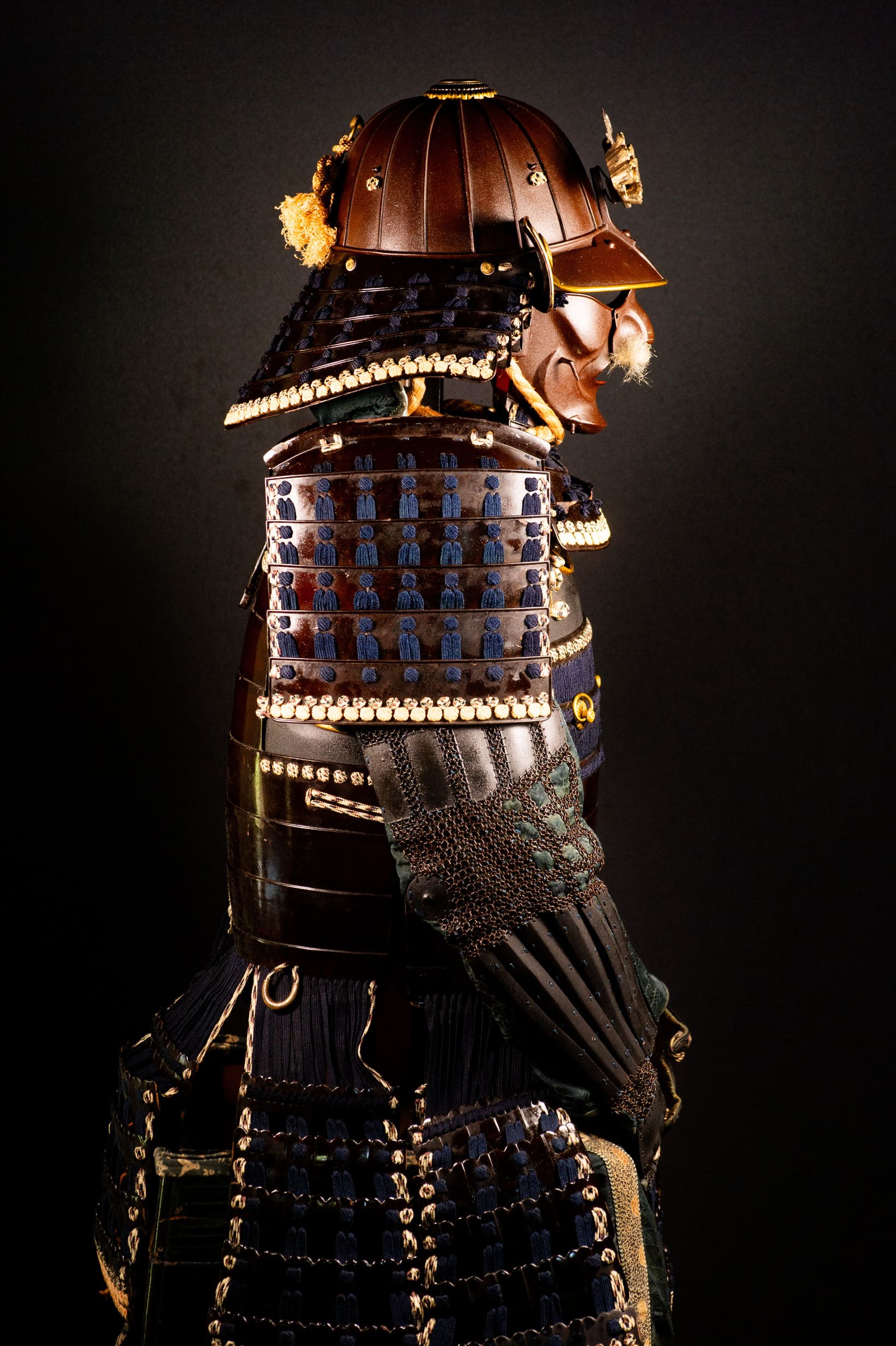
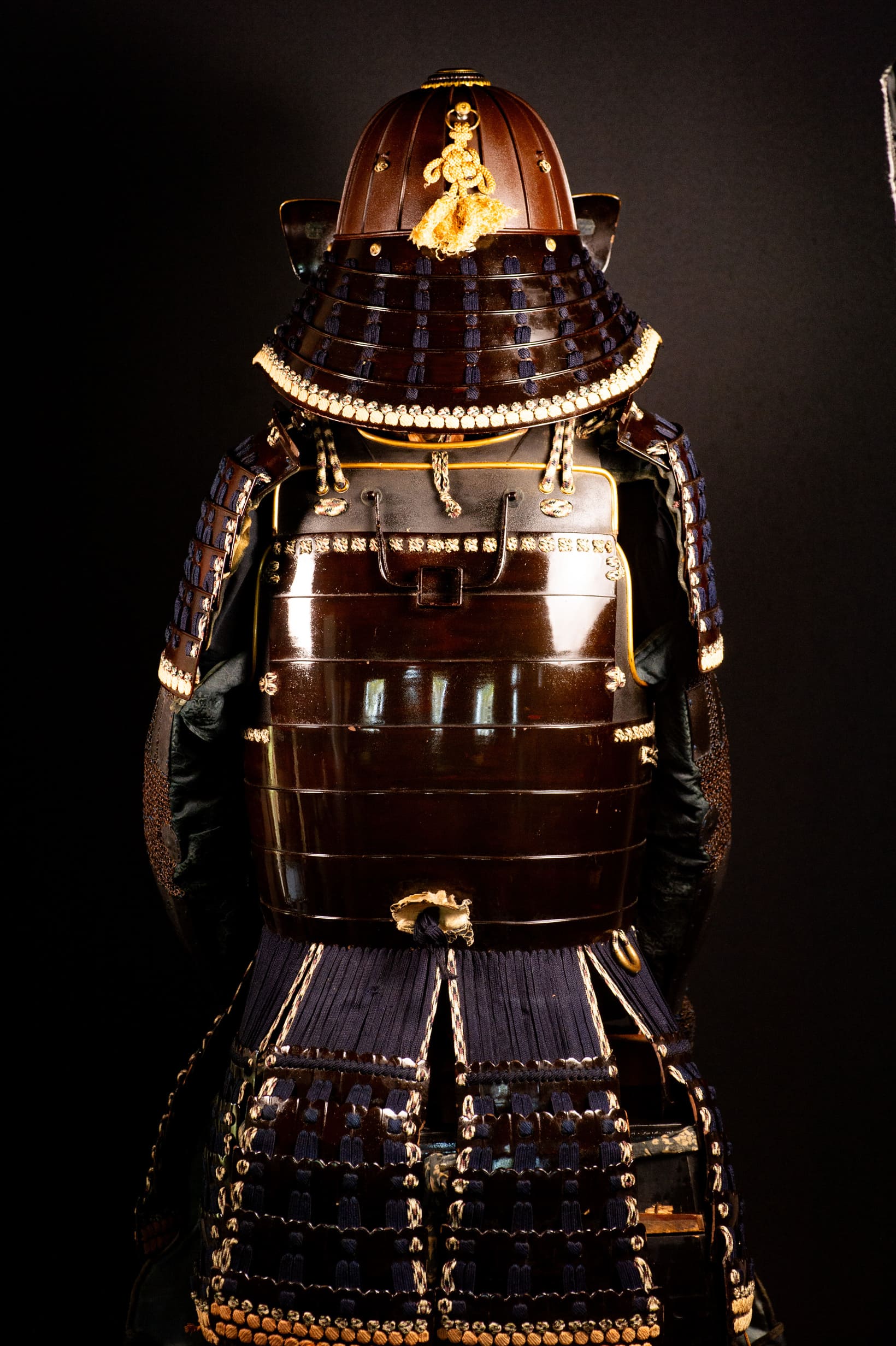
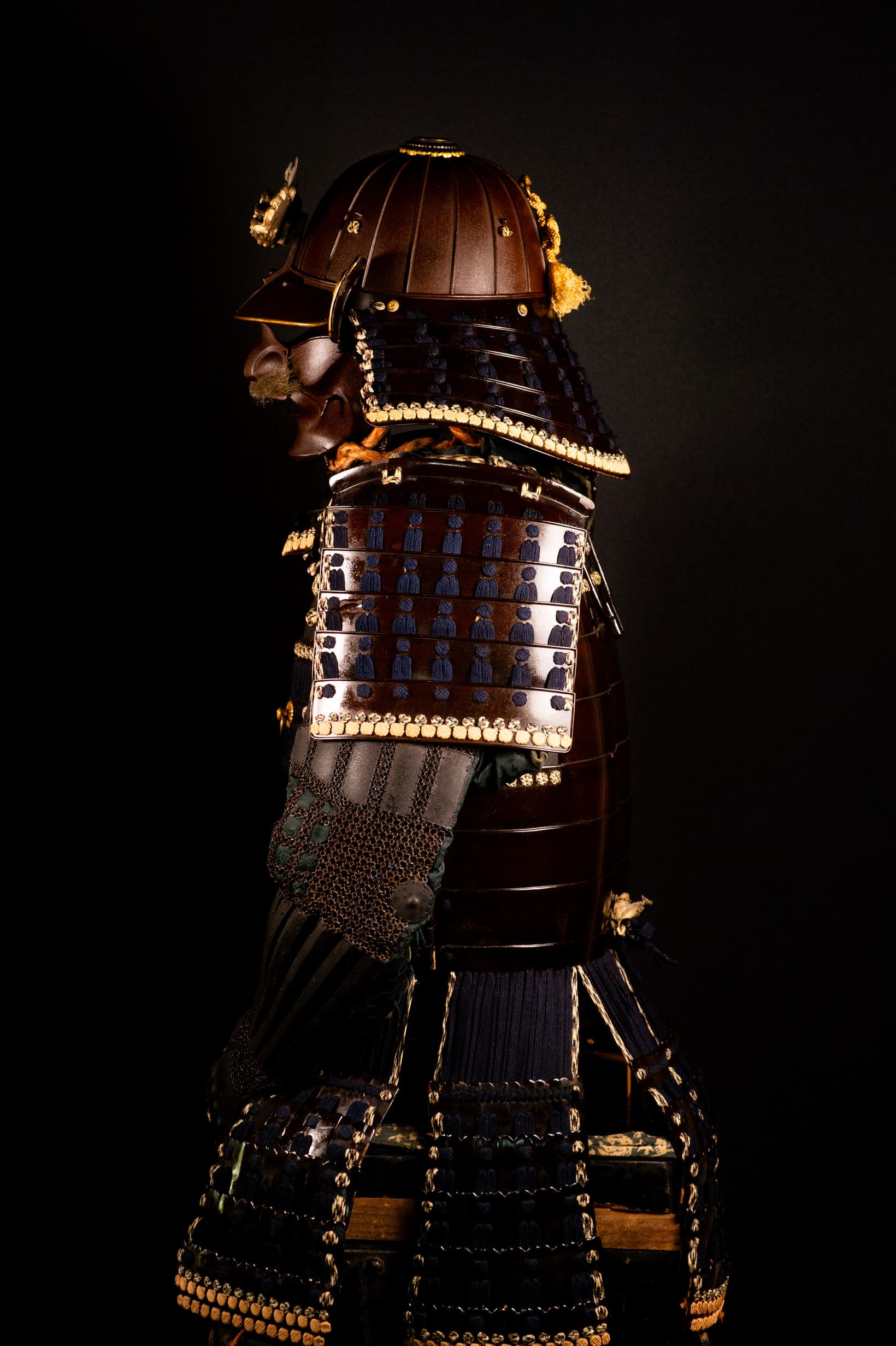
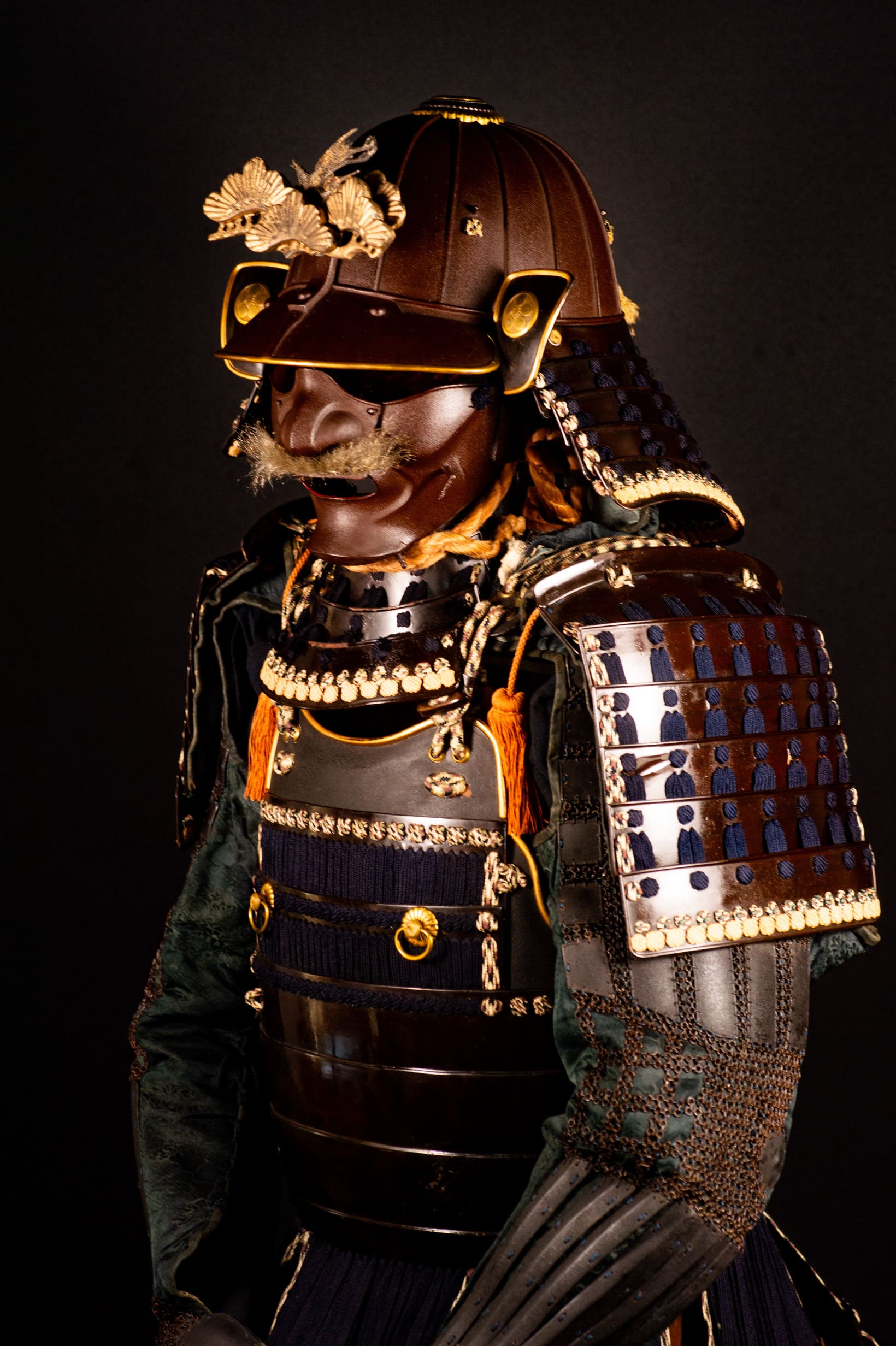
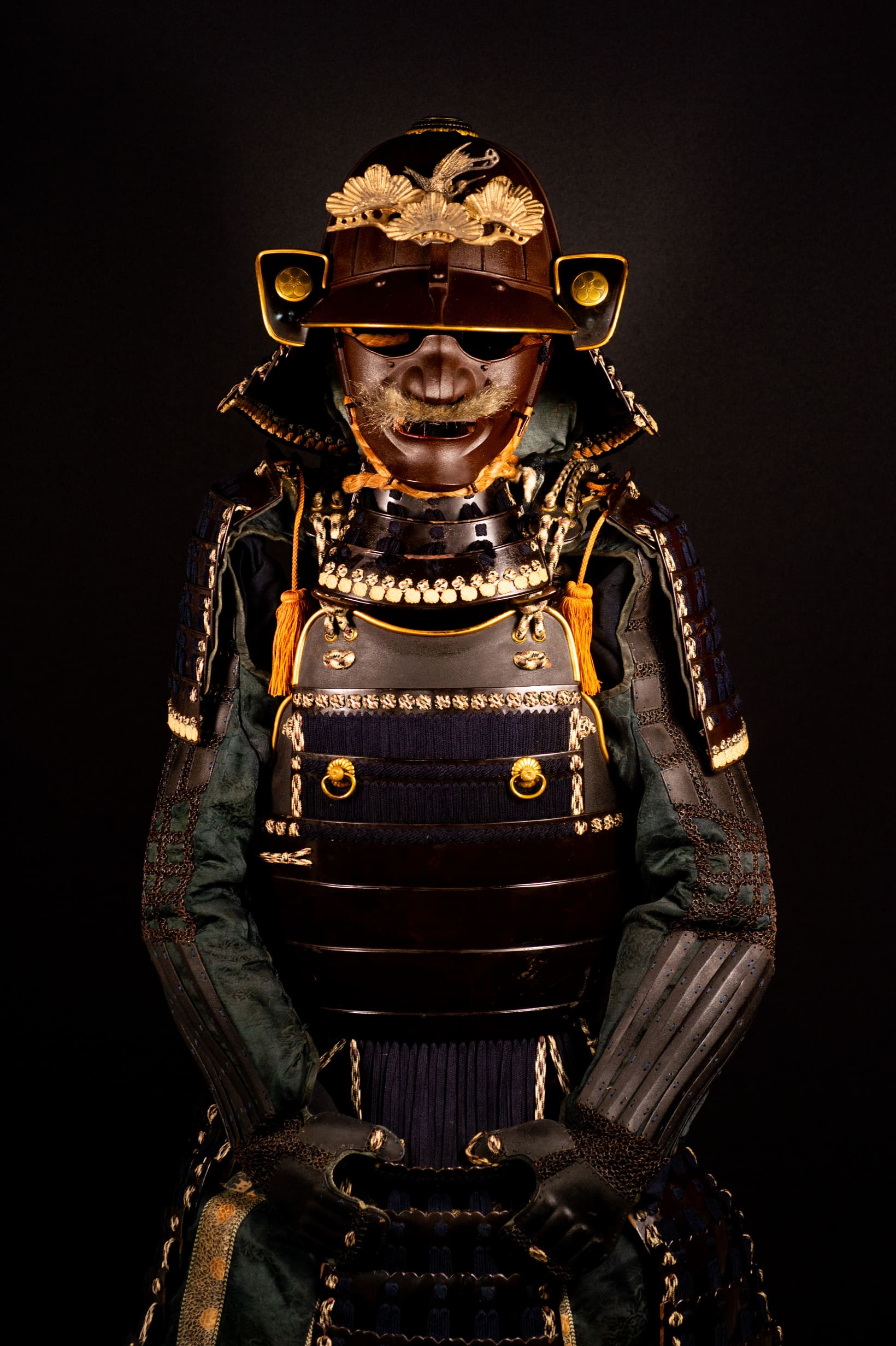
An armour of exceptional presence and quiet authority, its sober russet-and-navy palette announcing a warrior of rank for whom restraint was itself a form of magnificence.
Where lesser harnesses court the eye with gold, this suit commands it through proportion, finish, and the deep warmth of its lacquer — the unmistakable taste of the Edo elite, when armour had become as much an heirloom and a statement of lineage as an instrument of war.
The Helmet (Kabuto)
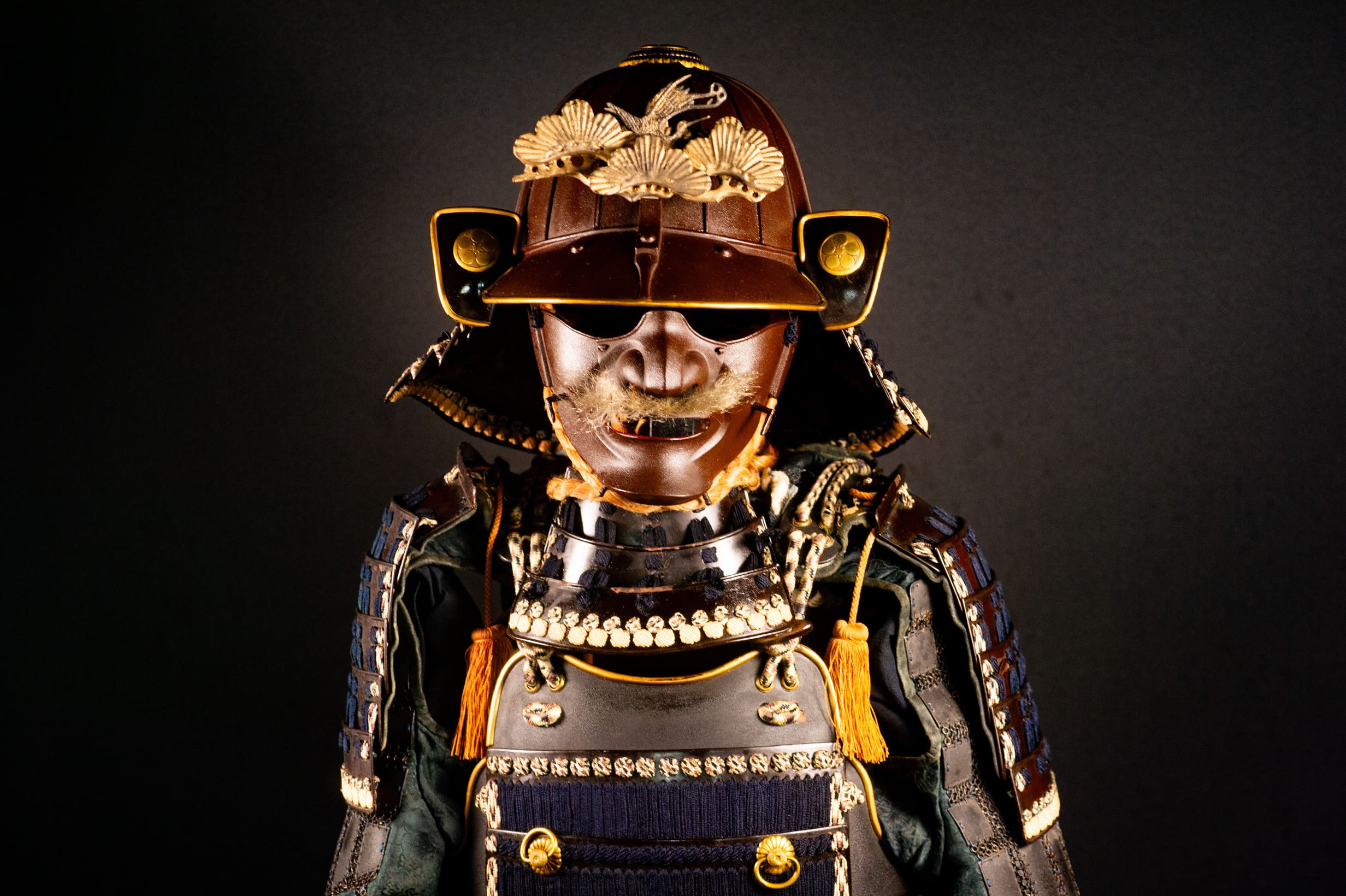
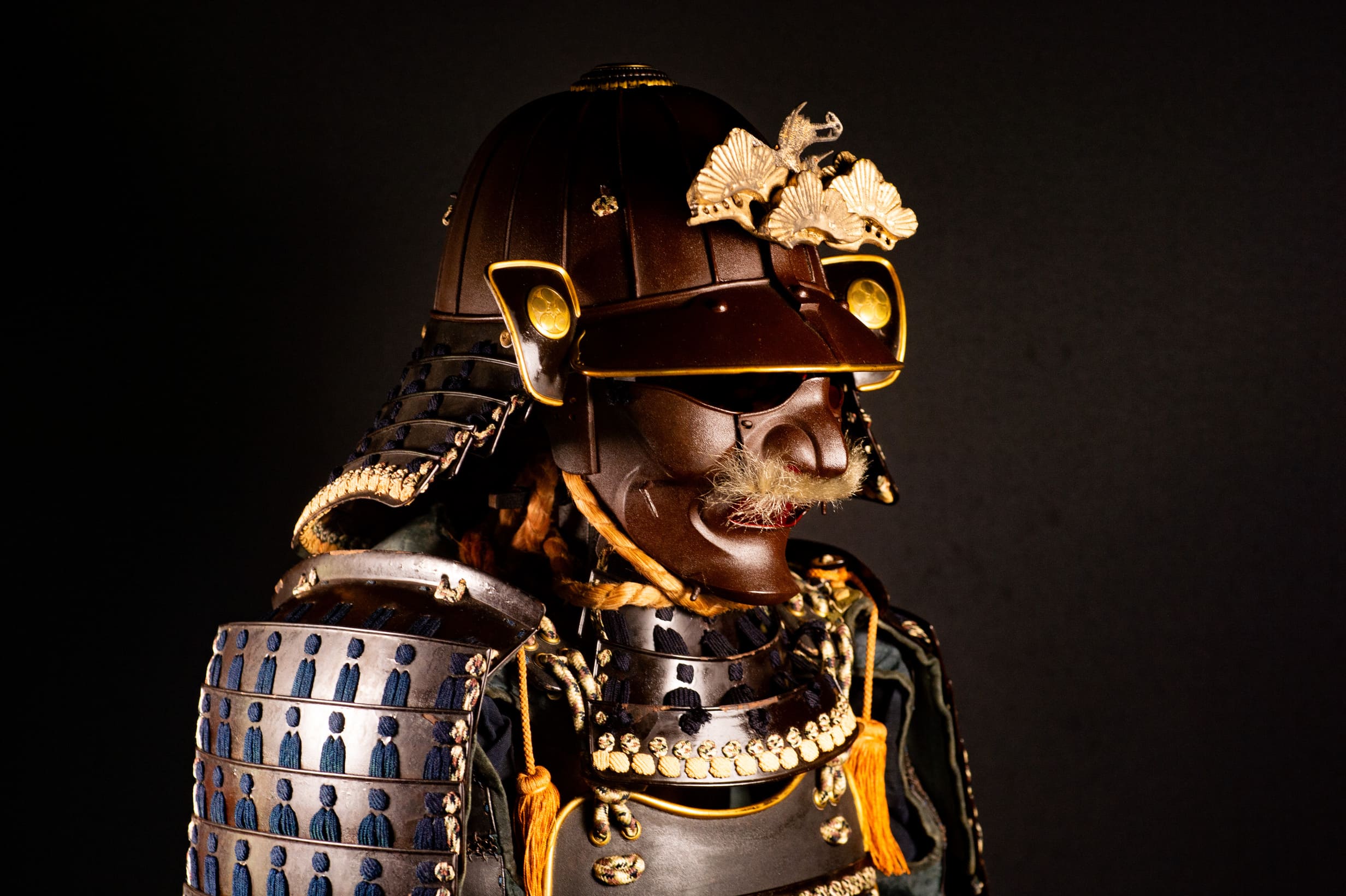
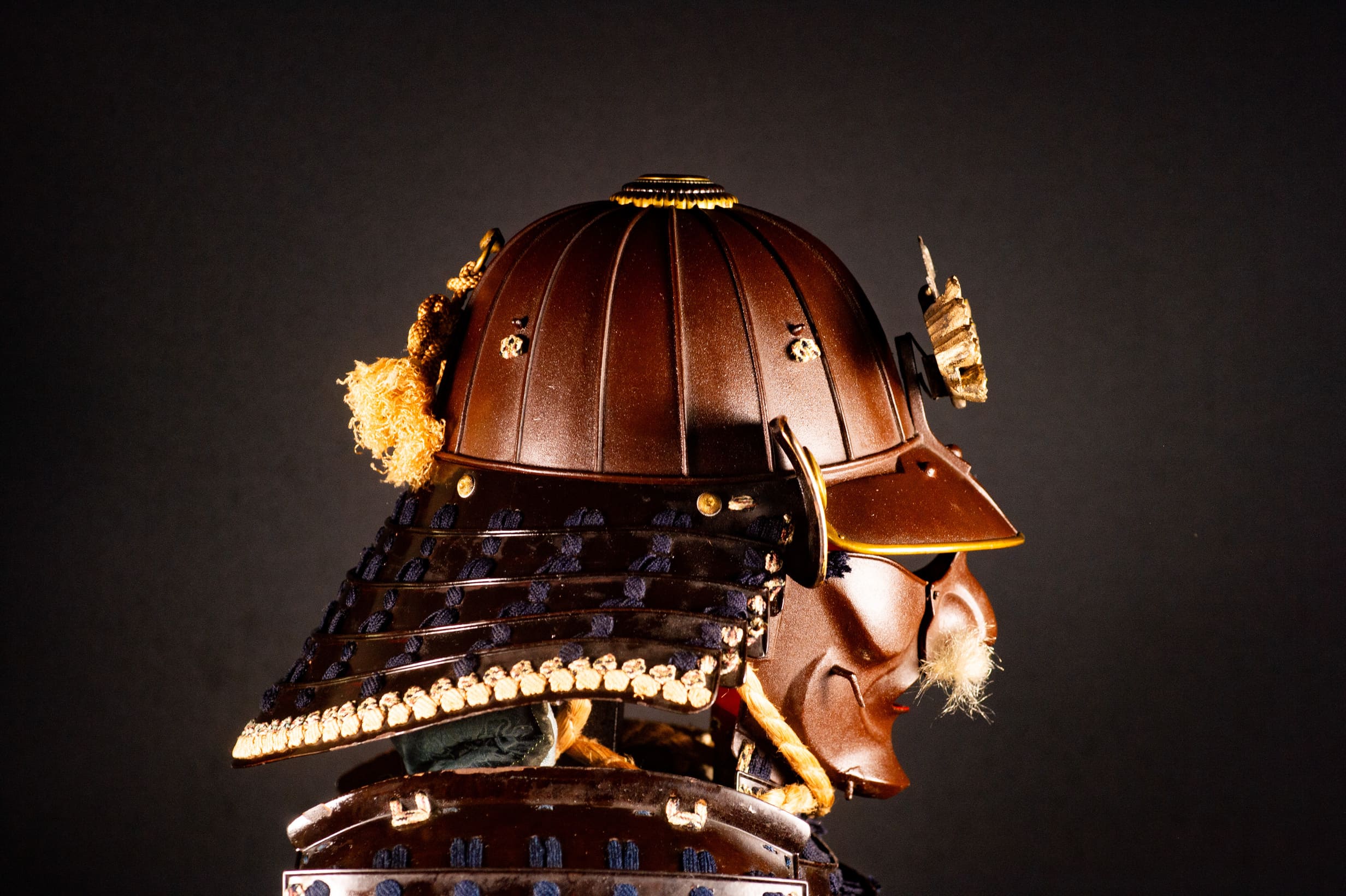
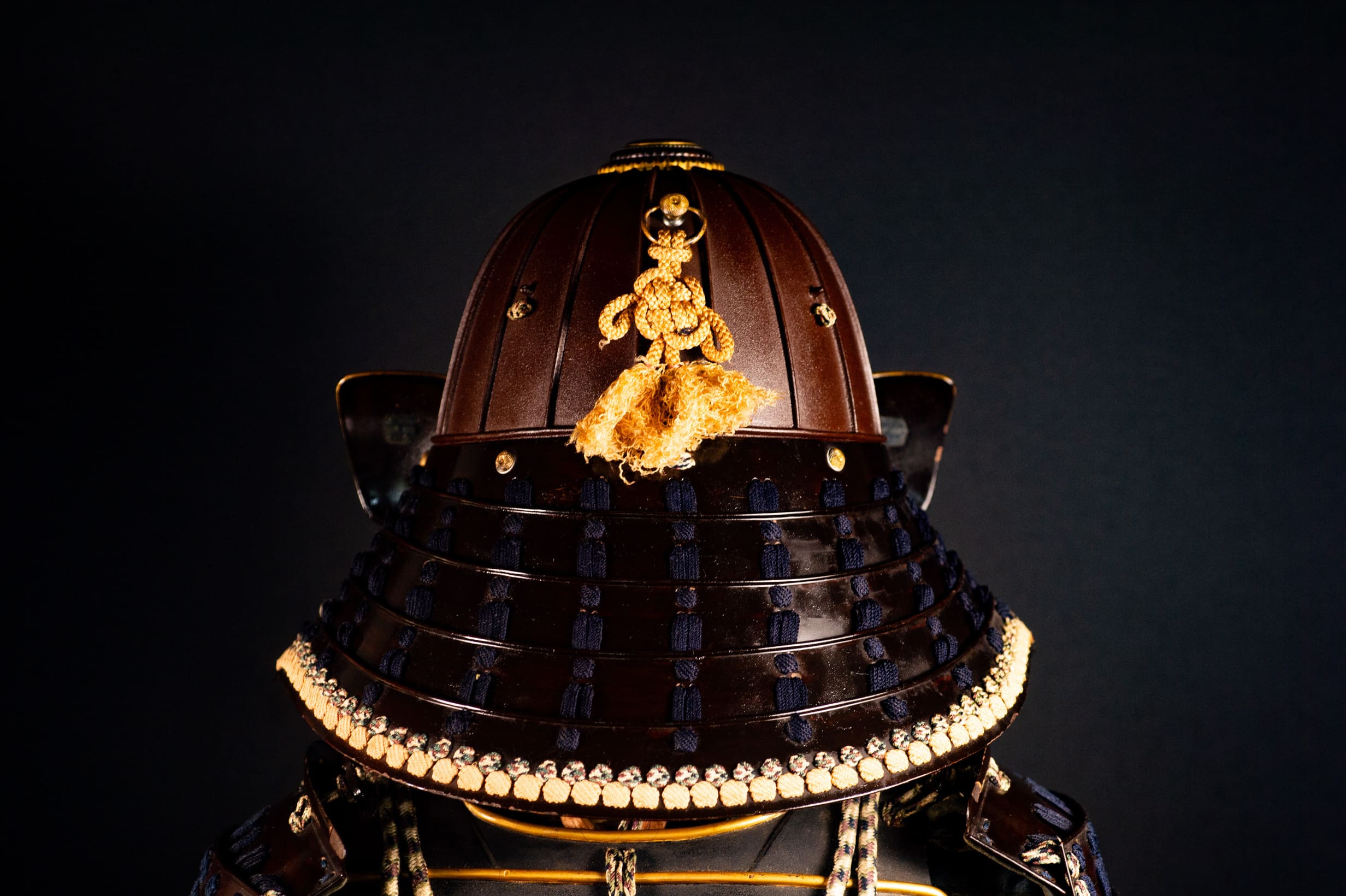
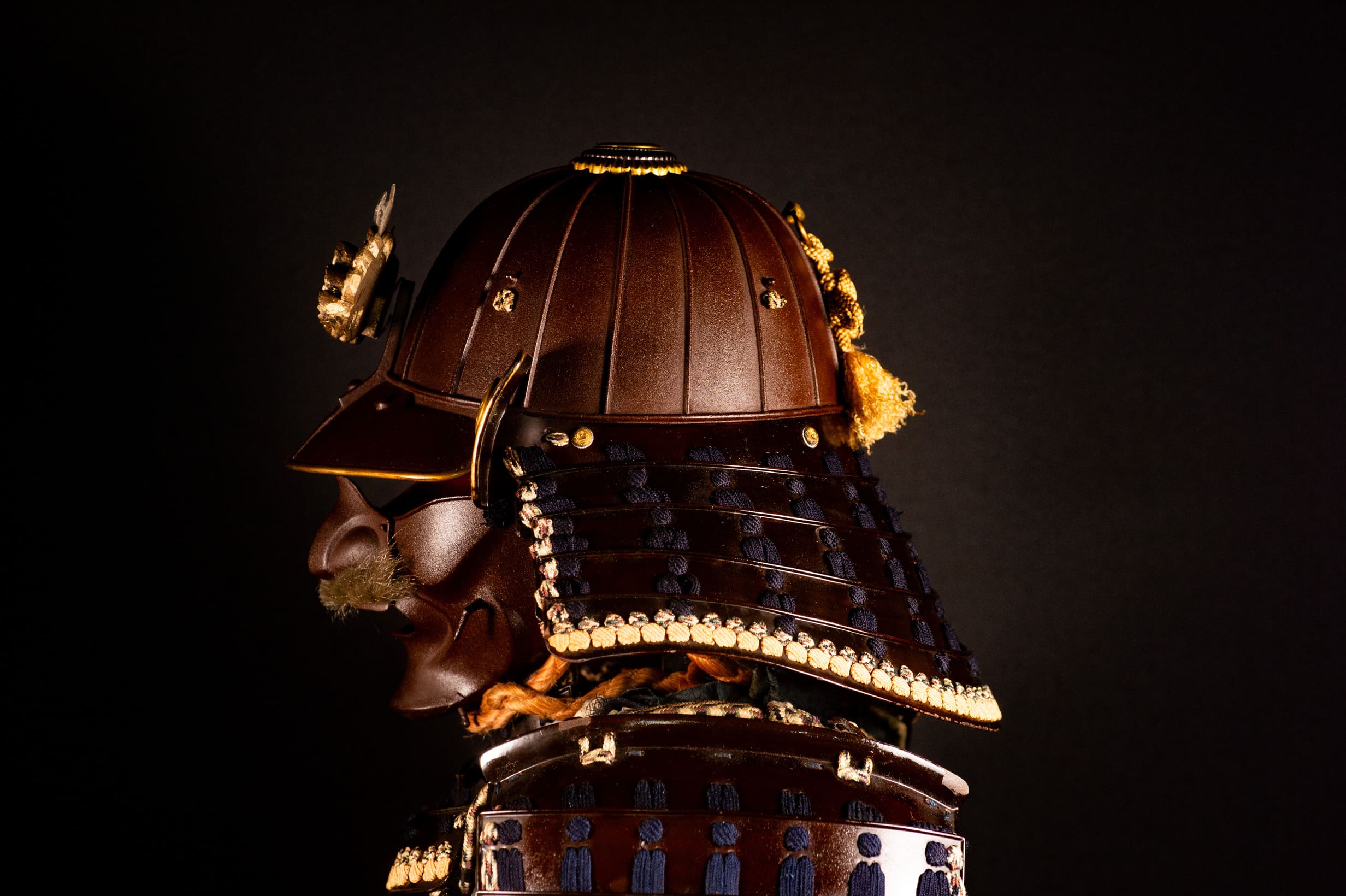
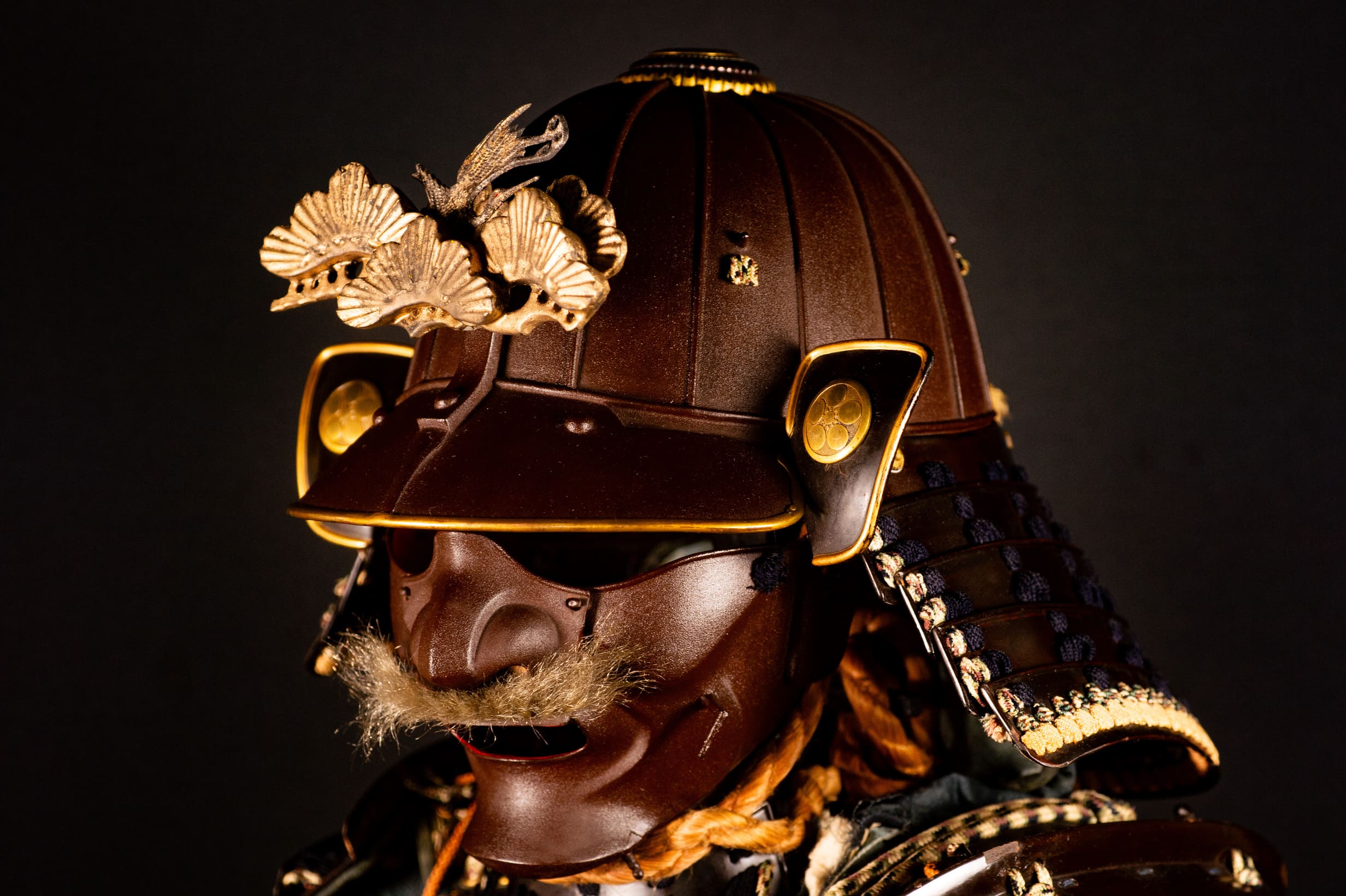
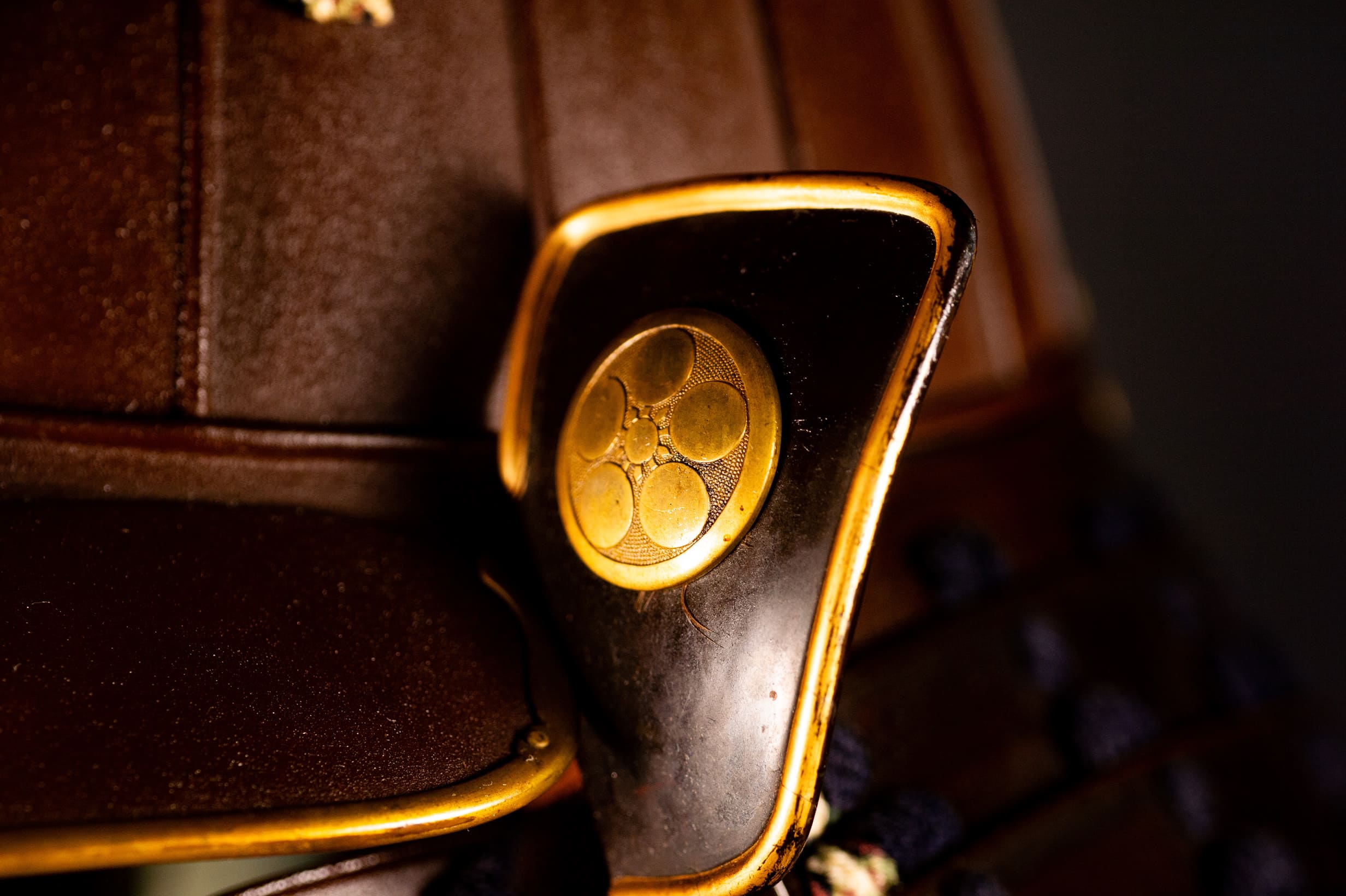
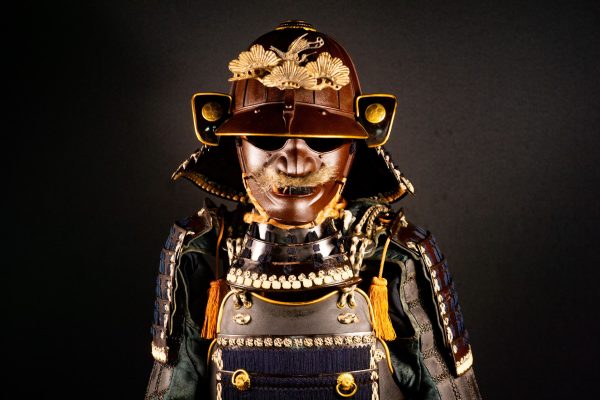
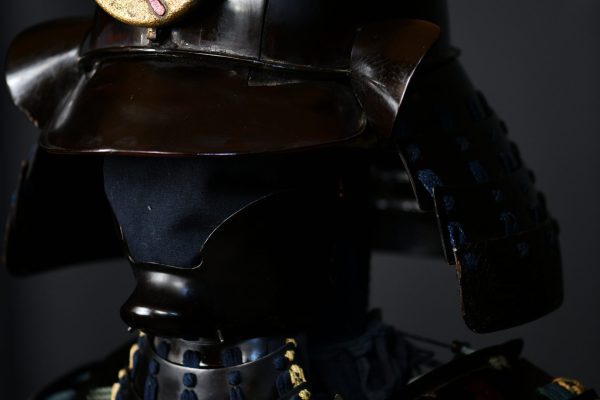
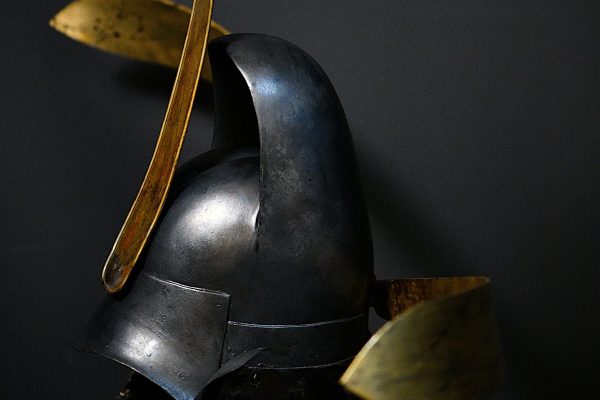
The helmet is a ridged multi-plate bowl (suji-bachi) of fine line, lacquered in a lustrous chestnut-russet that catches the light along every rib. It is fitted with a boldly upswept peak (mabizashi) and squared turnbacks (fukigaeshi) applied with gilt clan crests, the whole crowned at the apex by a chased gilt fitting (tehen kanamono).
Surmounting the brow is the armour’s crowning glory: a gilt-metal crest (maedate) modelled with great delicacy as windswept pine boughs alighted upon by a crane in flight — a pairing rich in auspicious meaning, the pine for endurance and constancy, the crane for longevity and noble bearing.
The Face Defence (Mengu)
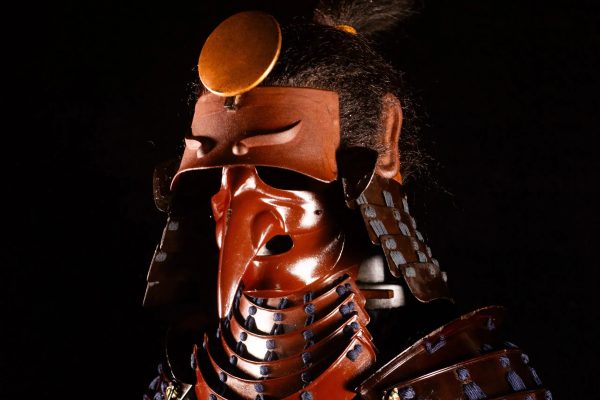
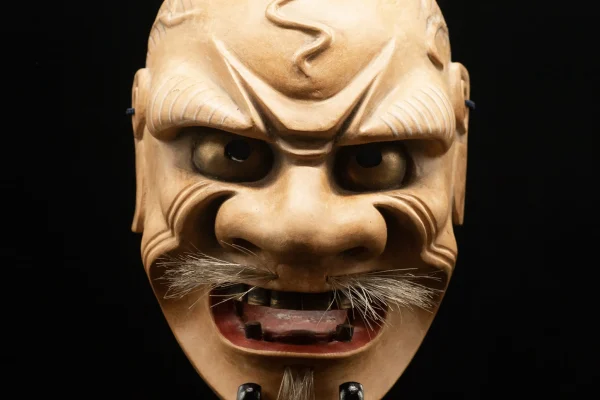
The face defence is a half-mask of russet-lacquered iron, modelled — most unusually and most appealingly — with a composed, faintly smiling countenance rather than the snarling ferocity of the common type.
It is the face of a commander who need not threaten to be obeyed.
The upper lip is dressed with a tuft of natural hair and the mouth picked out within in red lacquer, a touch of life against the dark metal.
The Cuirass (Dō)
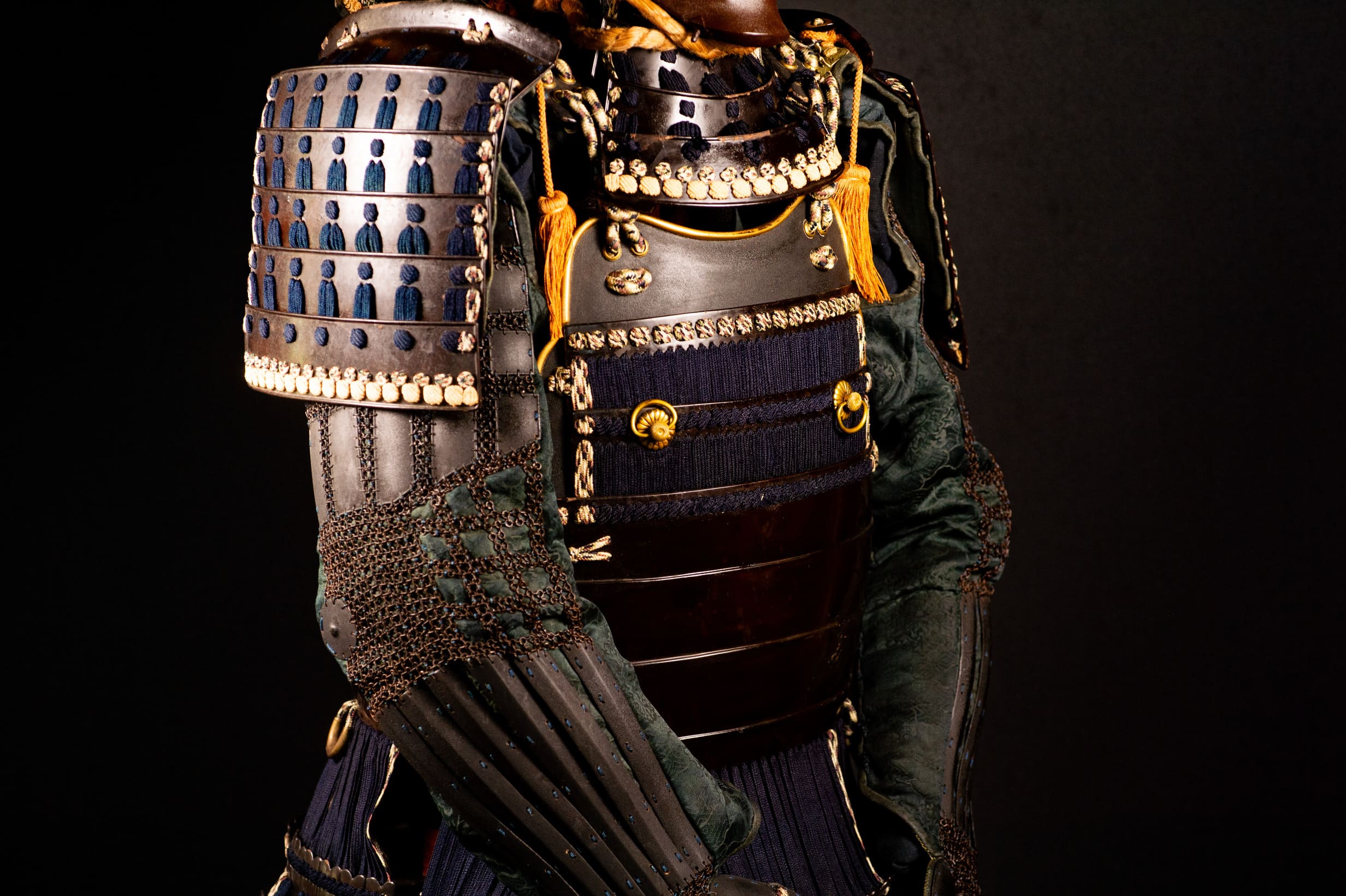
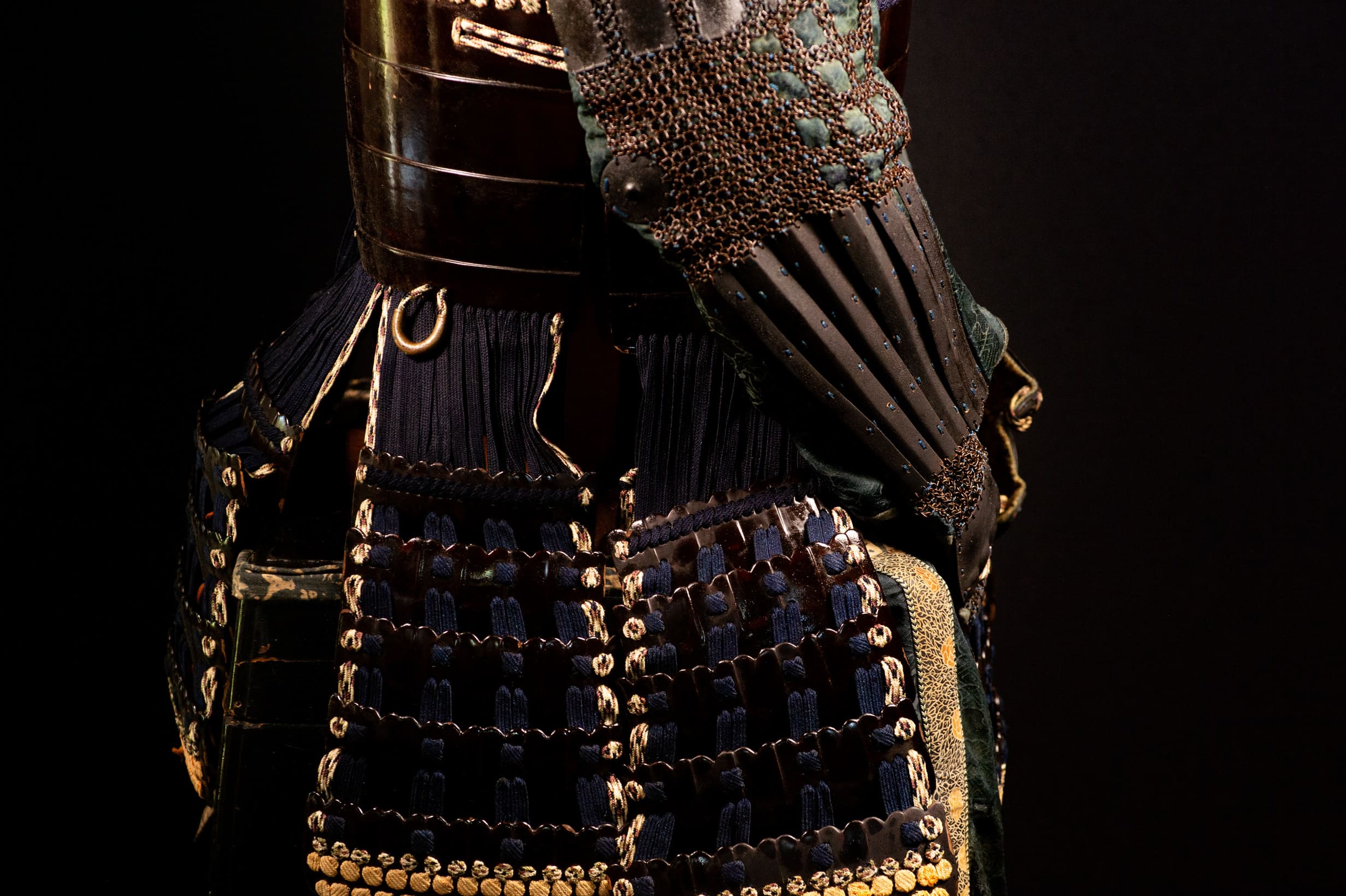
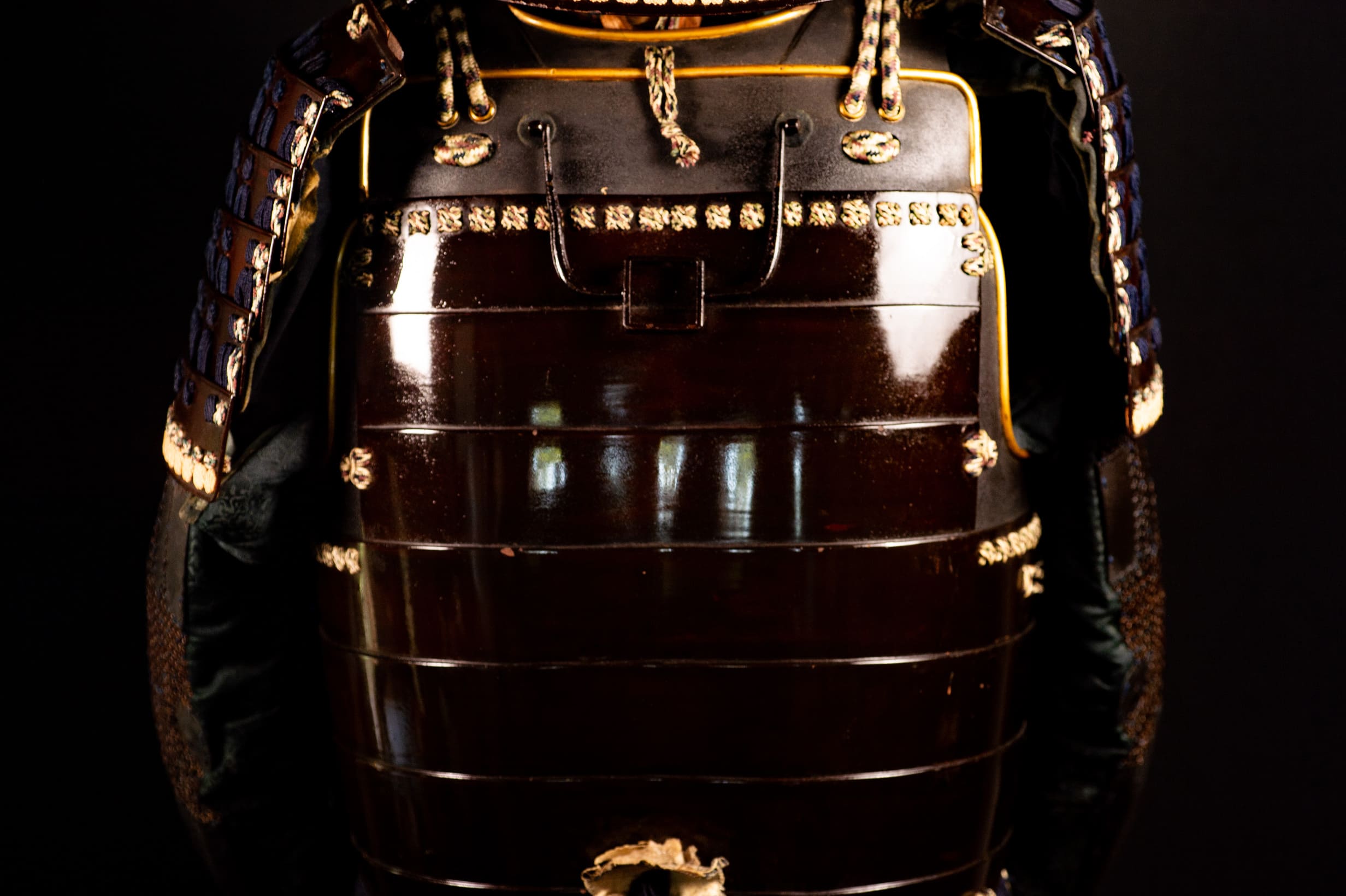
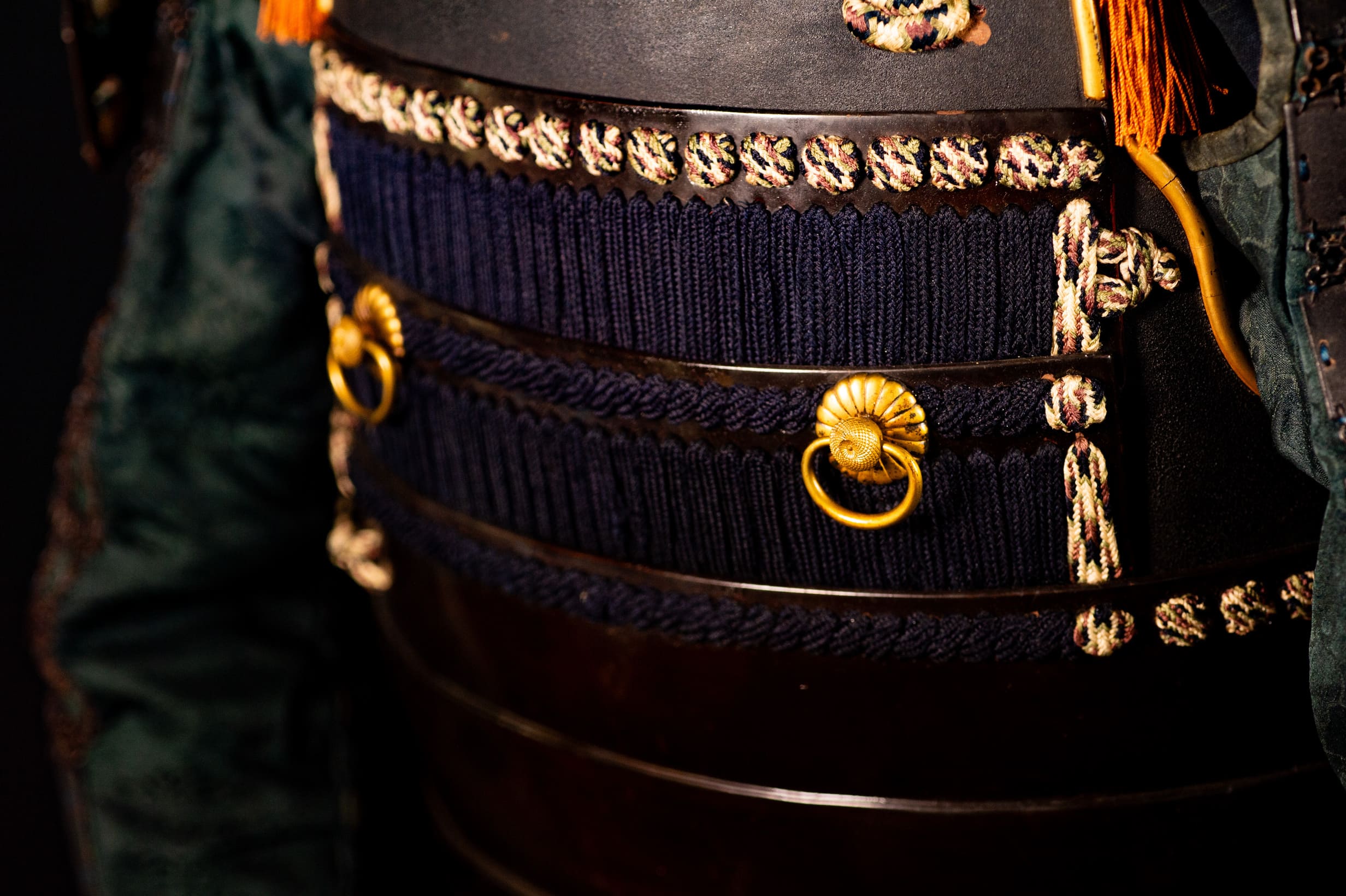
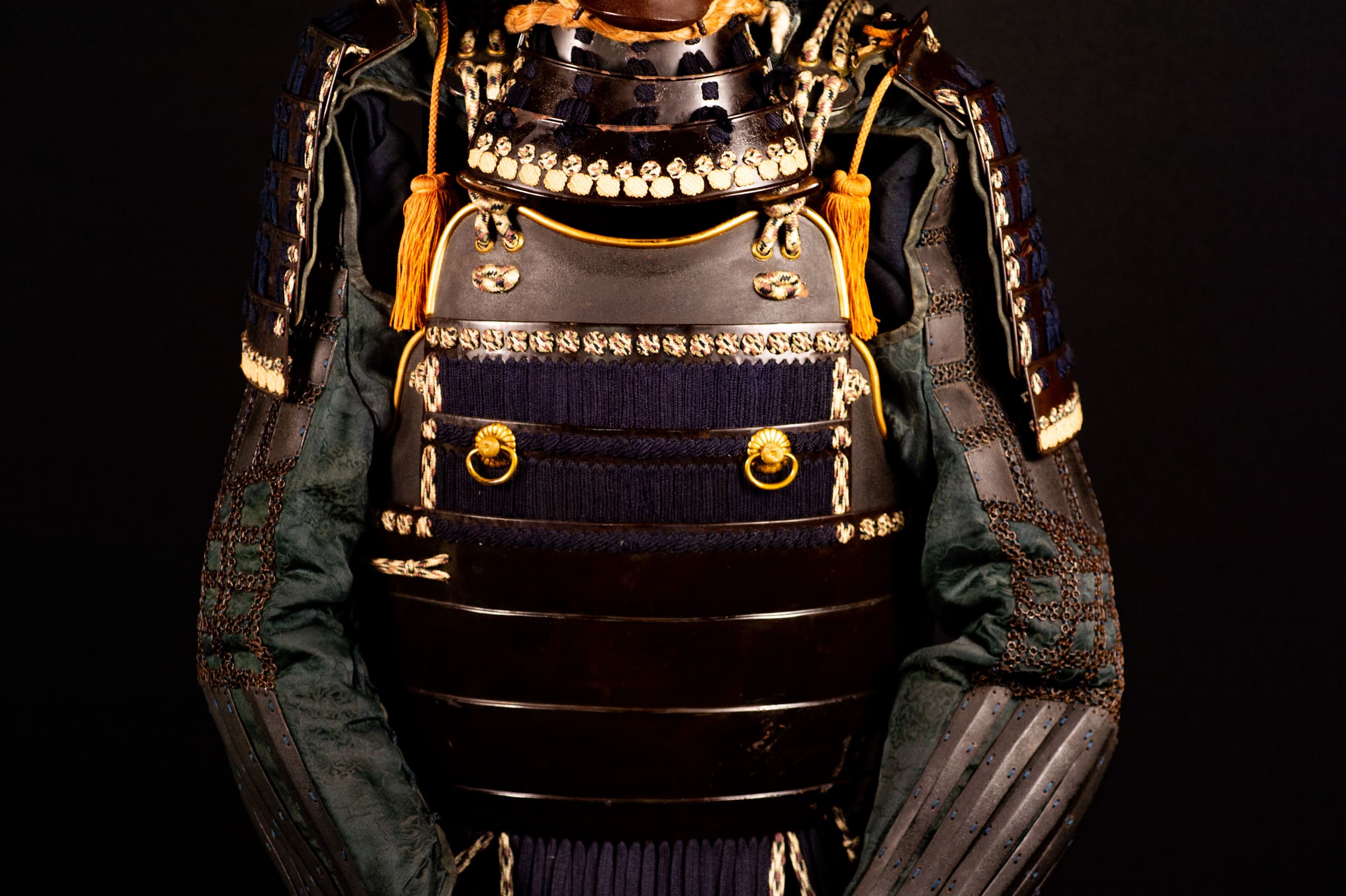
The cuirass is of handsome okegawa-dō form, built of broad horizontal plates of smoothly lacquered iron raised to a flawless barrel profile — a construction prized in its day for combining true protective strength with a clean, sculptural silhouette.
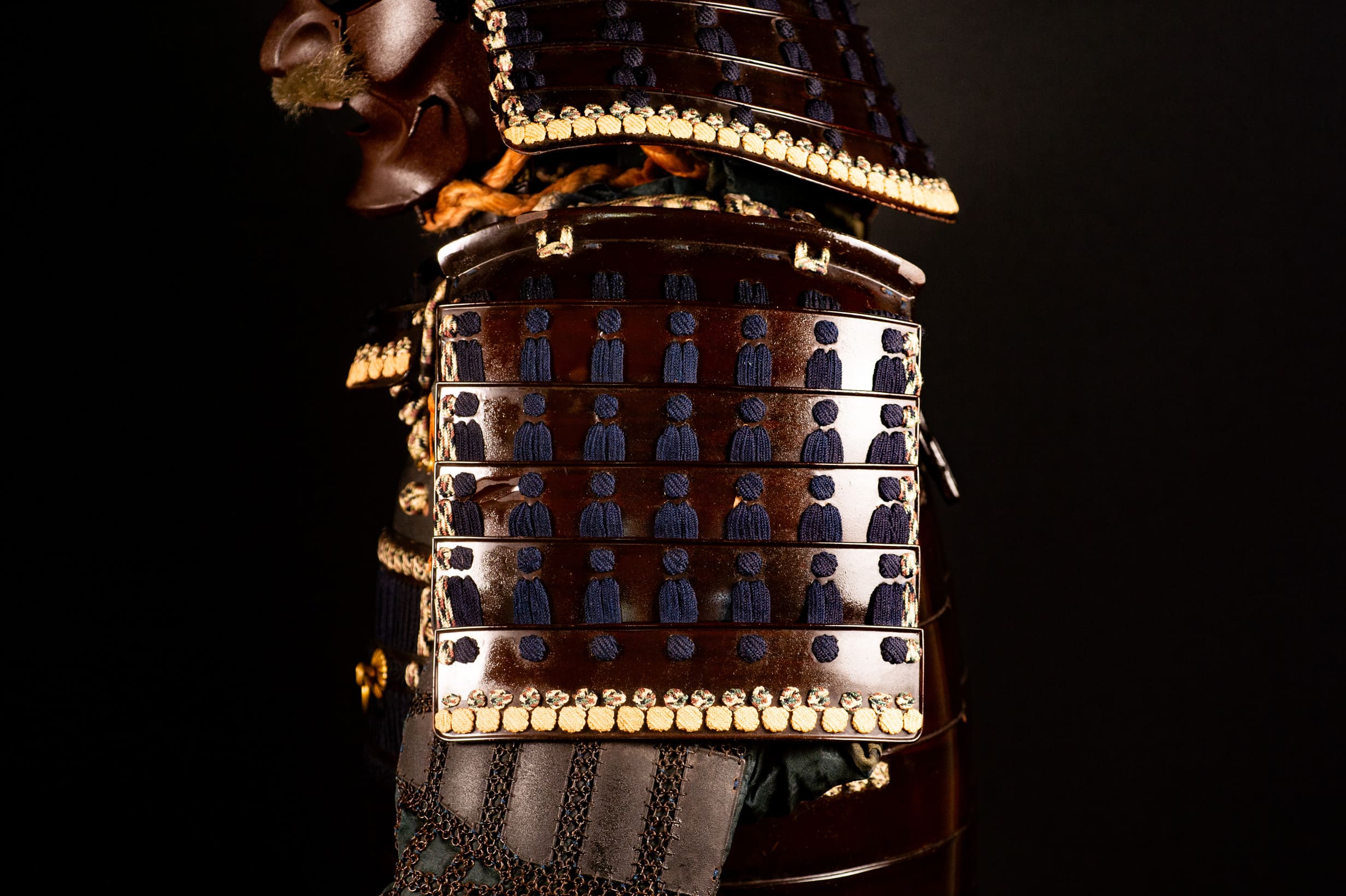
The plate joins are concealed beneath crisp navy braid and edged throughout with polychrome knotwork of considerable refinement. The breast is mounted with gilt suspension rings and chrysanthemum-form bosses (kan and za), and dressed with generous agemaki bows of brilliant orange silk.
Additional Elements
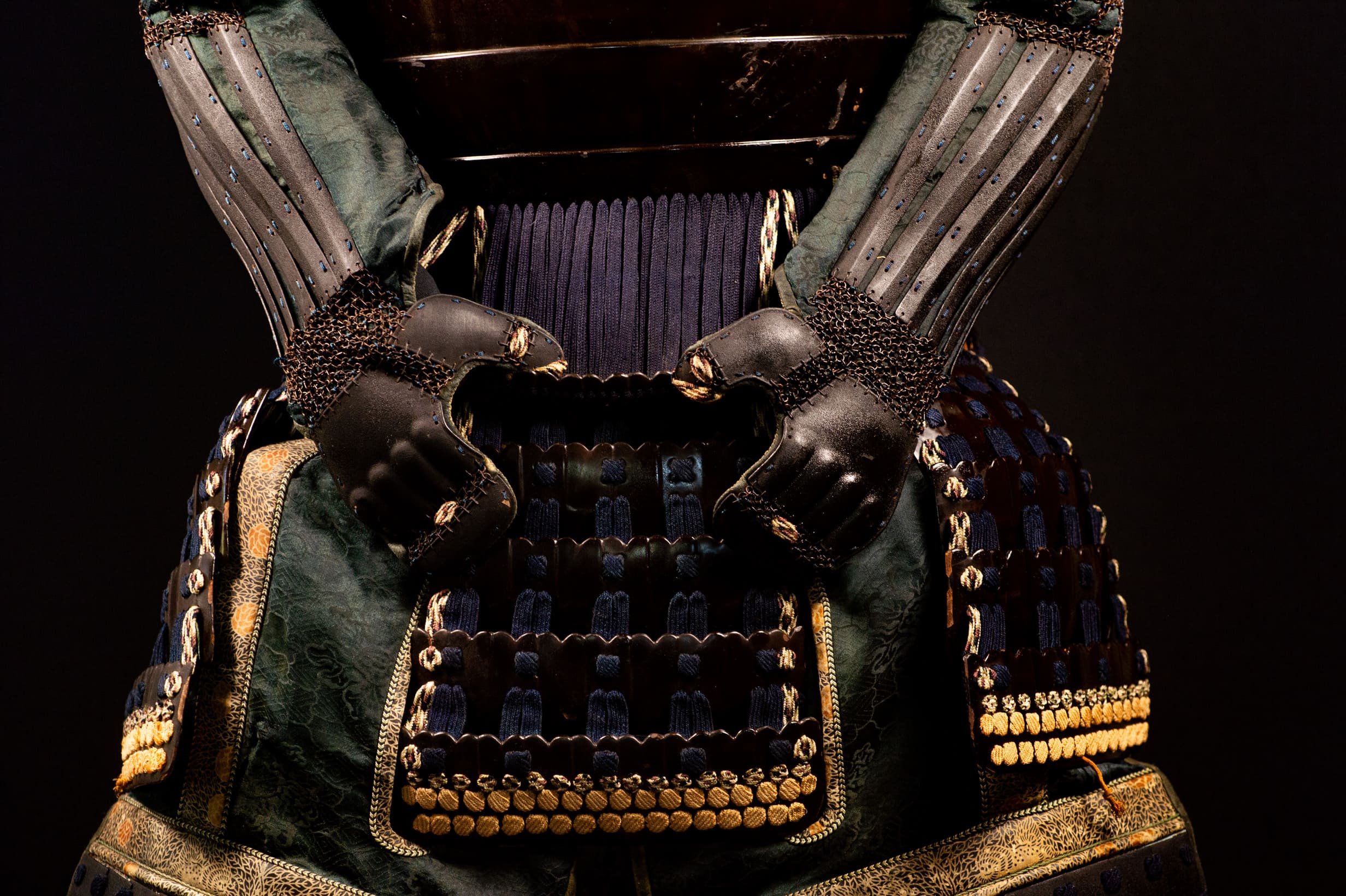
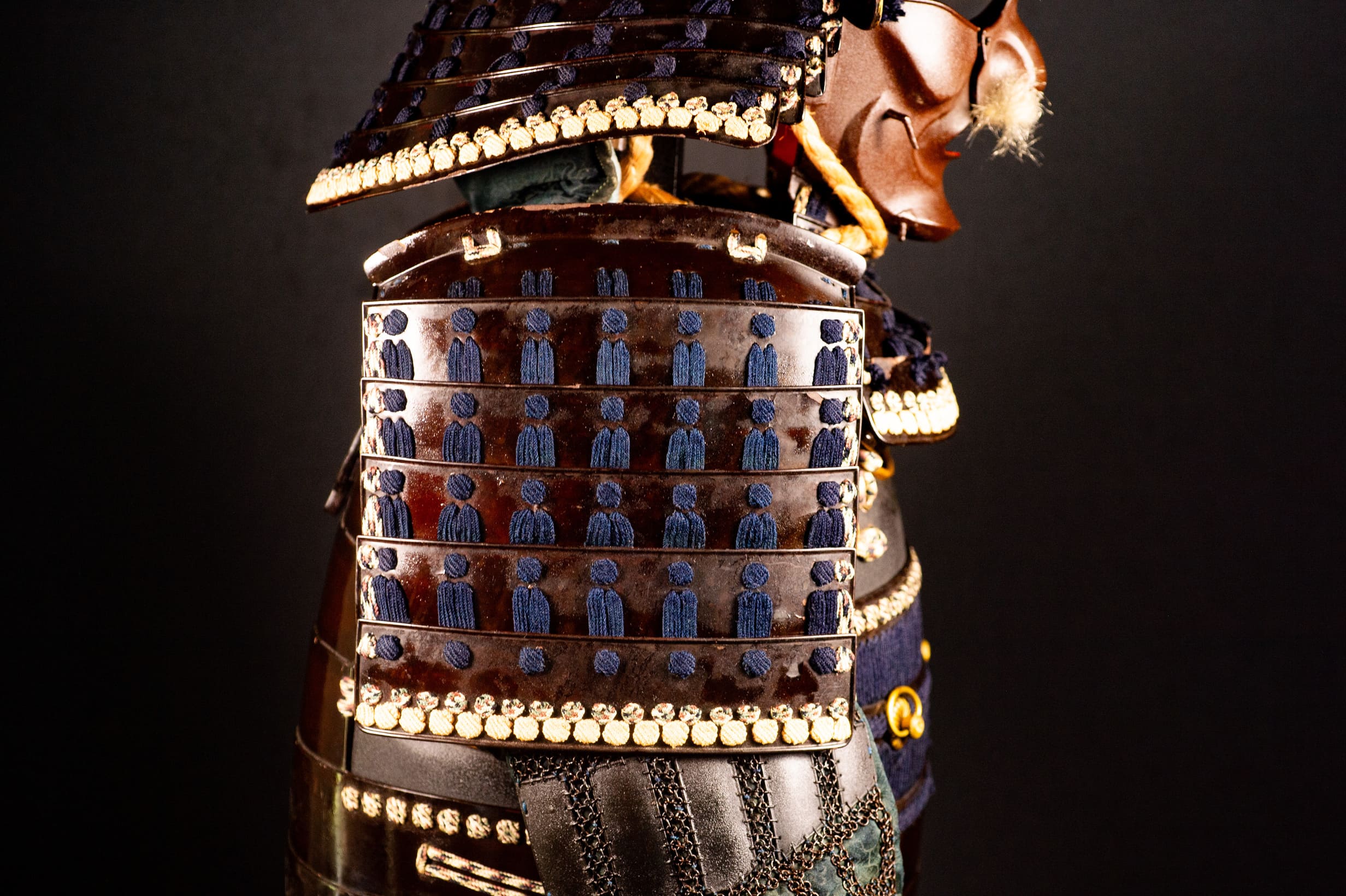
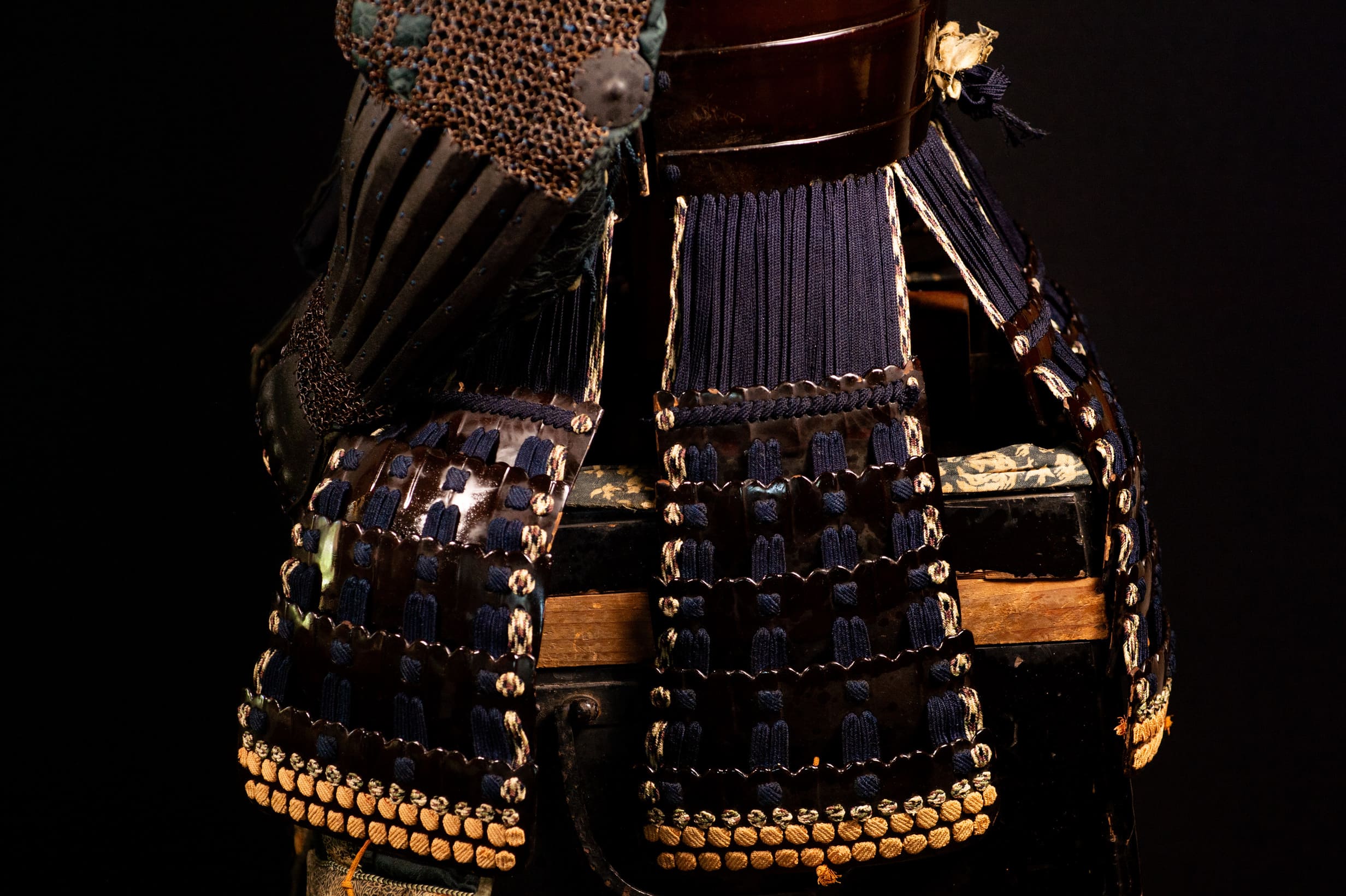
The armour is completed by large rectangular shoulder-guards (sode) and finely articulated arm-defences (kote) of lacquered plates worked over mail, mounted upon a luxurious foundation of green figured silk.
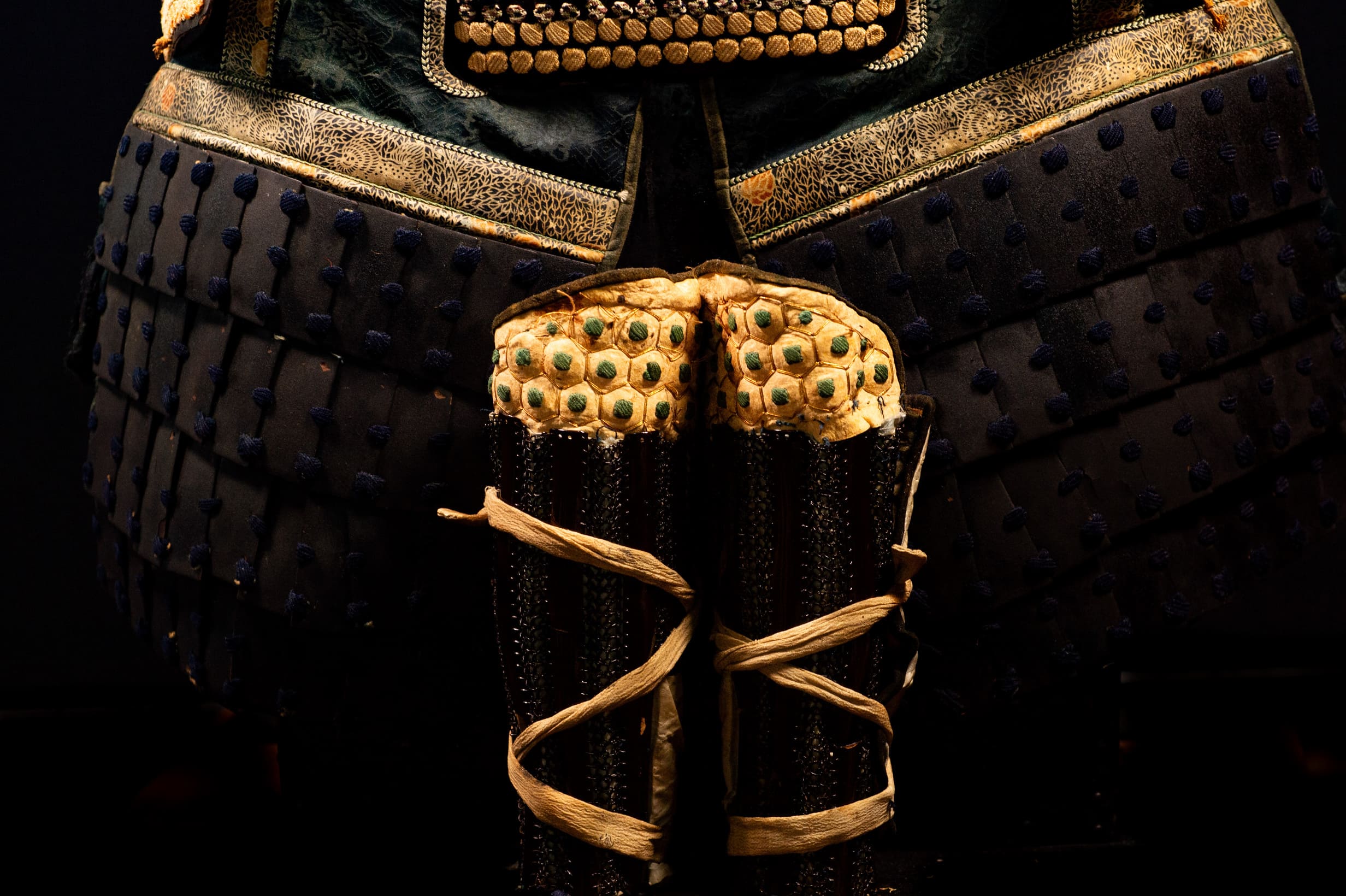
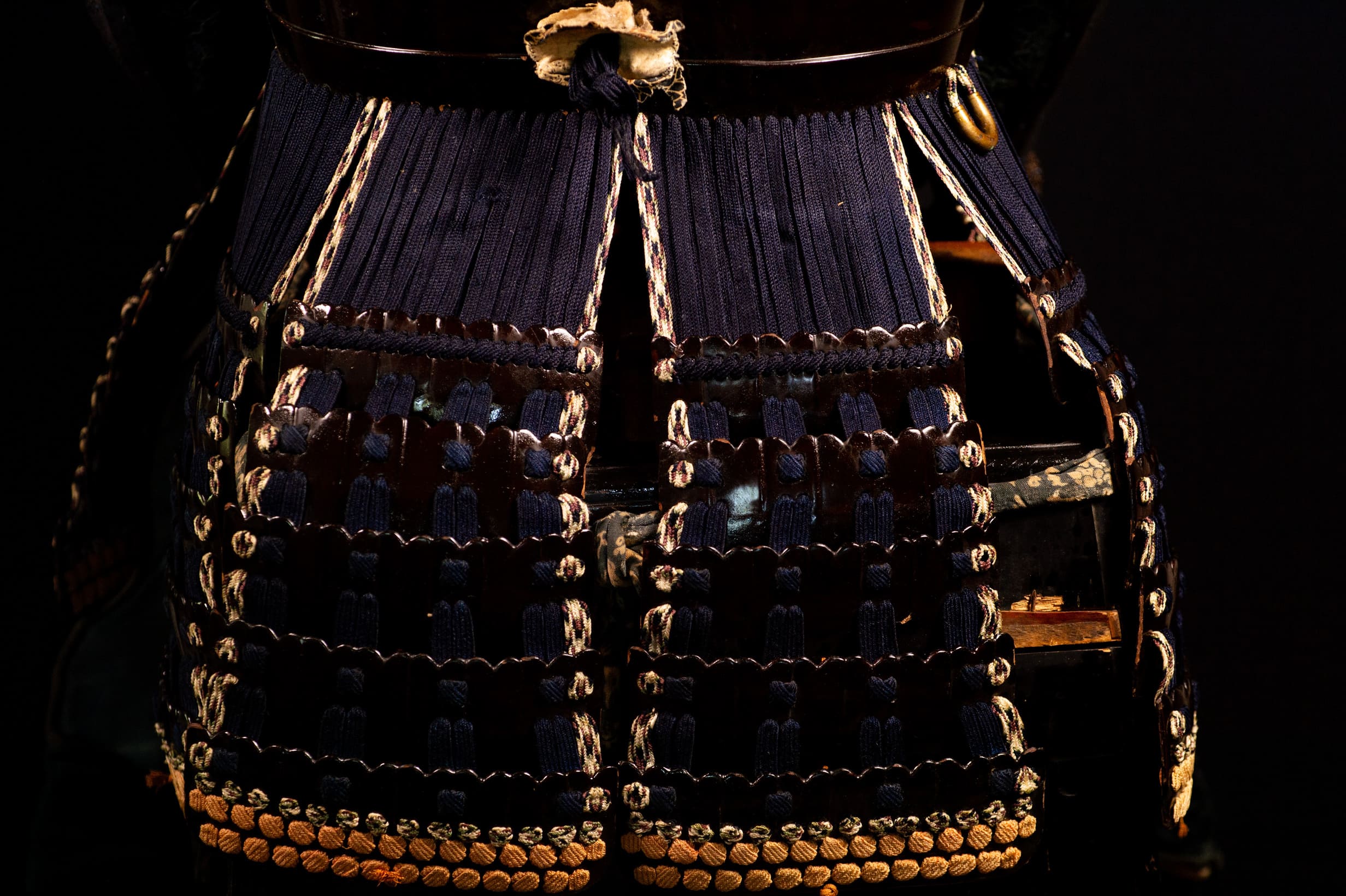
The thigh-guards (haidate) are faced with a hexagonal-patterned brigandine textile. Throughout, the gilt tomoe crest recurs upon helmet and fittings, binding the ensemble together as the unified expression of a single house.
A harness of genuine quality and harmonious assembly, its components speaking with one voice — an imposing and eminently displayable example of the armourer’s art at its most assured.