Documentation
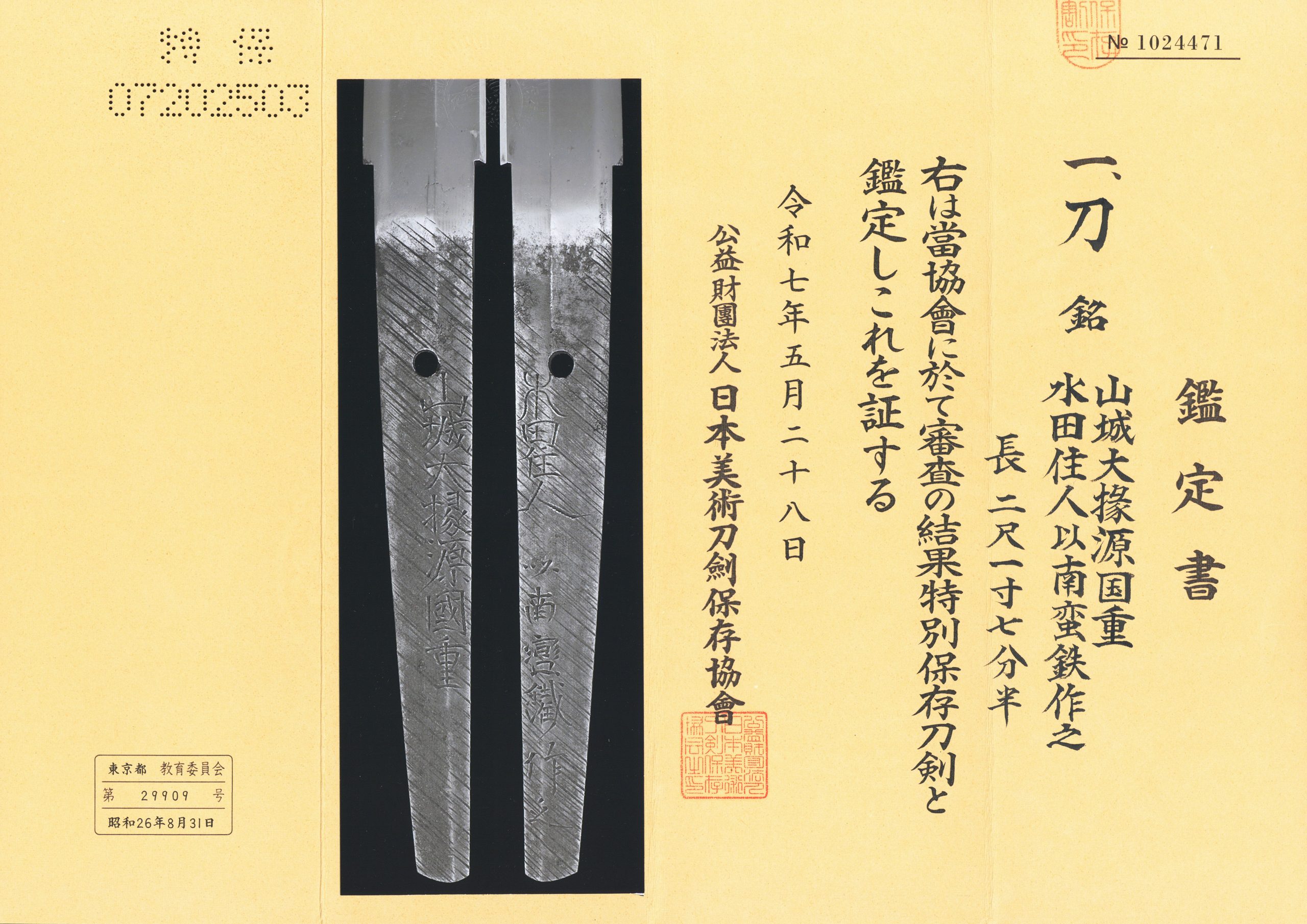
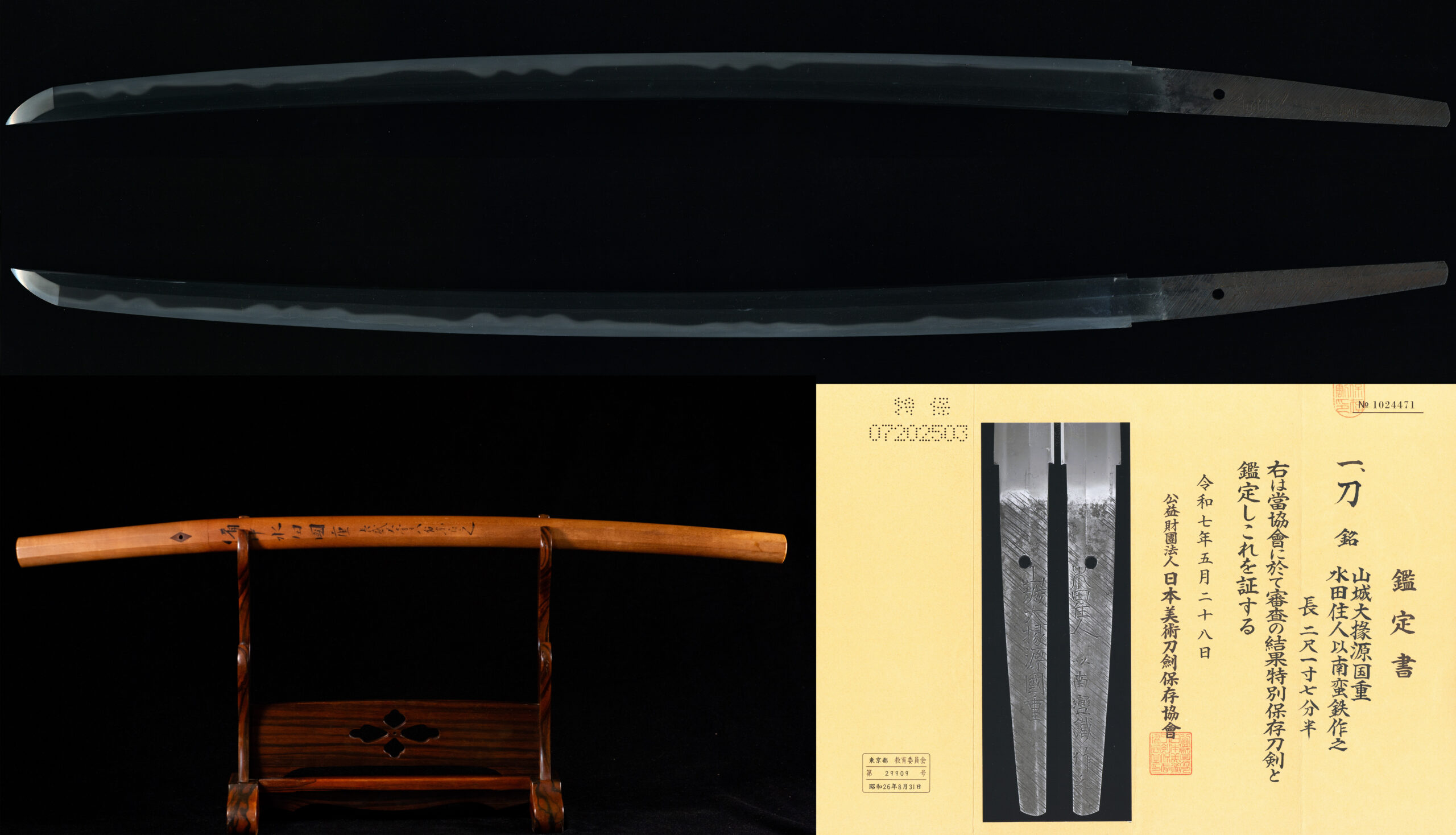
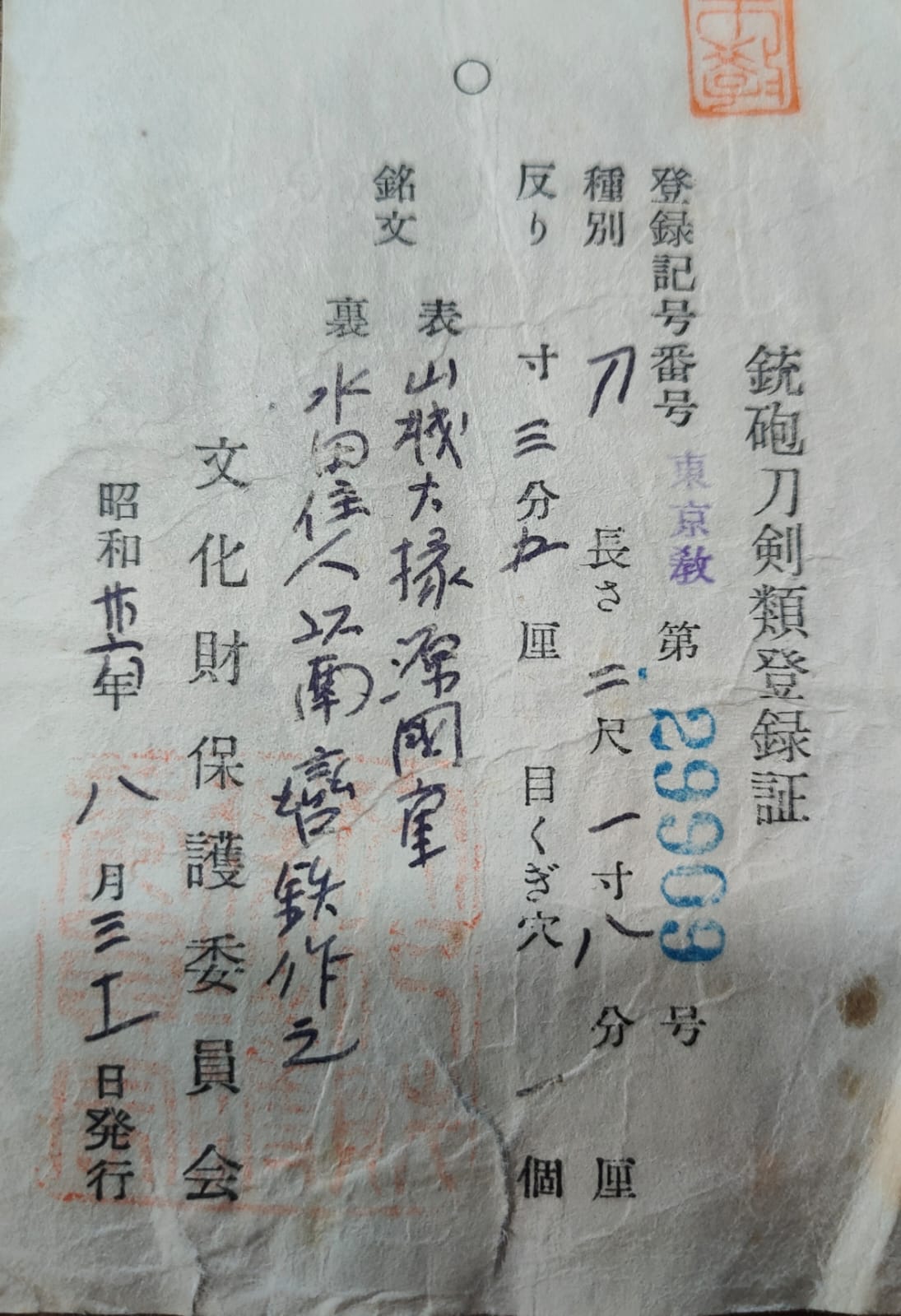
1) NBTHK Certificate (刀剣鑑定書 / “Sword Appraisal Certificate”)
-
Heading: 刀 鑑定書
Translation: Katana — Appraisal Certificate
-
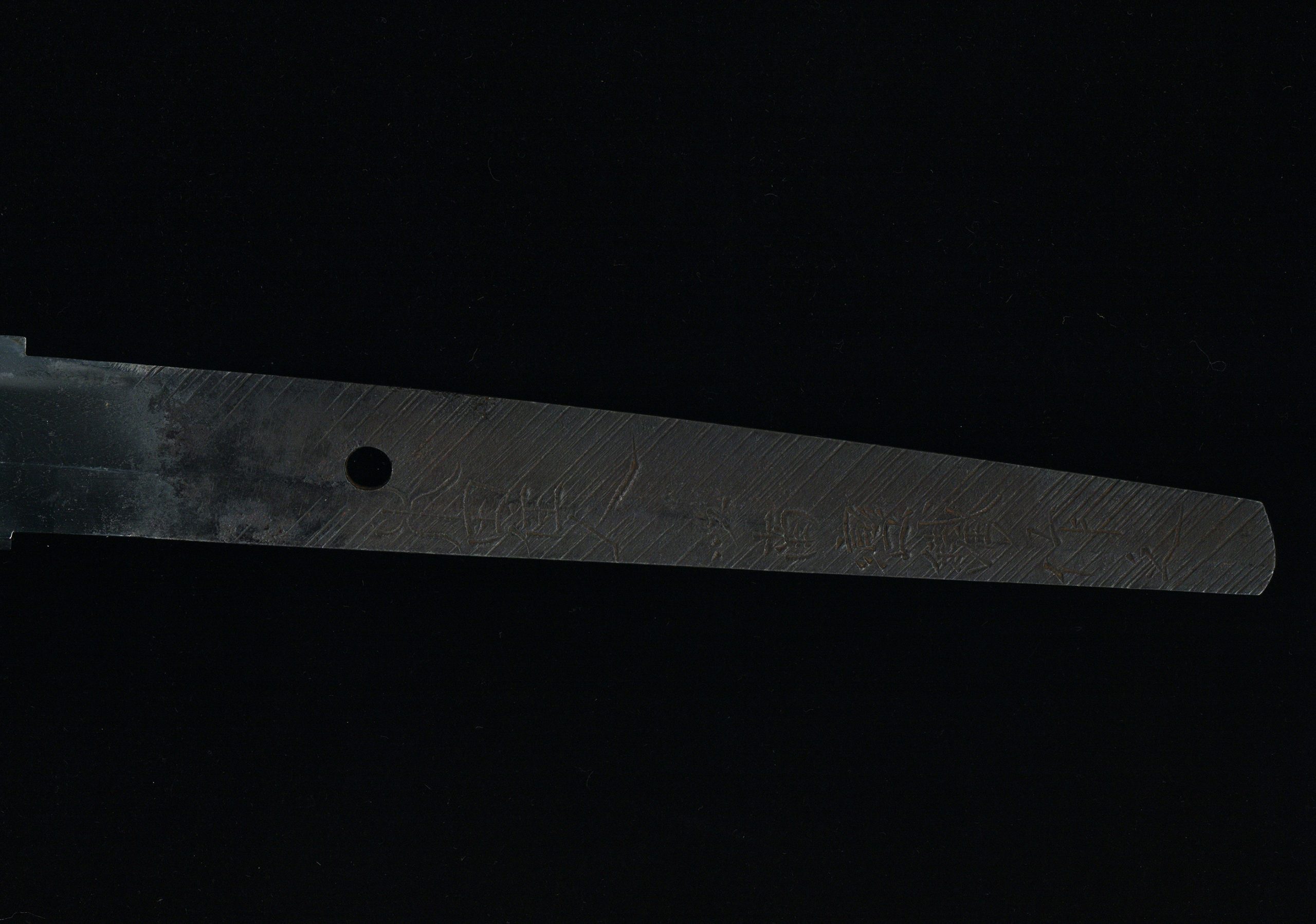
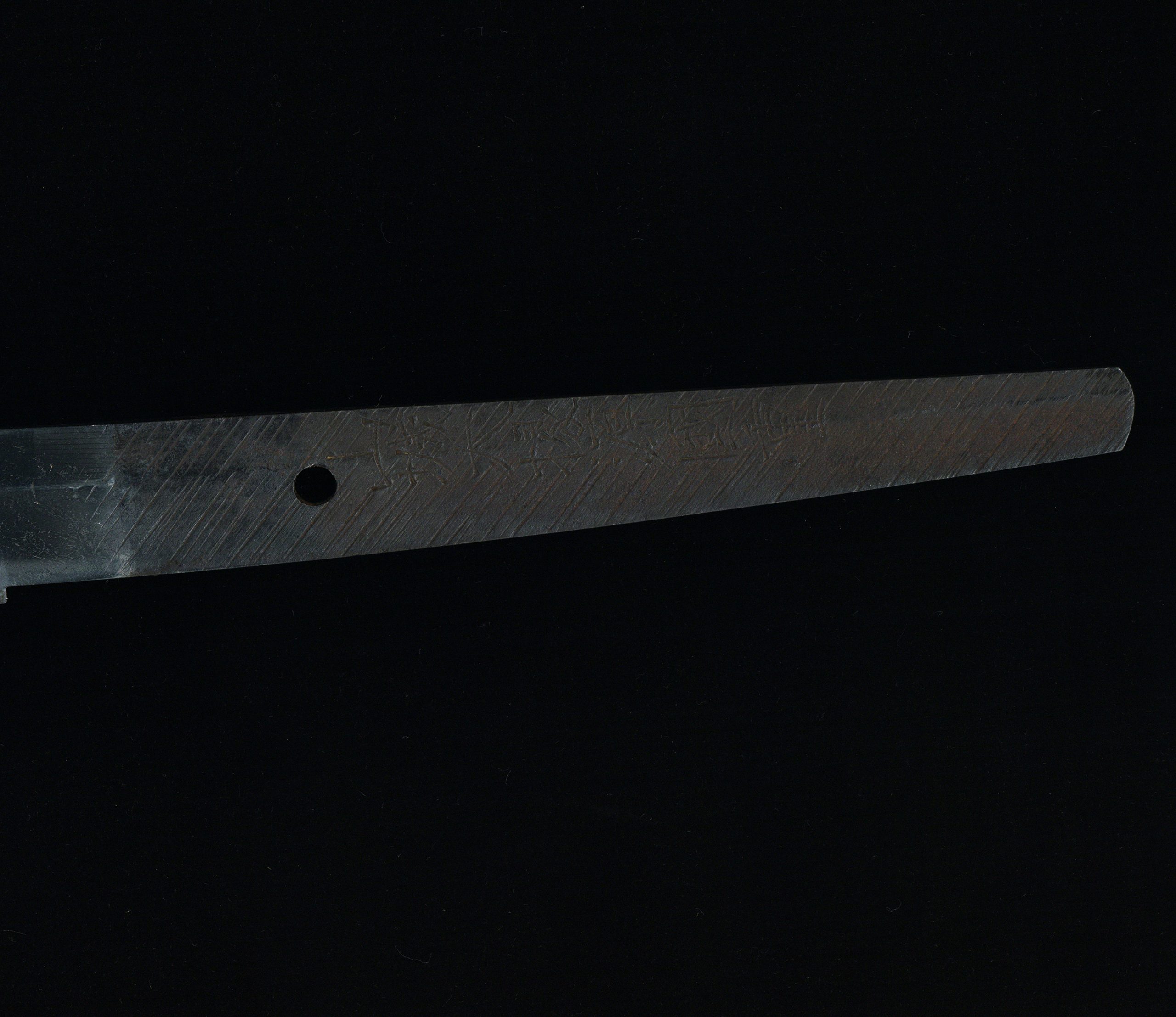
Mei: 山城大掾源国重
Translation: Inscription: Yamashiro Daijō Minamoto Kunishige
-
(Additional inscription): 水田住人以南蛮鉄作之
Translation: (Additional inscription): “Resident of Mizuta; made using nanban-tetsu (imported/‘western’ iron/steel)”
-
Length: 二尺二寸七分半
Translation: Length: 2 shaku 2 sun 7.5 bu (≈ 68.94 cm)
-
Text: 右は當協會に於て審査の結果特別保存刀剣と鑑定しこれを證する
Translation: The above item has been examined by this association and, as a result, is appraised as Tokubetsu Hozon Tōken (Especially Preserved Sword) and is hereby certified.
Smith, school, and context
The signature 山城大掾源国重 (Yamashiro Daijō Minamoto Kunishige) is commonly linked to the Mizuta lineage (備中水田), described in reference material and specialist trade sources as active in the early Shintō phase (Edo period). These sources also place the granting of the title “Yamashiro Daijō” for this Kunishige in Shōhō 2 (1645), and associate him with the “Edo Mizuta” designation.
The additional inscription 「以南蛮鉄作之」 is commercially and historically significant because it explicitly states the use of nanban-tetsu, imported iron/steel that some Edo-period smiths incorporated—often as a deliberate technical and prestige marker. (No guesswork here: it is recorded because it is literally present in the mei and in both documents).
Technical description of the blade
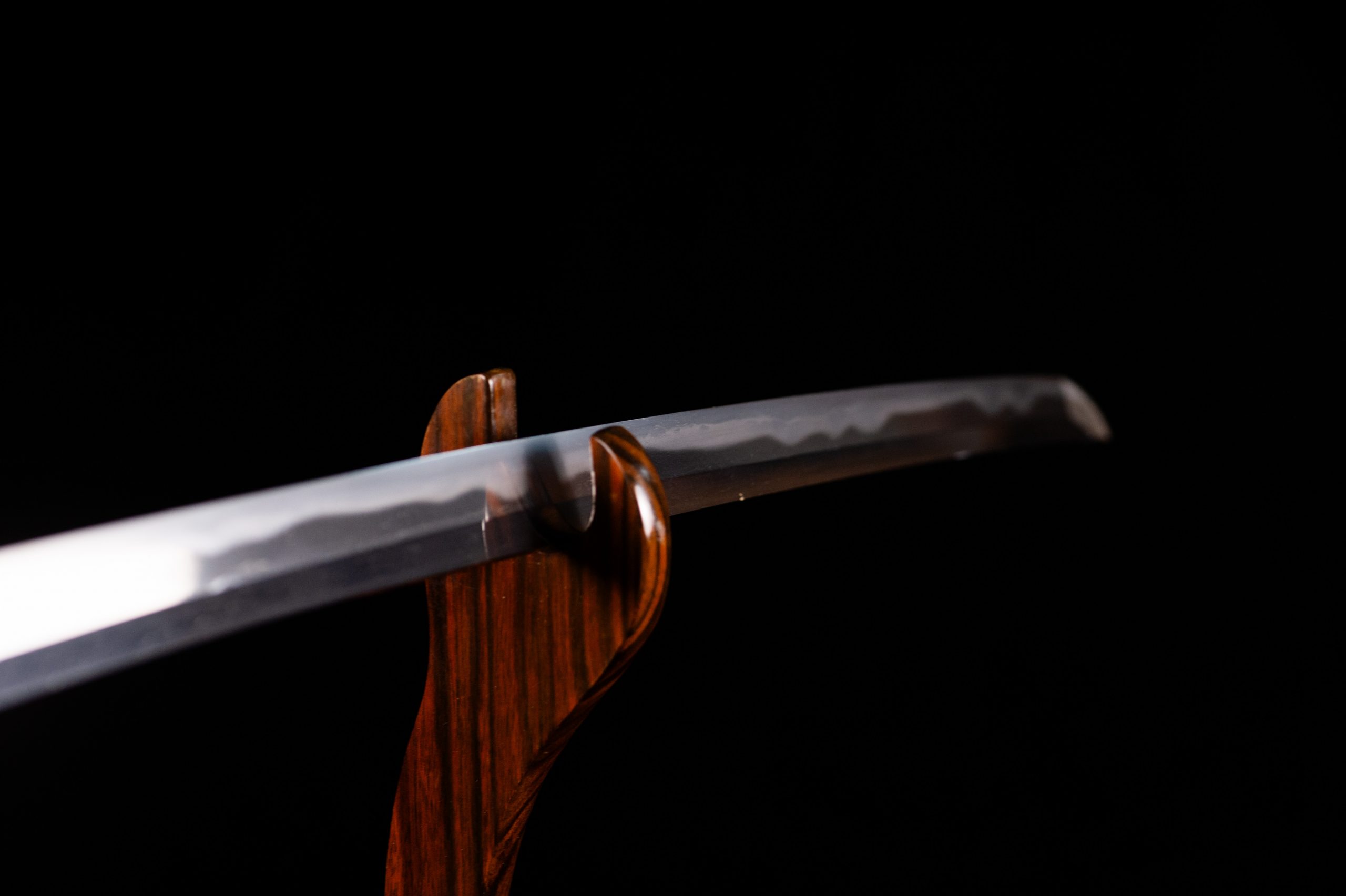
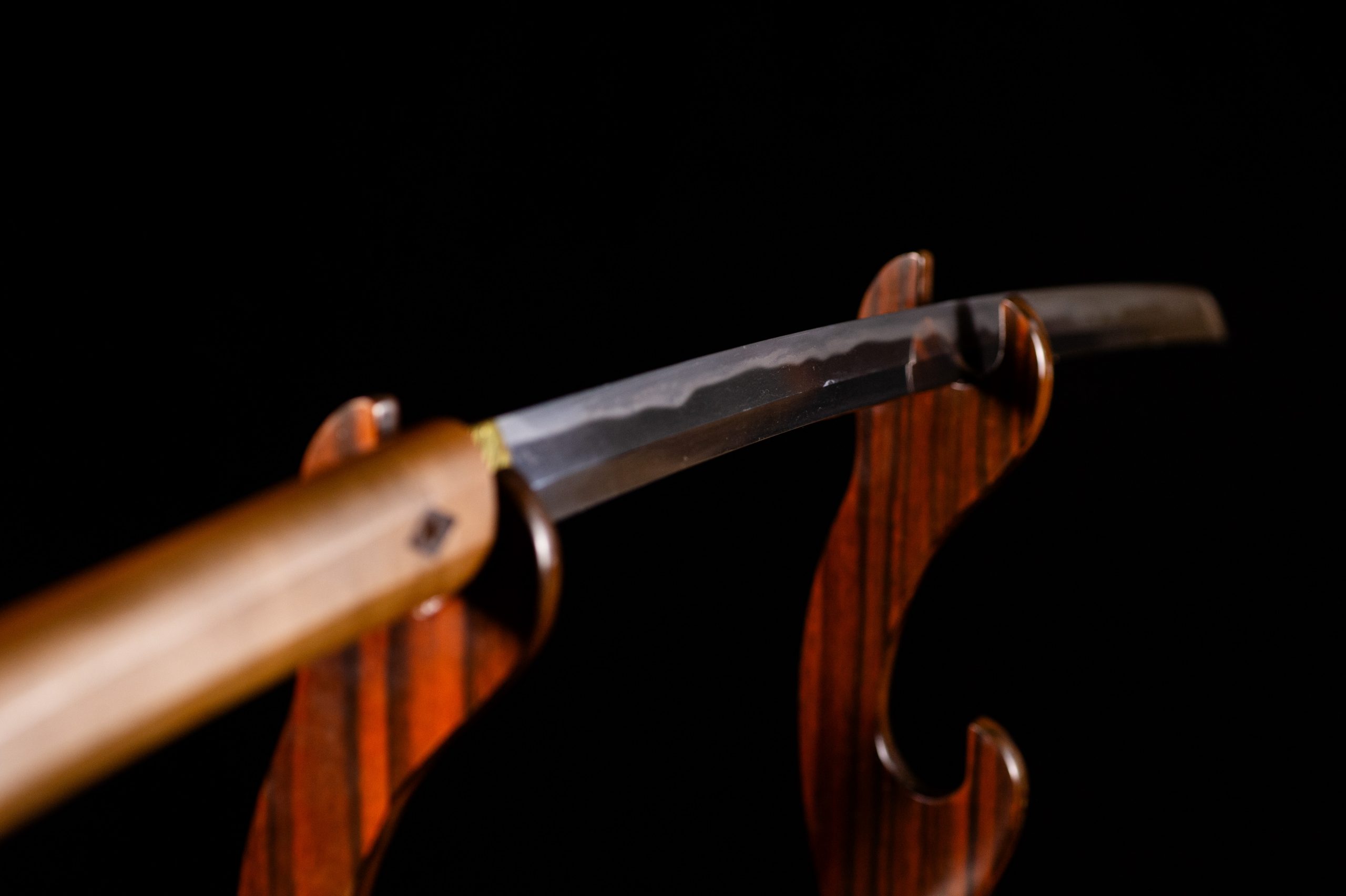
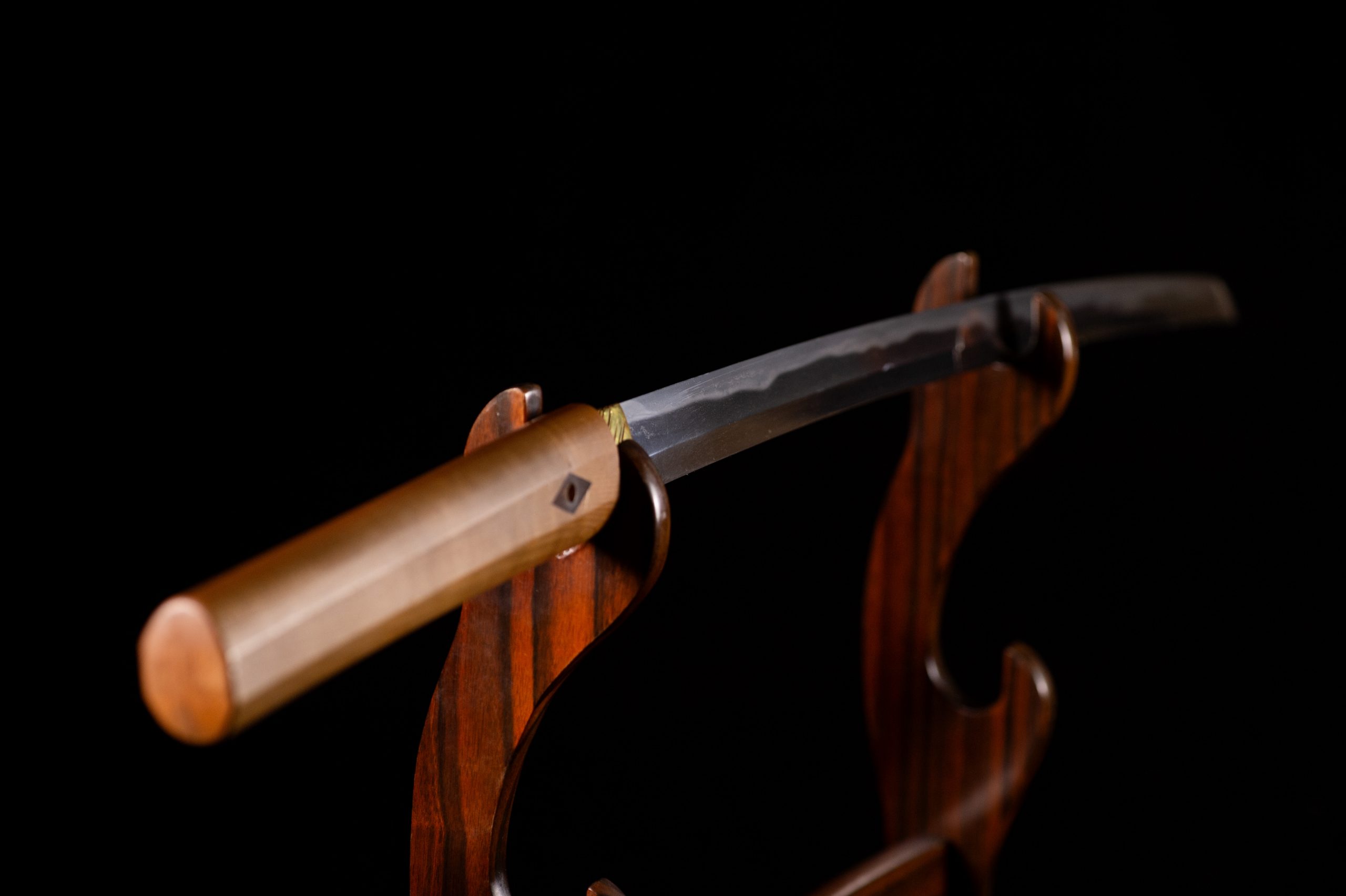
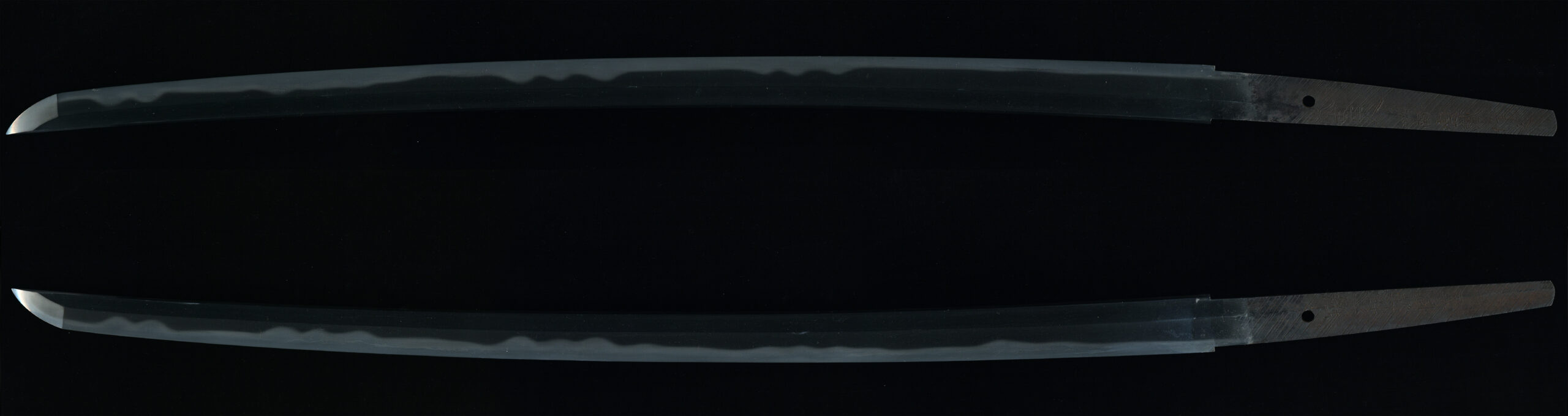
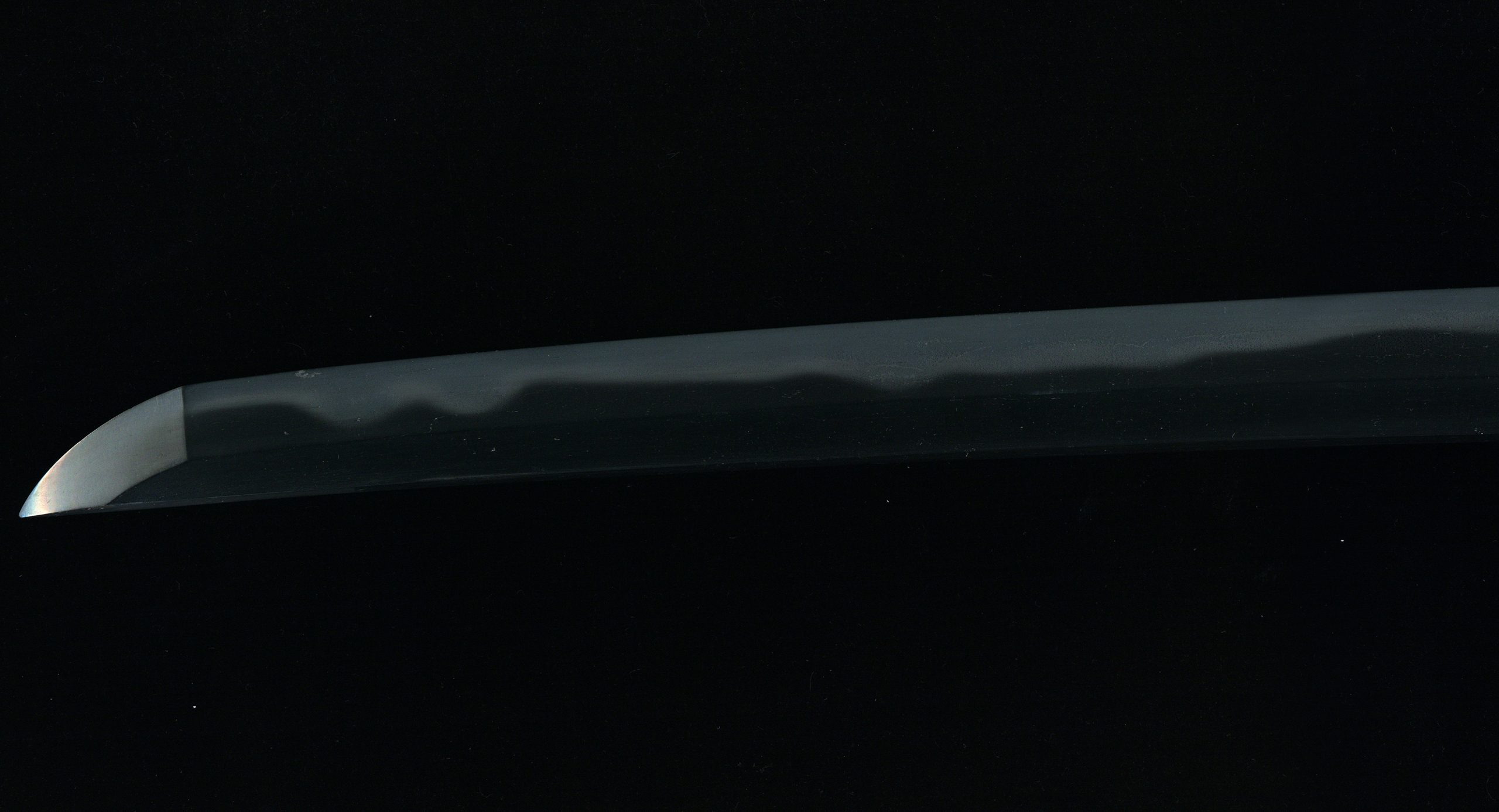
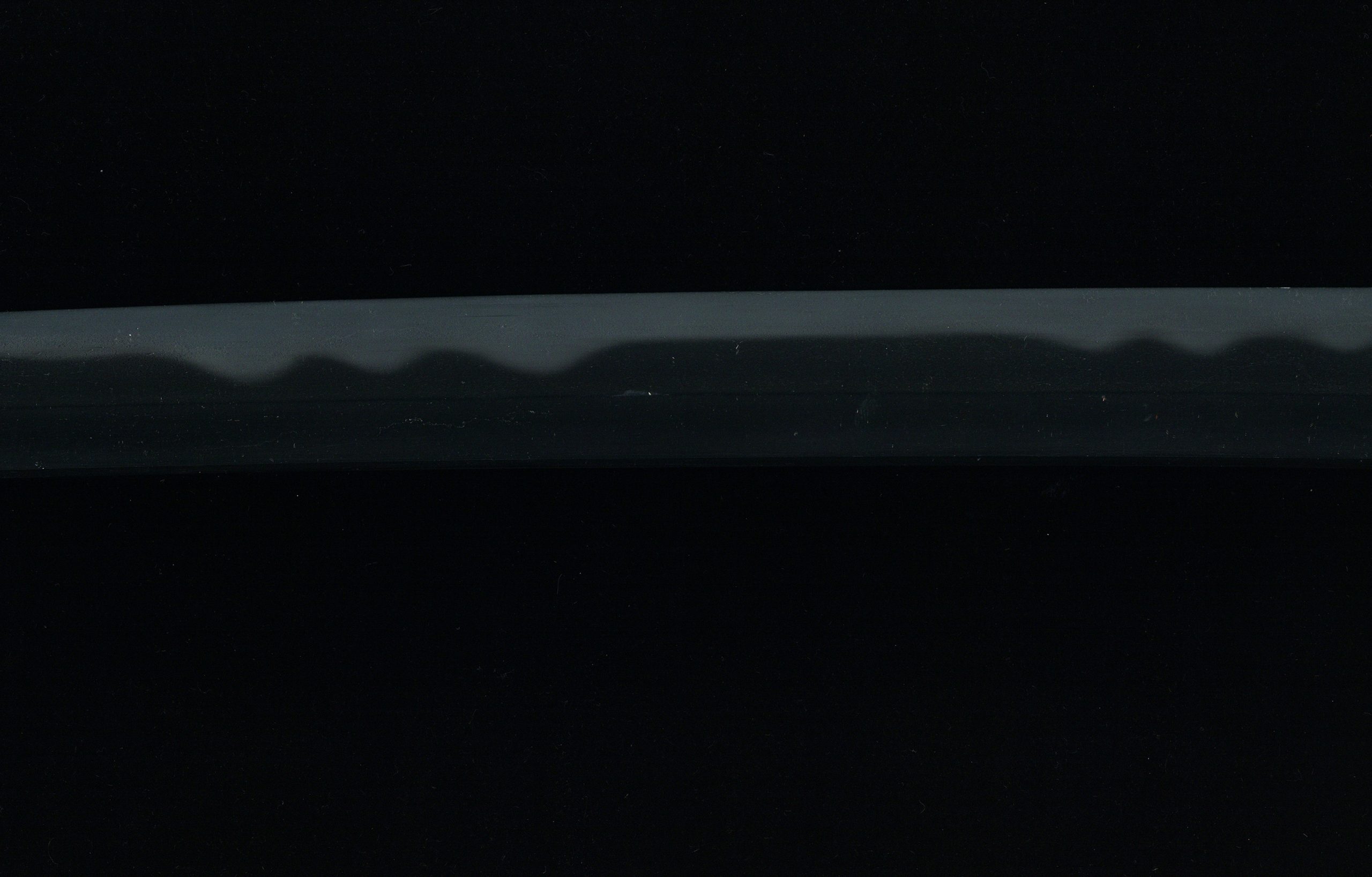
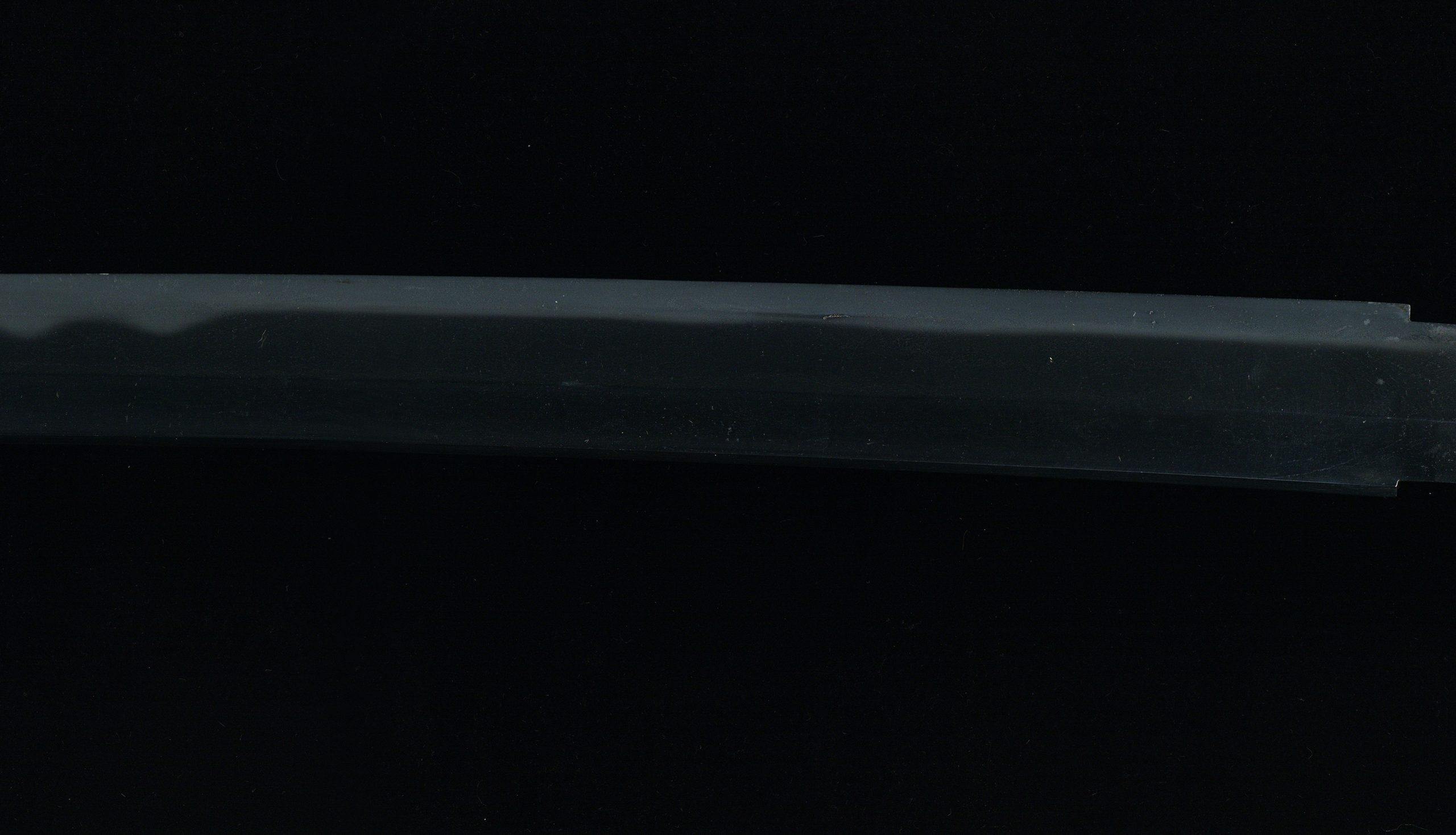
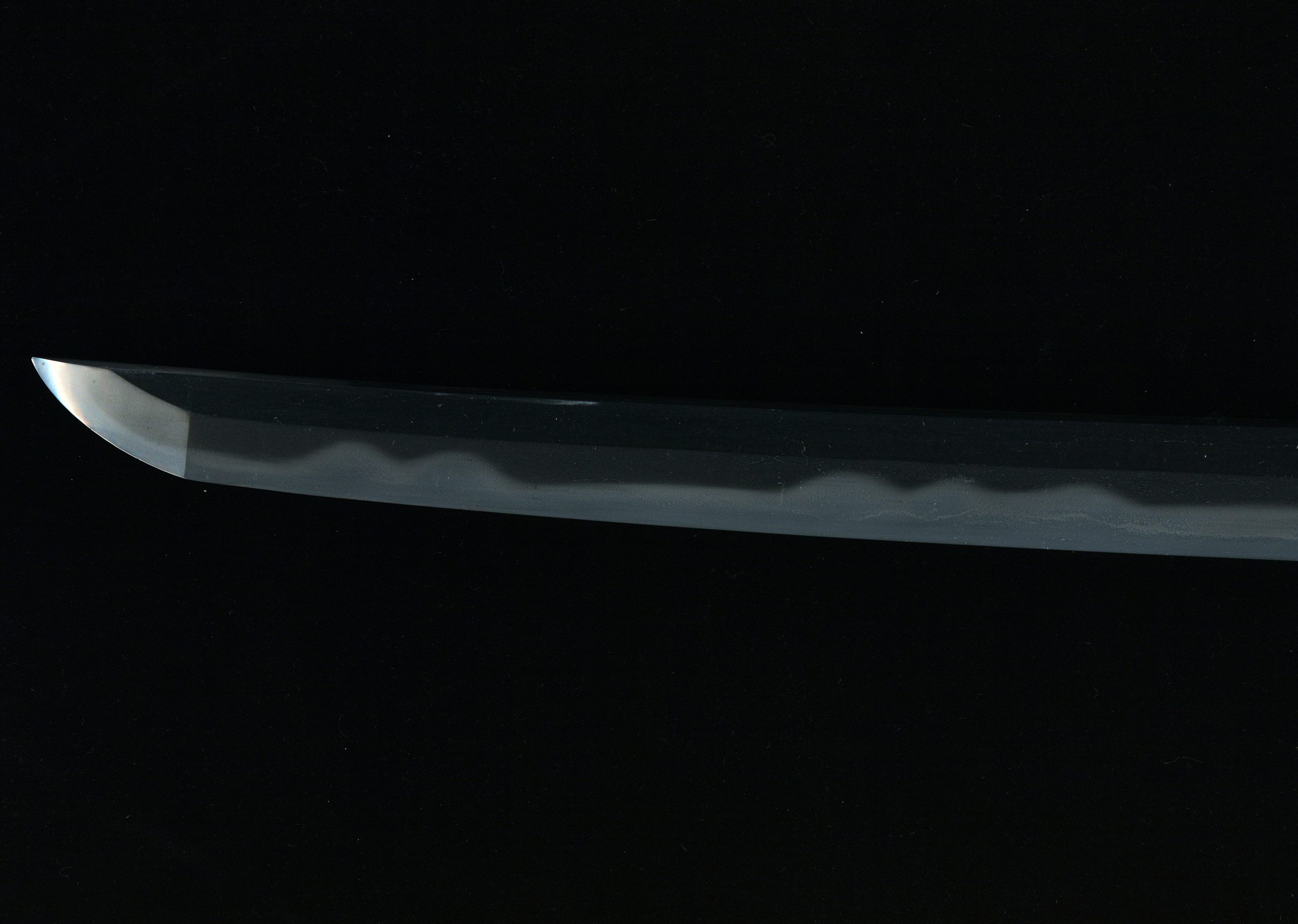
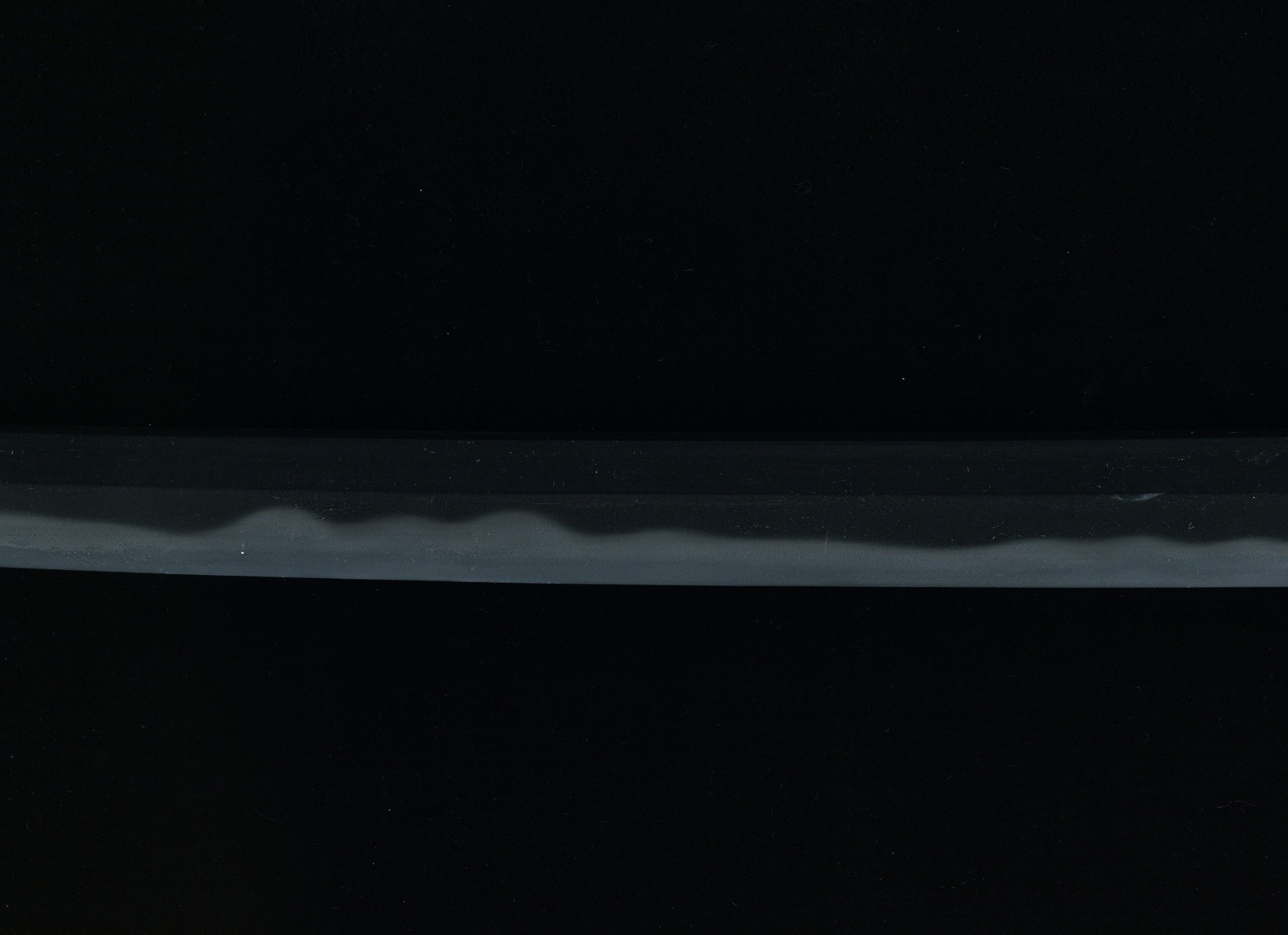
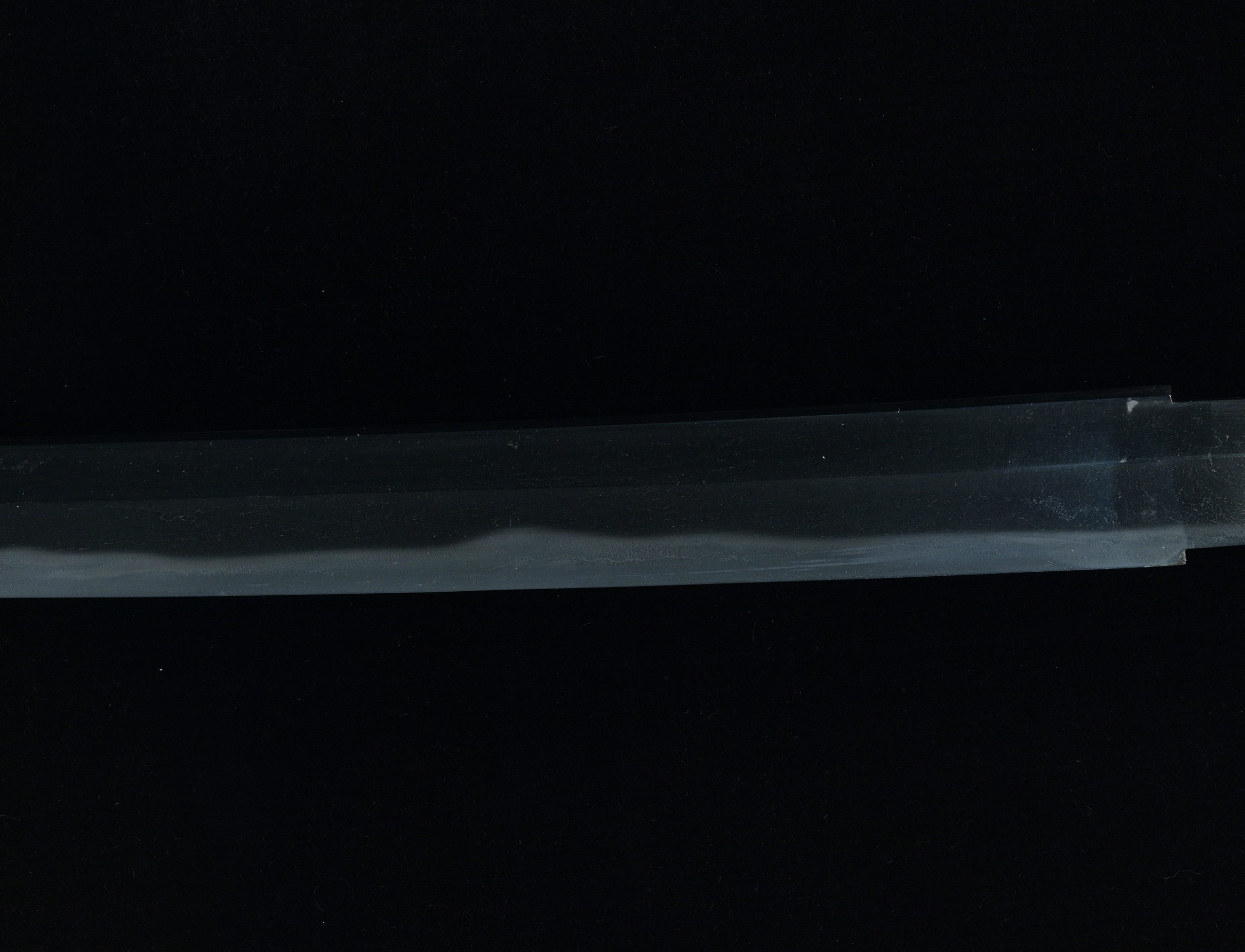
This is a shinogi-zukuri katana with a classical overall profile, a medium-proportioned kissaki, and a clearly defined yokote in the photographs. The hamon reads as notare-midare, broad and continuous in its undulation, with a well-defined hardened boundary along the edge. The polish allows a clean reading of the hamon outline; fine superficial handling/storage marks are visible under hard lighting.
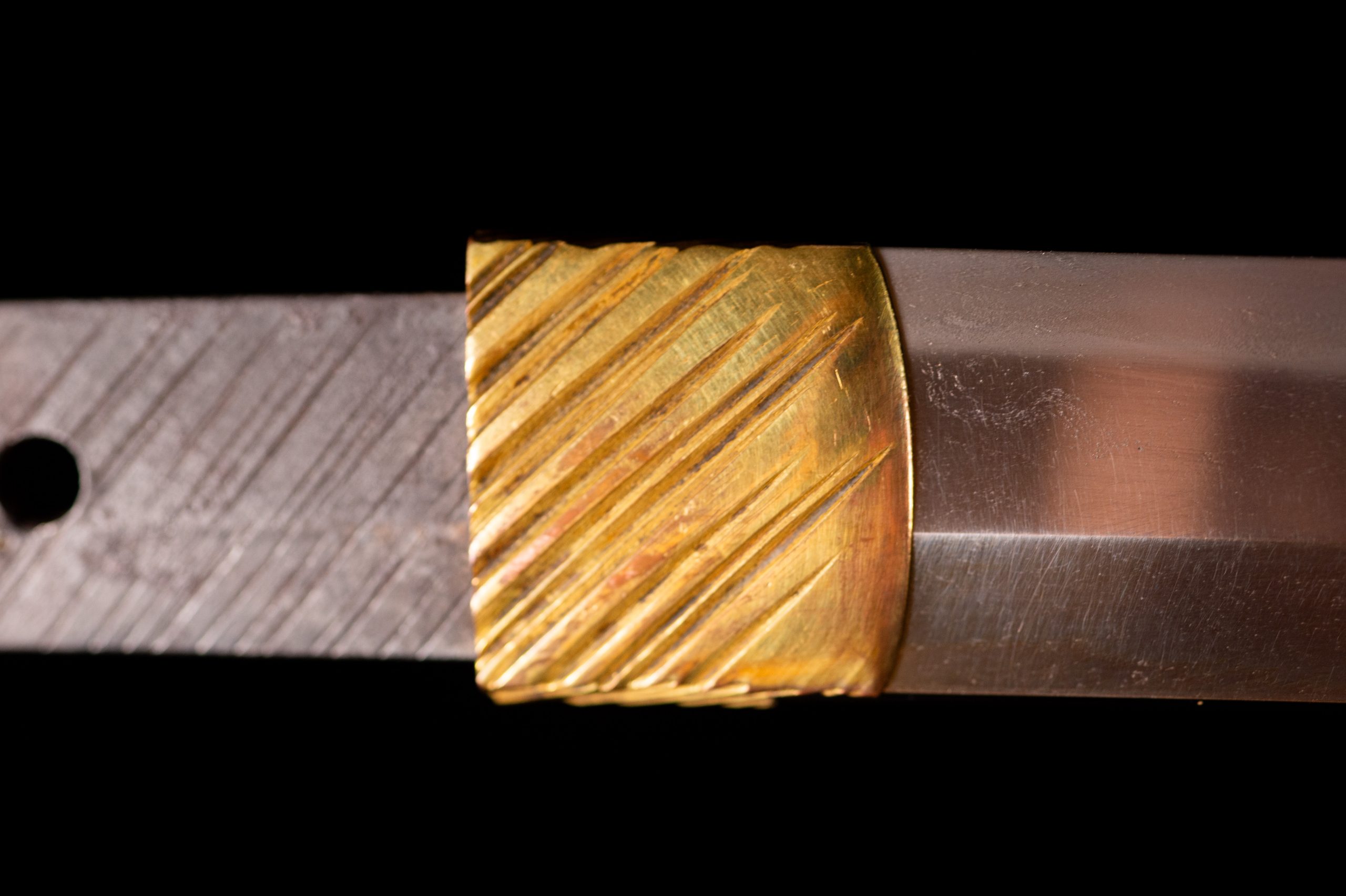
The nakago is signed and shows diagonal yasurime; one mekugi-ana is visible. The tang patina appears stable and consistent with age and use.
Mounting / koshirae
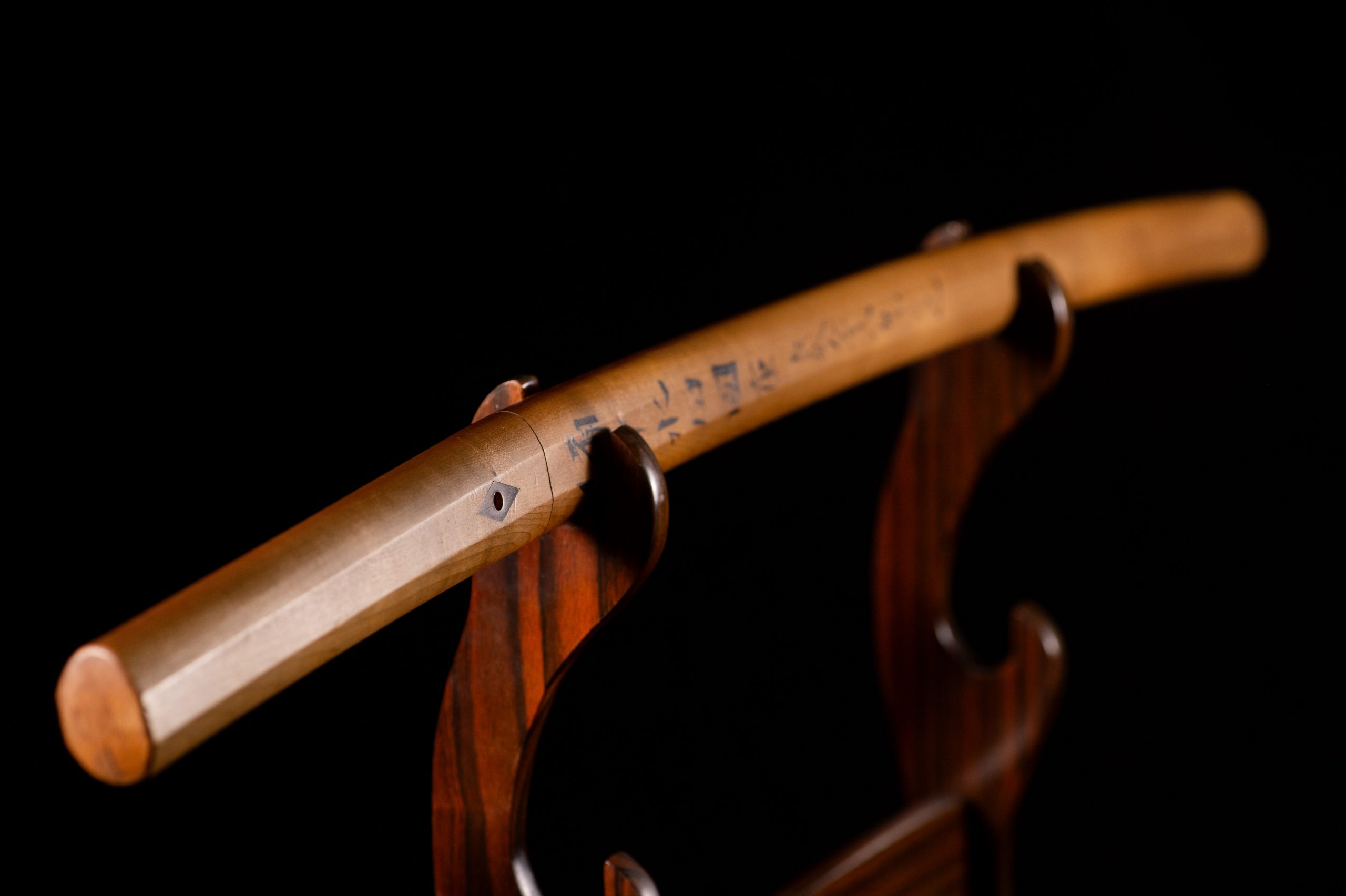
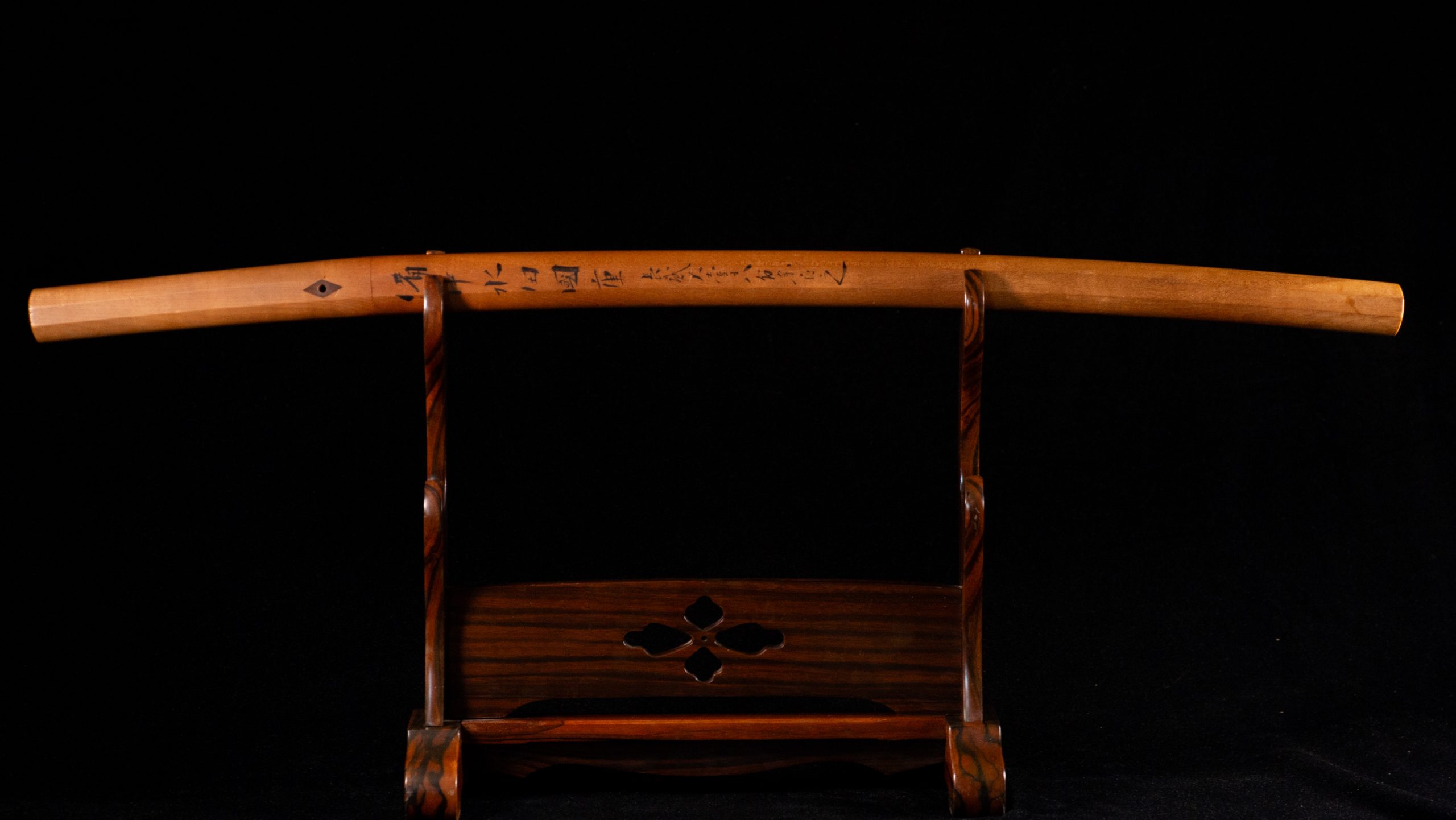
The sword is housed in shirasaya with a calligraphic inscription. For a piece with this level of documentation, shirasaya is exactly the right choice: sober storage, secure fit, and a conservation-first approach (fewer parts that can rub, loosen, or age badly). The habaki is gold plated, with a pronounced diagonal file-pattern finish.