FREE EXPRESS INTERNATIONAL DELIVERY
- Residencial Les Moles, Canillo AD100, Andorra
Discover authentic Japanese swords, carefully selected for collectors.”
Each piece in our collection has been carefully selected for its history, craftsmanship, and authenticity.
Discover unique swords that embody the spirit and tradition of the samurai.

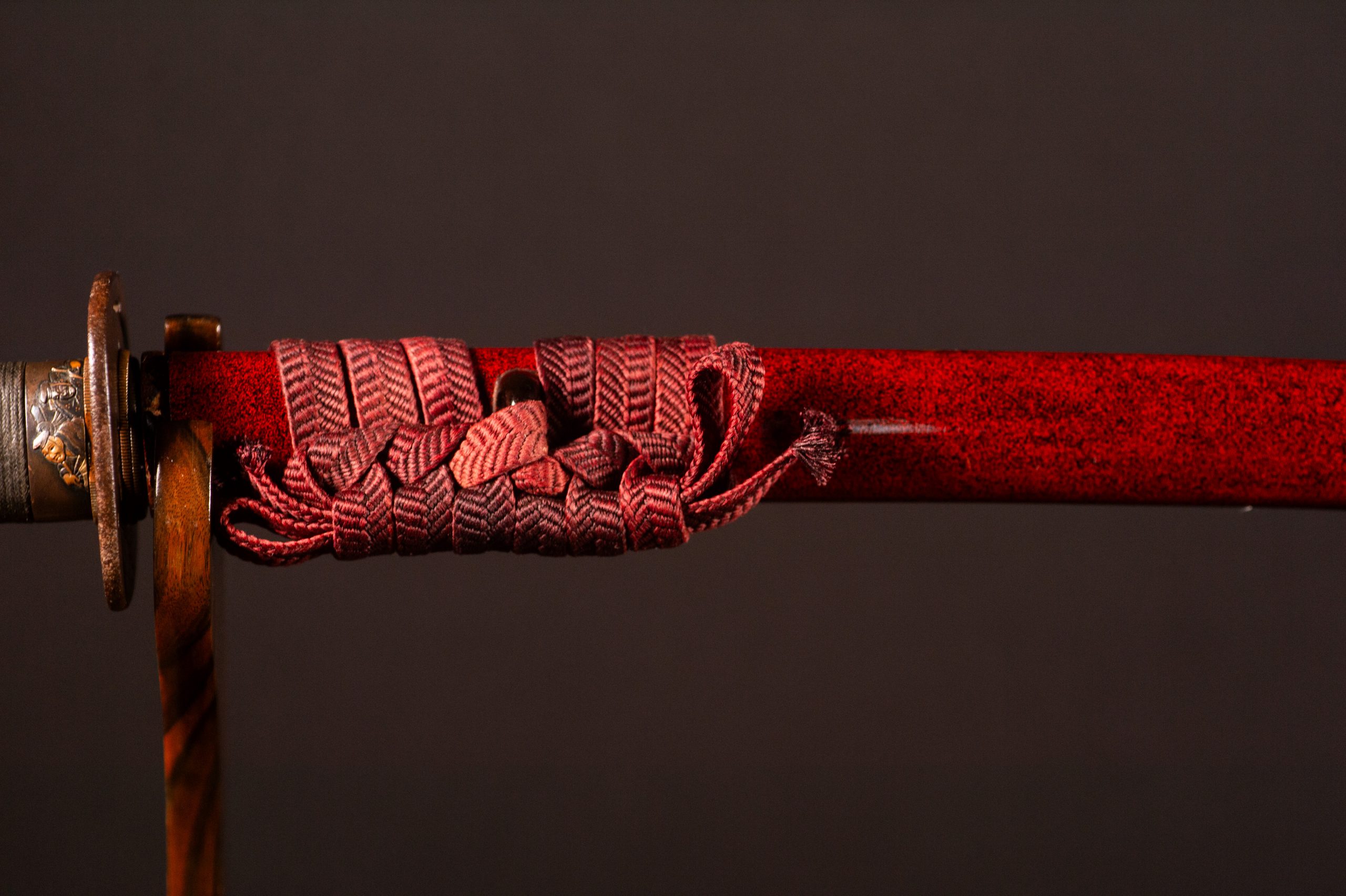
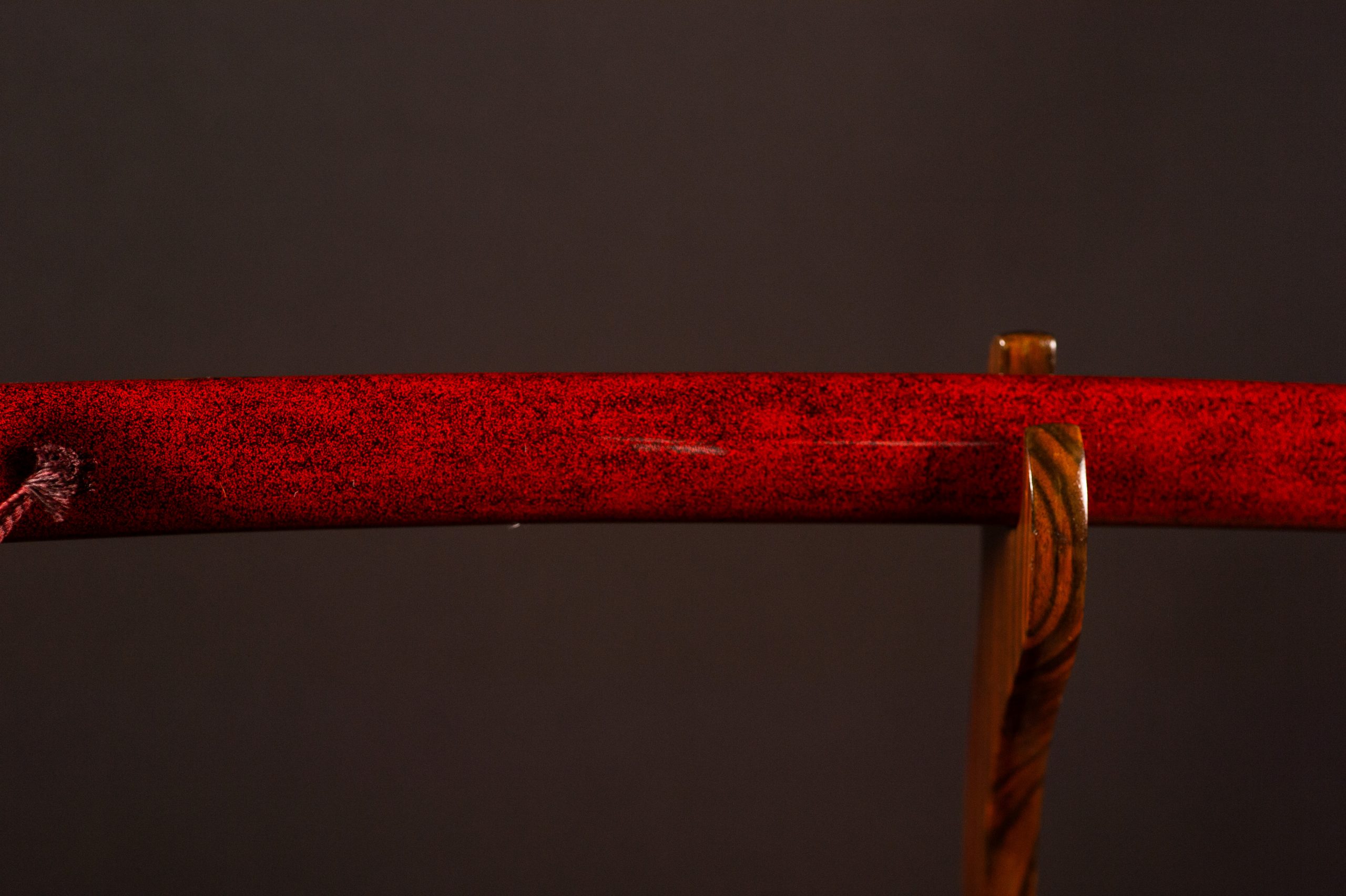
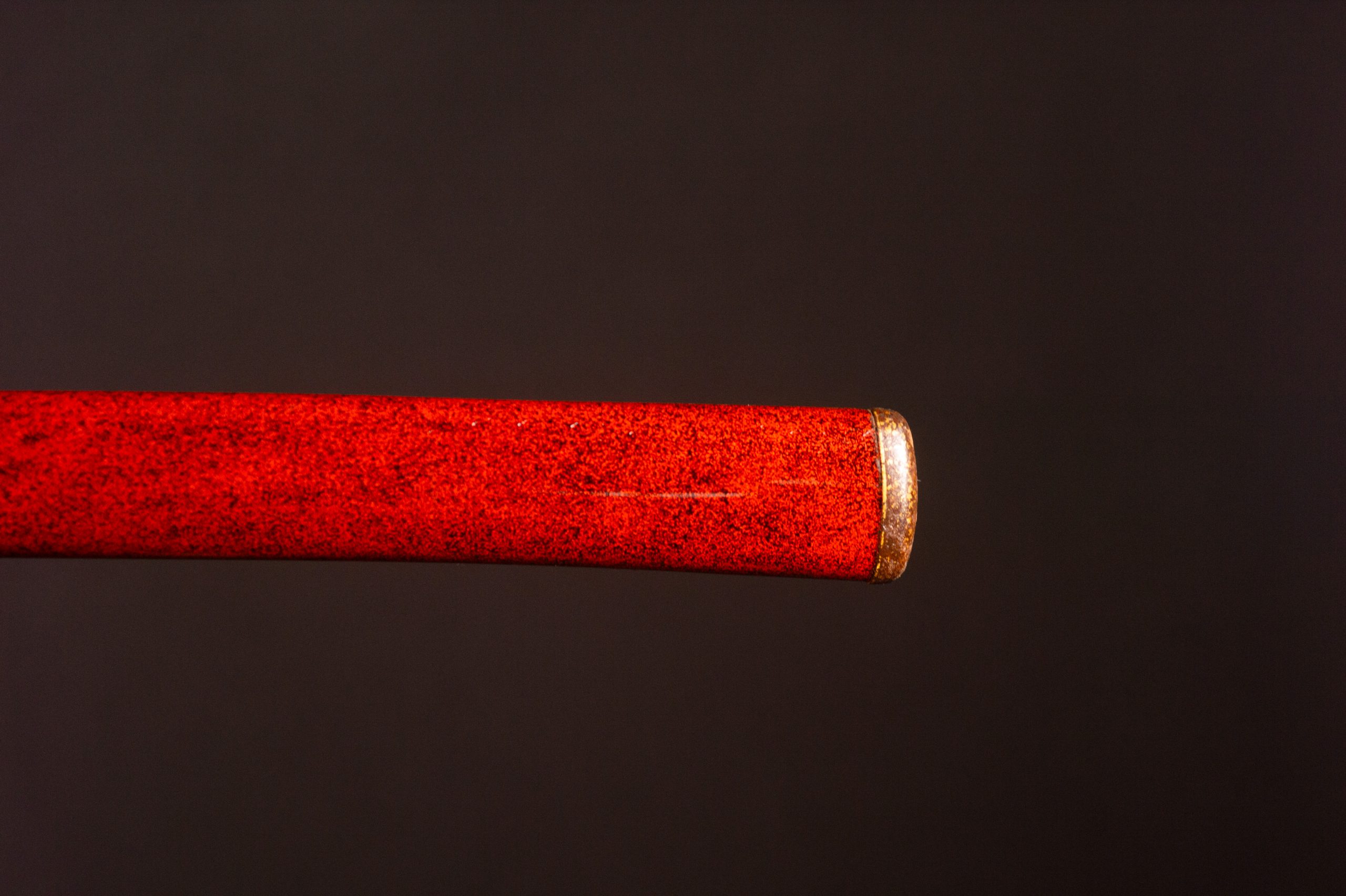
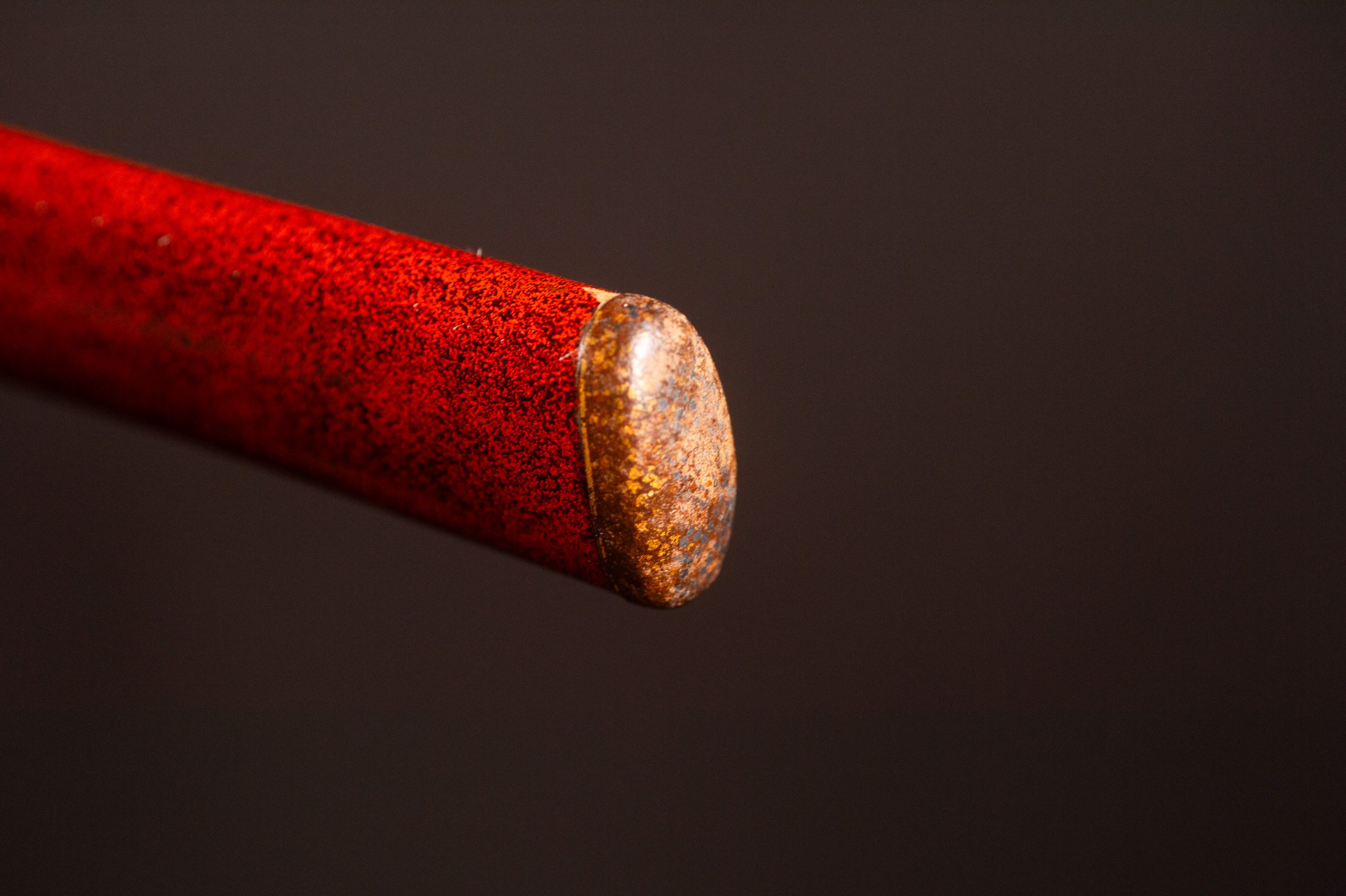


1 en stock
1 en stock
Add to Compare
Add to Wishlist

Order above 1.000,00 € gets free shipping.

Secure and hassle-free payment process.

Hassle-free returns with a money-back guarantee.

Have questions? Contact us via WhatsApp.
ITEM DESCRIPTION:
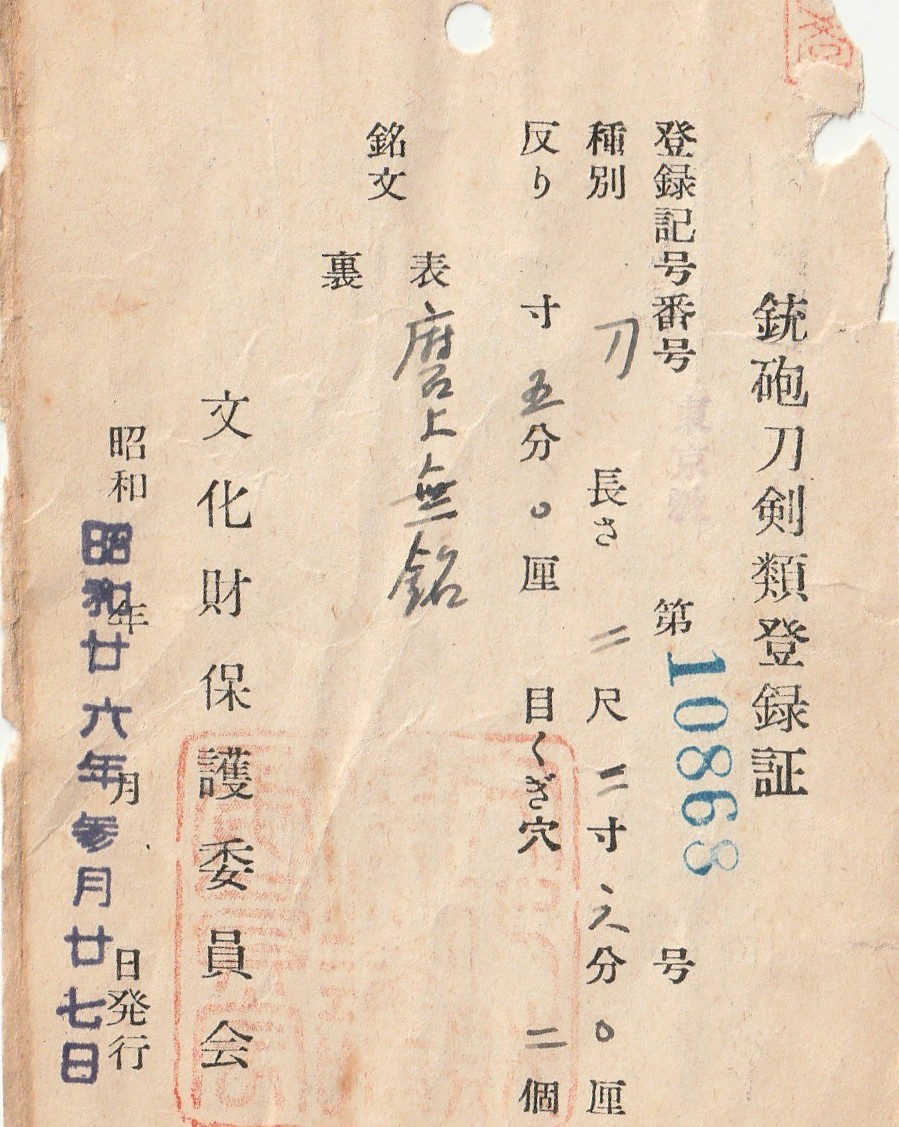
Comes with kimono or cotton bag. Comes with certificate of supein Nihonto. Comes with copy of Tokorusho.
Documents
Classification: 刀 (katana)
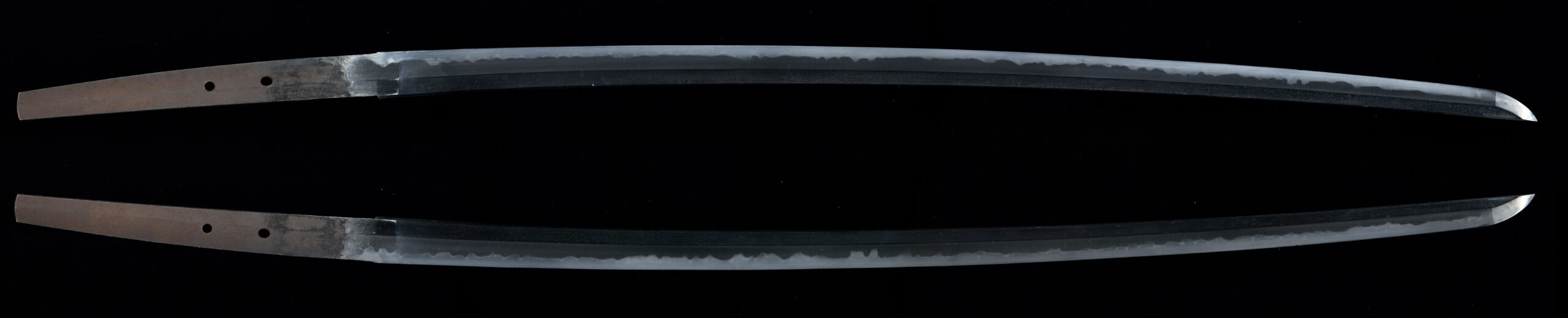
Blade length: 二尺二寸八分 — 69.1 cm
Curvature: 五分六厘 — approx. 1.7 cm
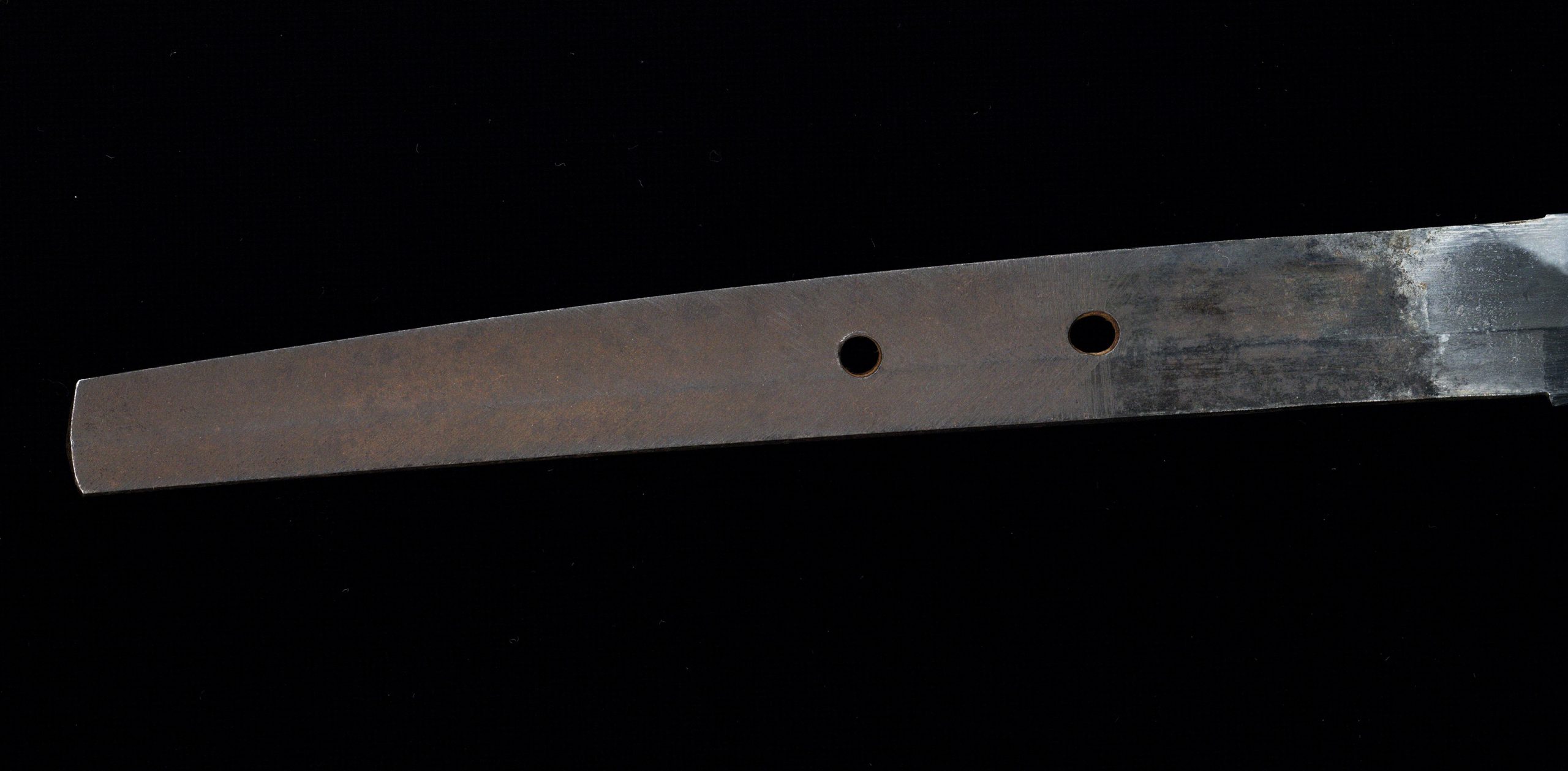
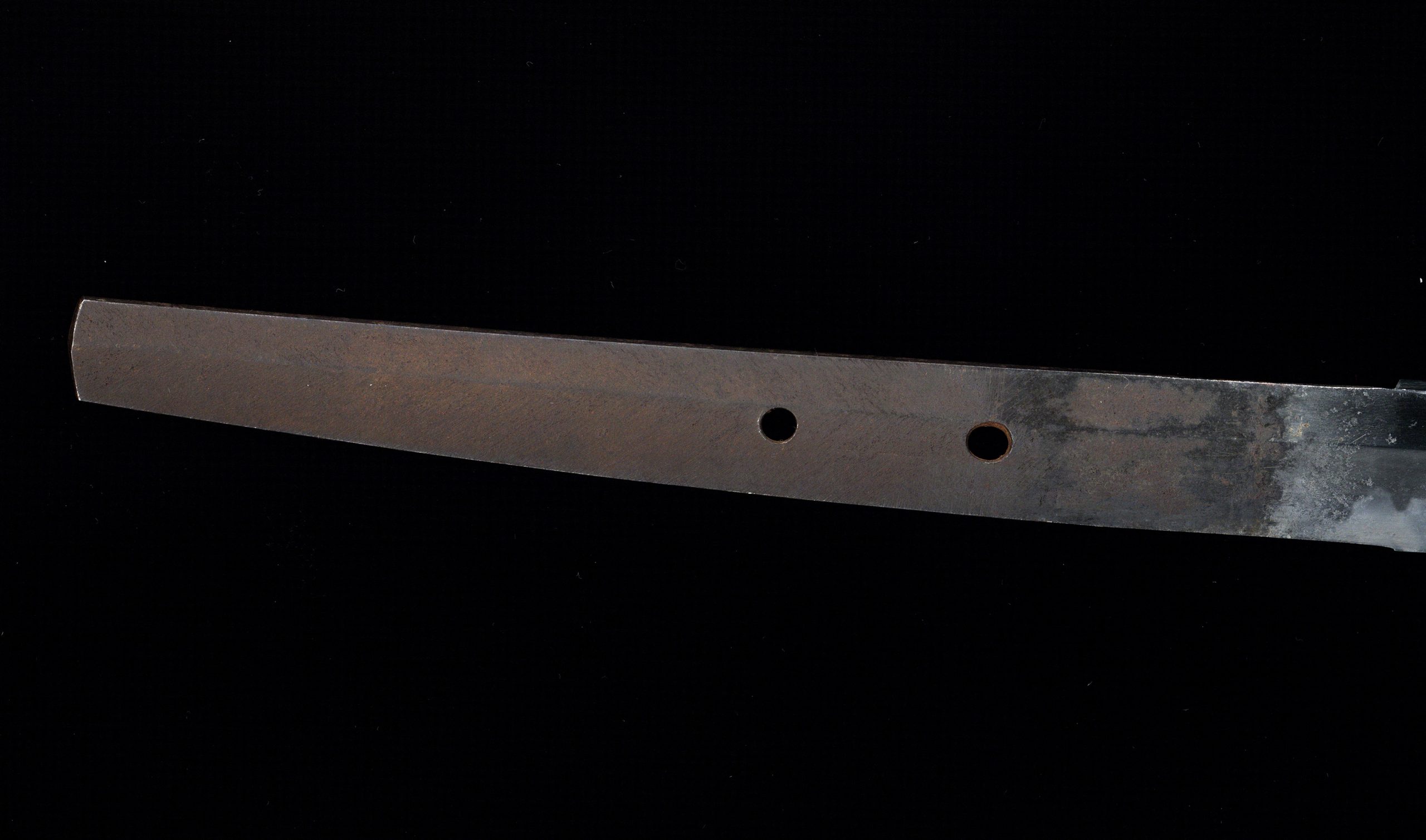
Mekugi-ana: 二個 — 2 peg holes
Inscription: 表 磨上無銘 — suriage mumei
Smith, school and period
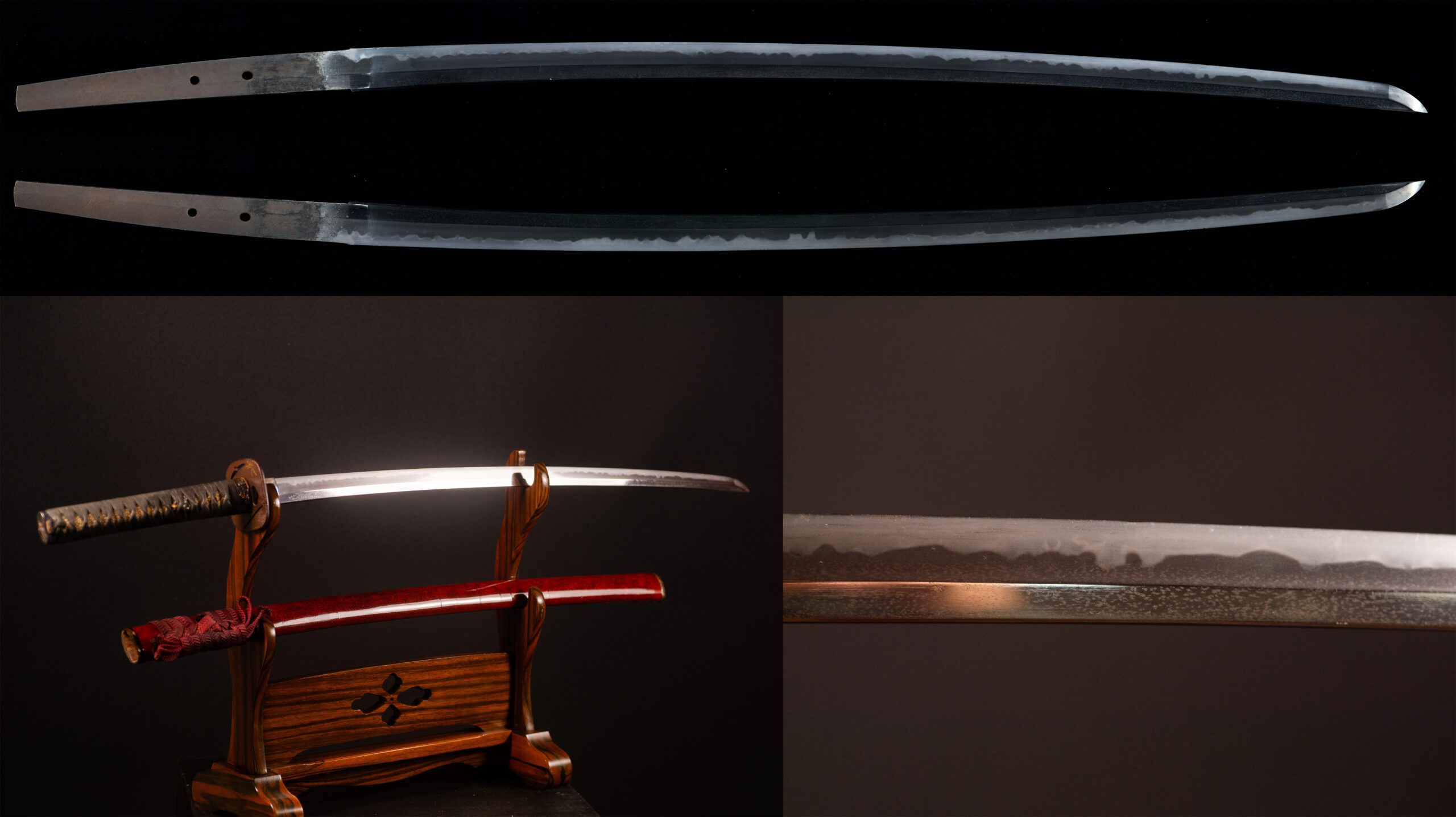
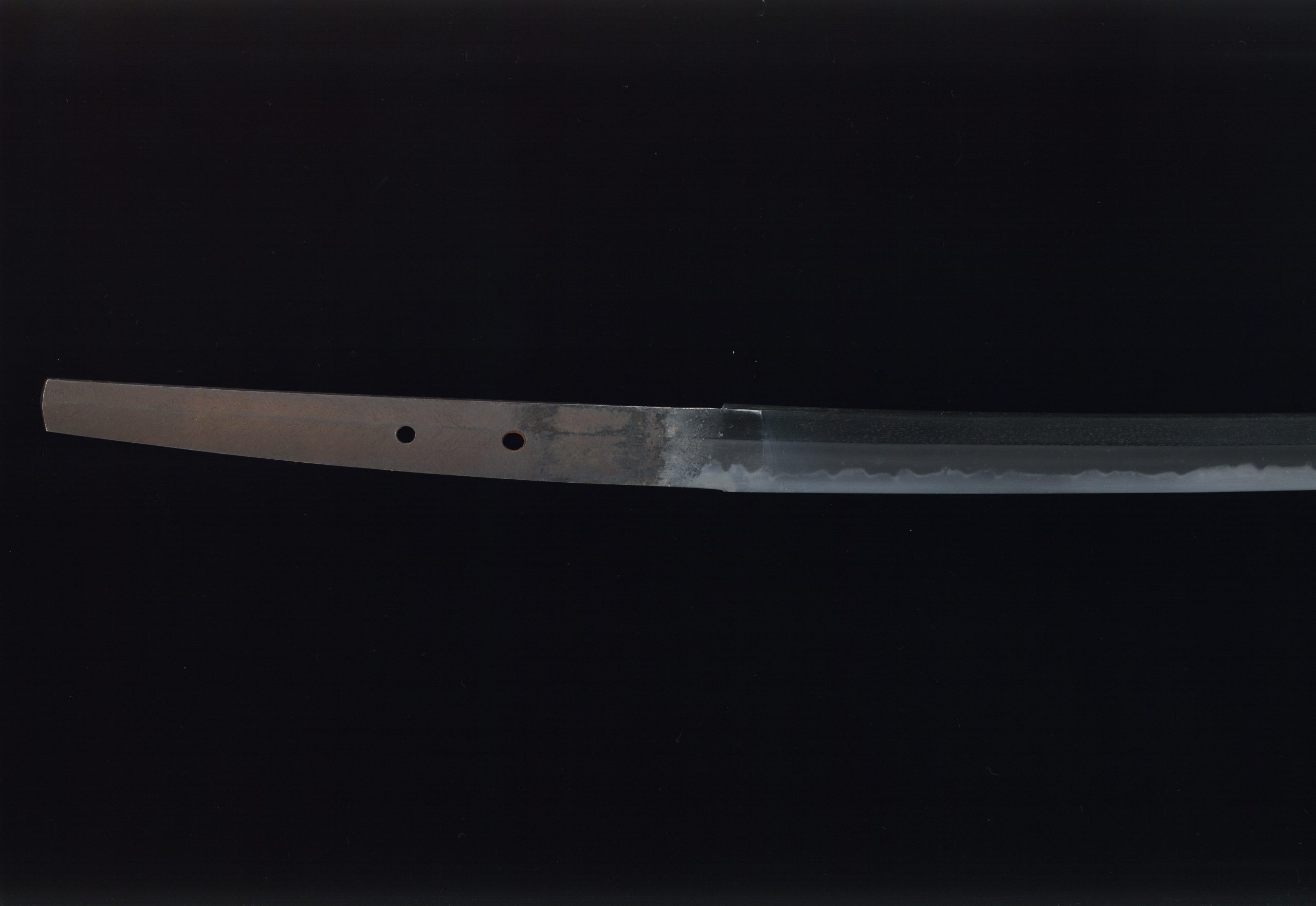
The blade is recorded as mumei, arround Mid Edo period (17-18th.), with a suriage tang, exactly as stated on the registration paper. The original signature is no longer present. Even so, the sword preserves a balanced and classically proportioned katana silhouette, with restrained curvature and an elegant overall profile.
Suriage refers to a Japanese sword whose tang (nakago) has been shortened from its original length. This was often done to adapt an older blade to new mounting styles, changing tastes, or practical requirements over time.
When a blade was shortened, the original signature (mei), which was normally carved on the tang, could be partially cut away or lost entirely. For that reason, many old swords that are now described as suriage mumei were once signed, but the inscription disappeared during the shortening process.
Blade
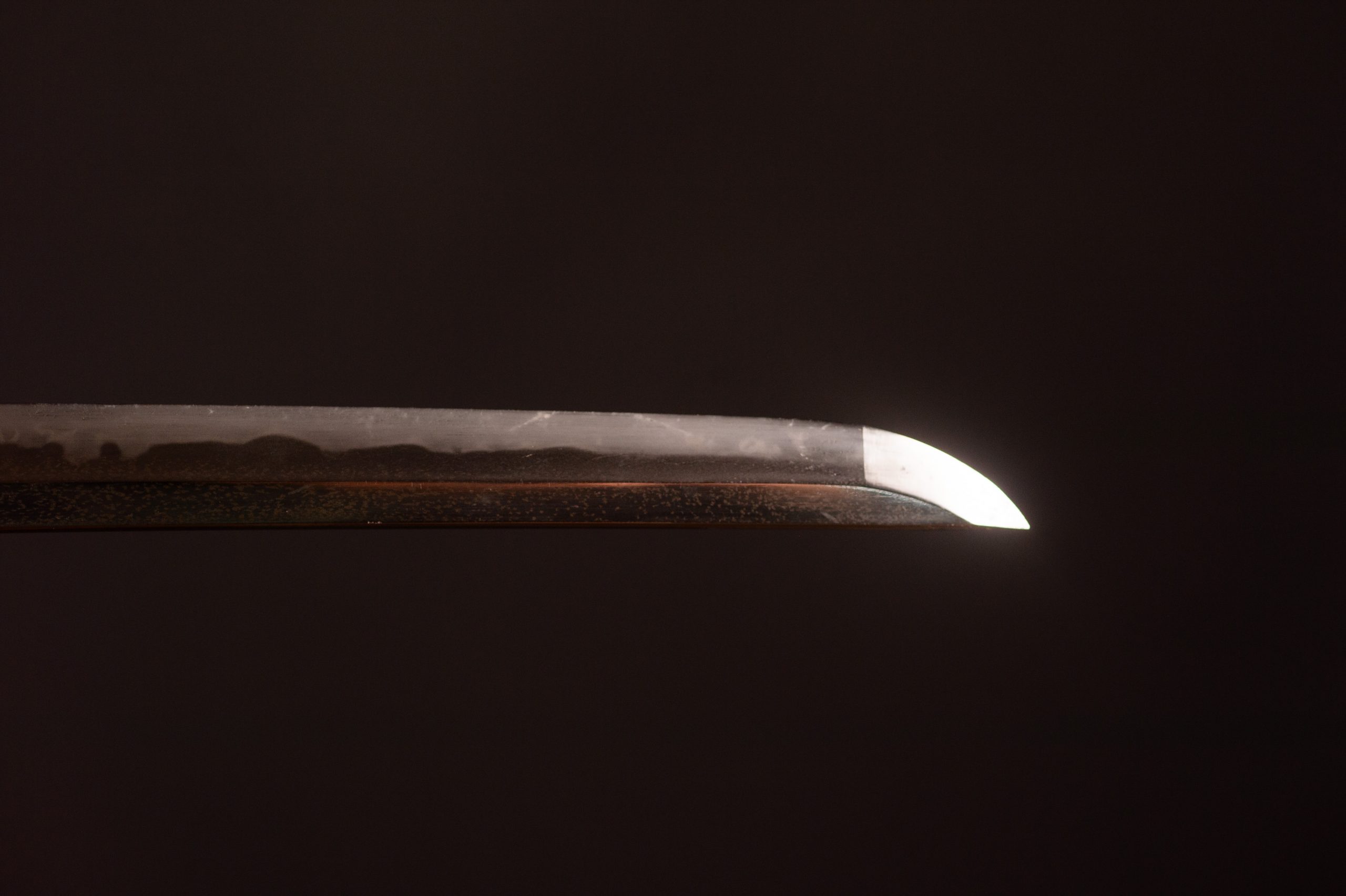
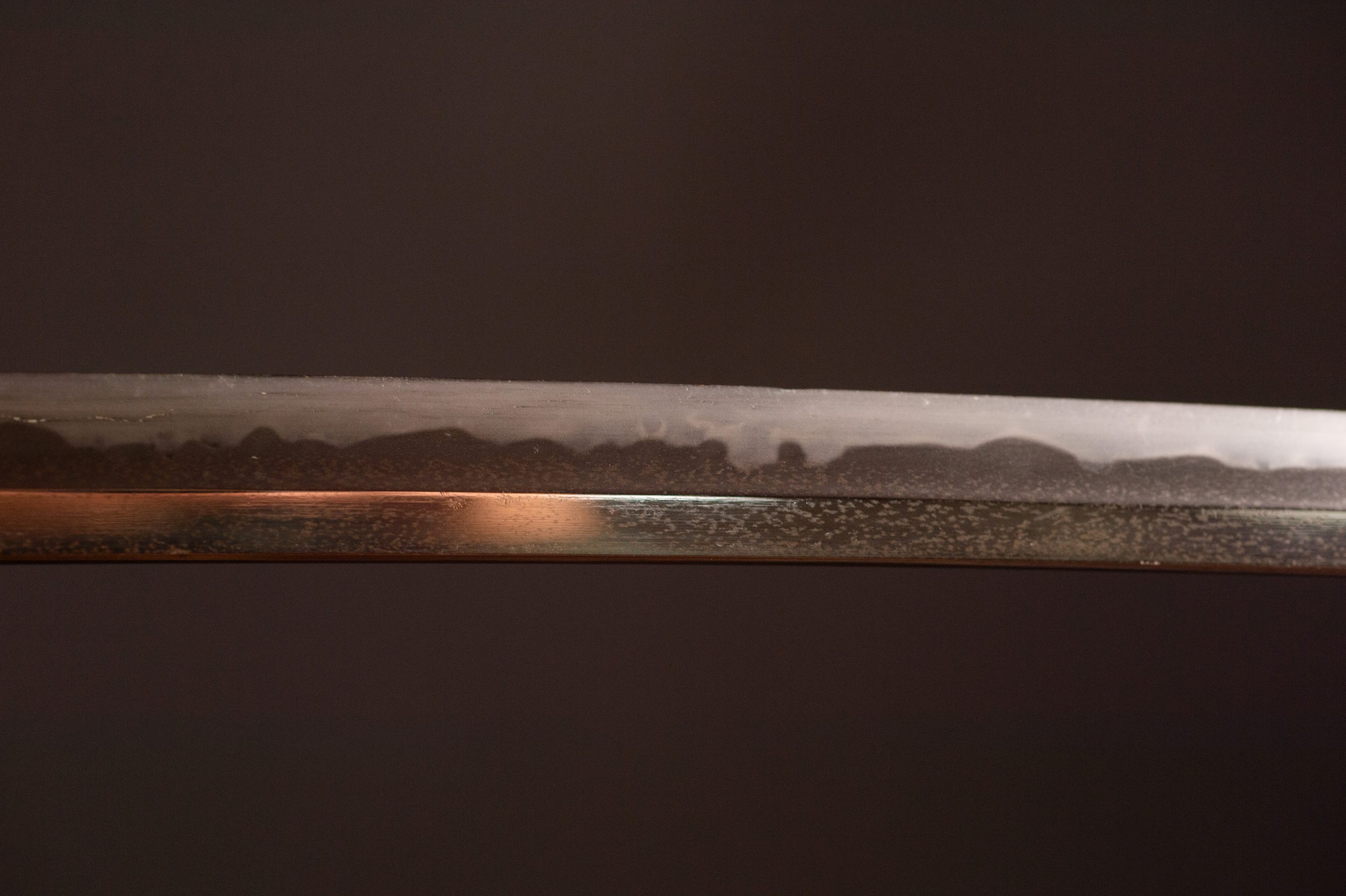
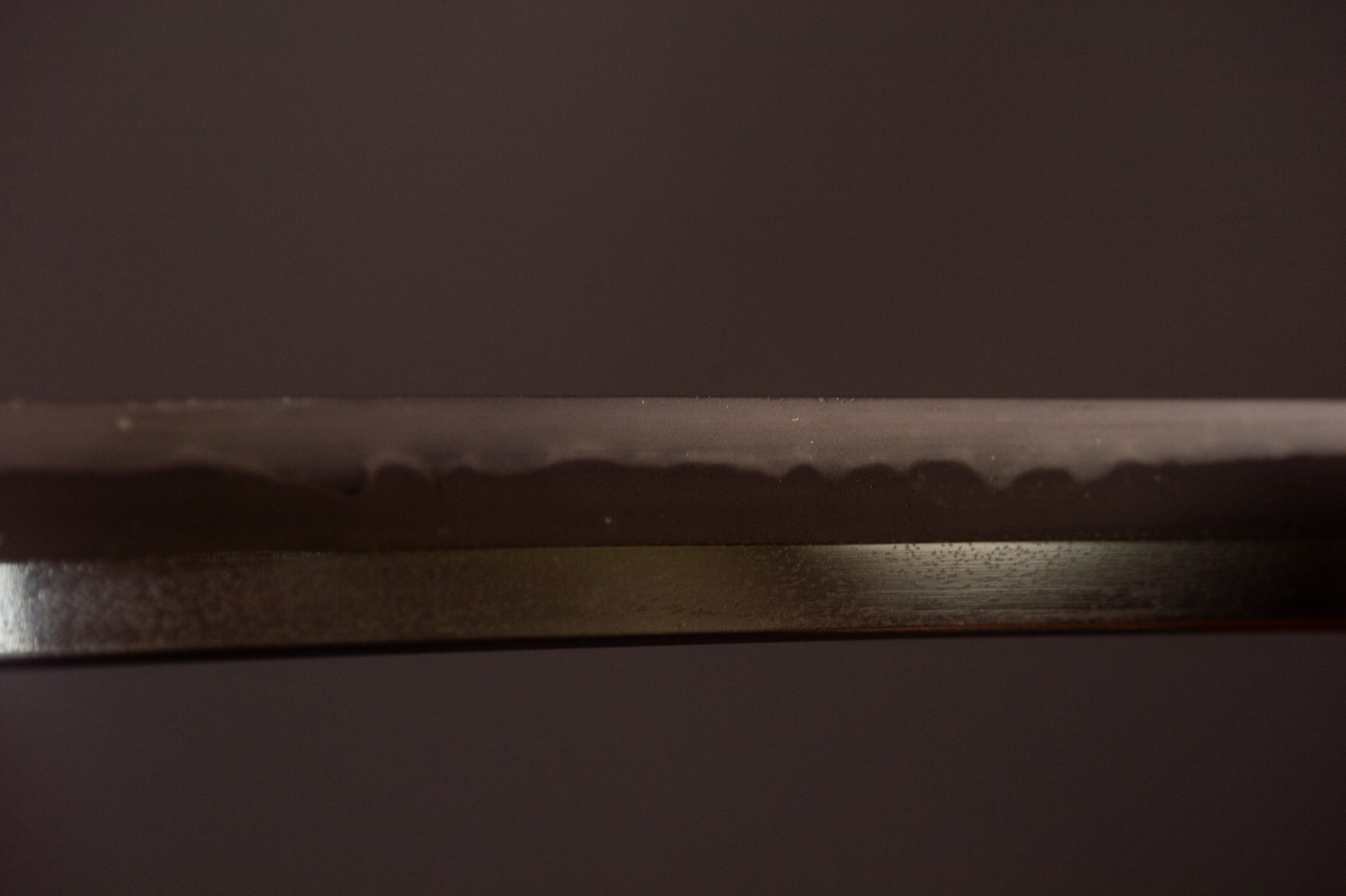
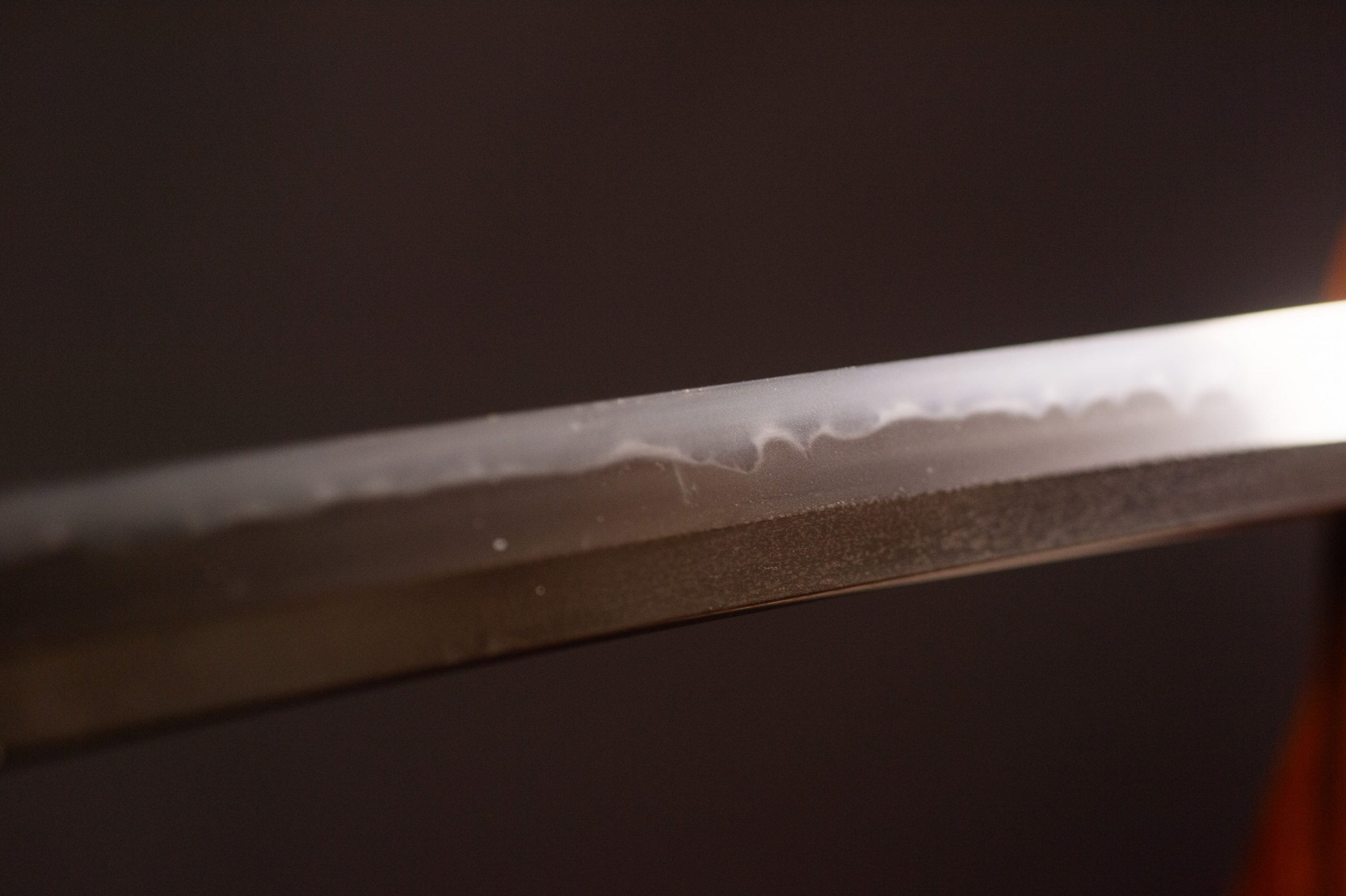
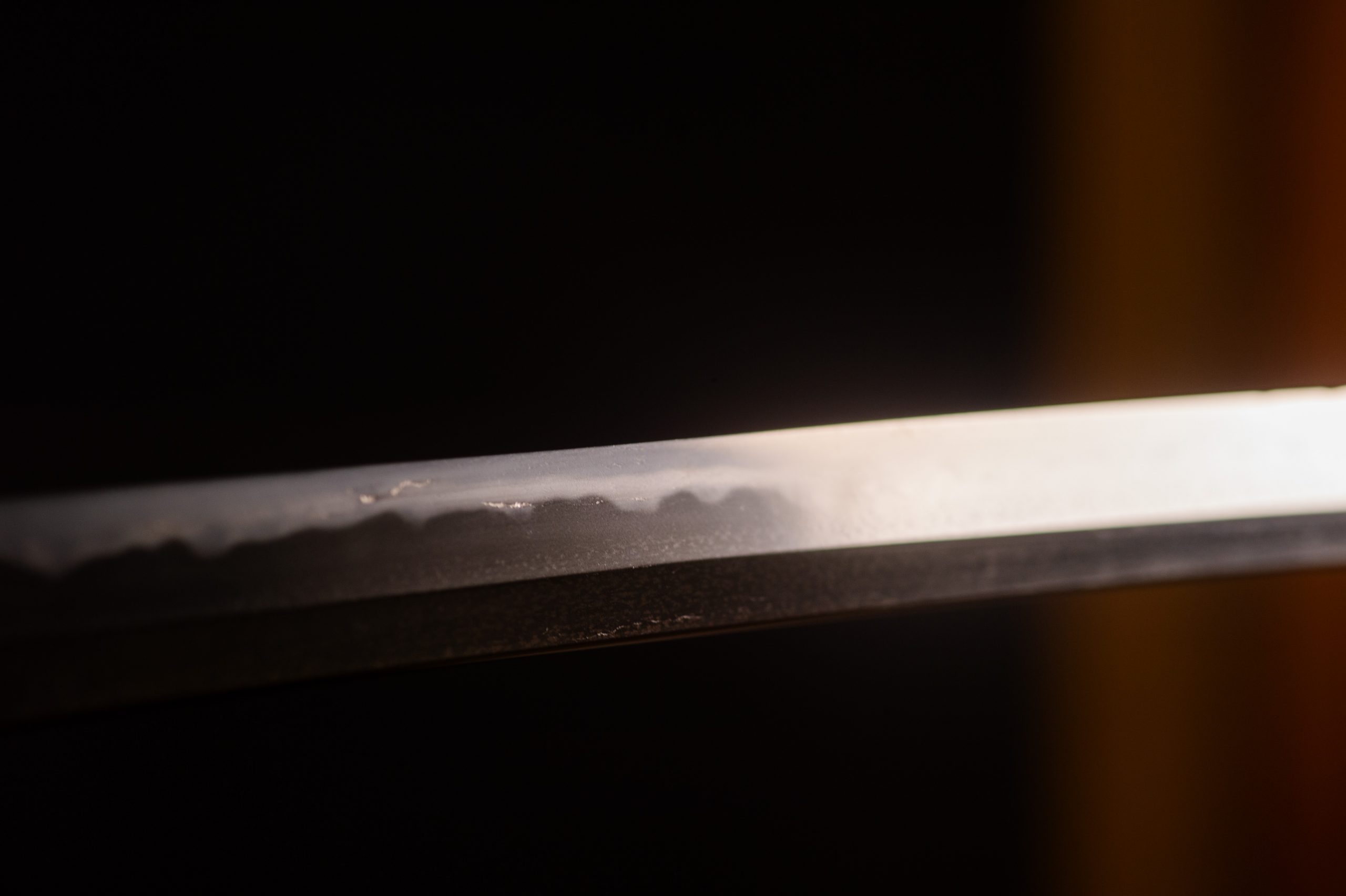
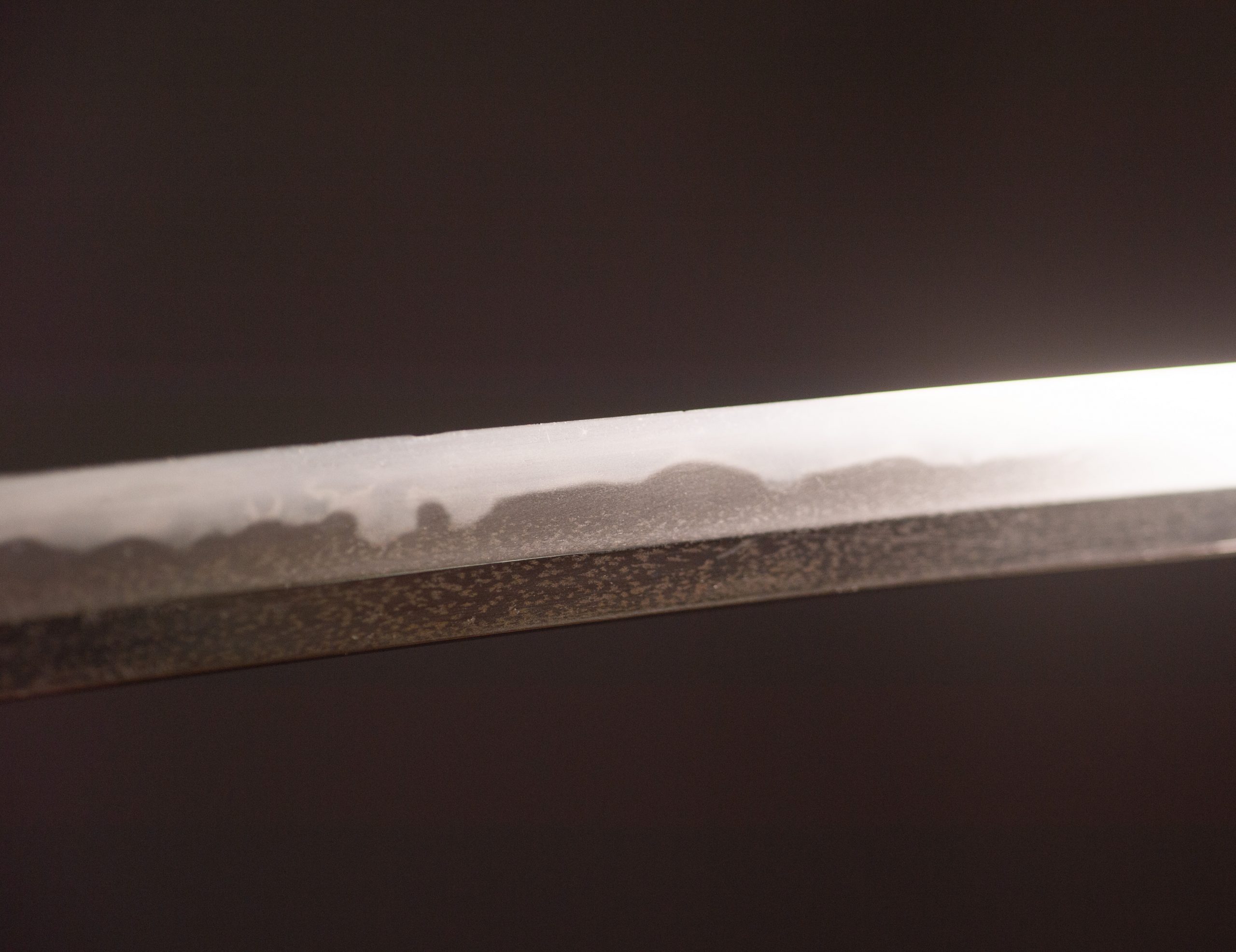
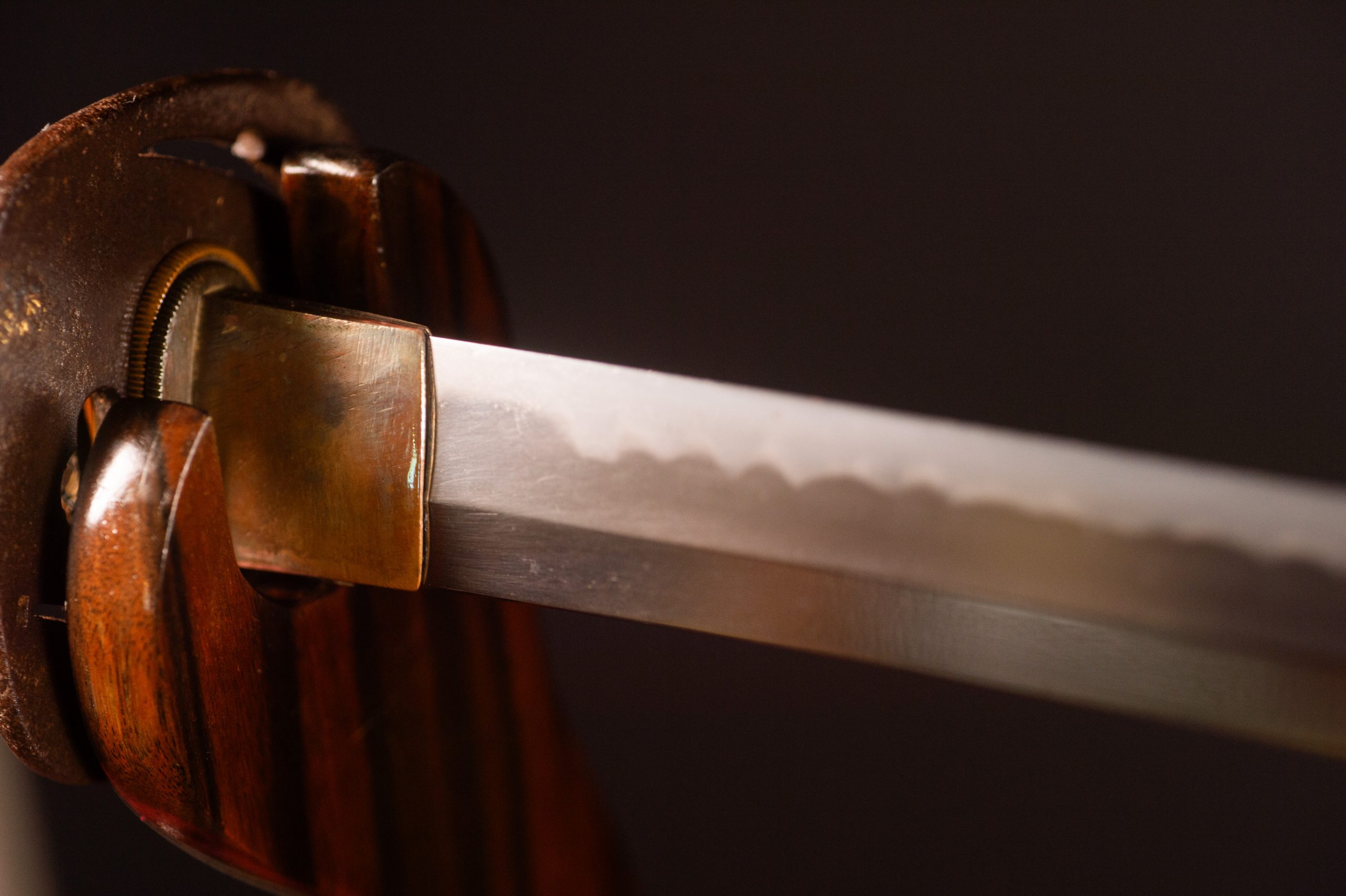
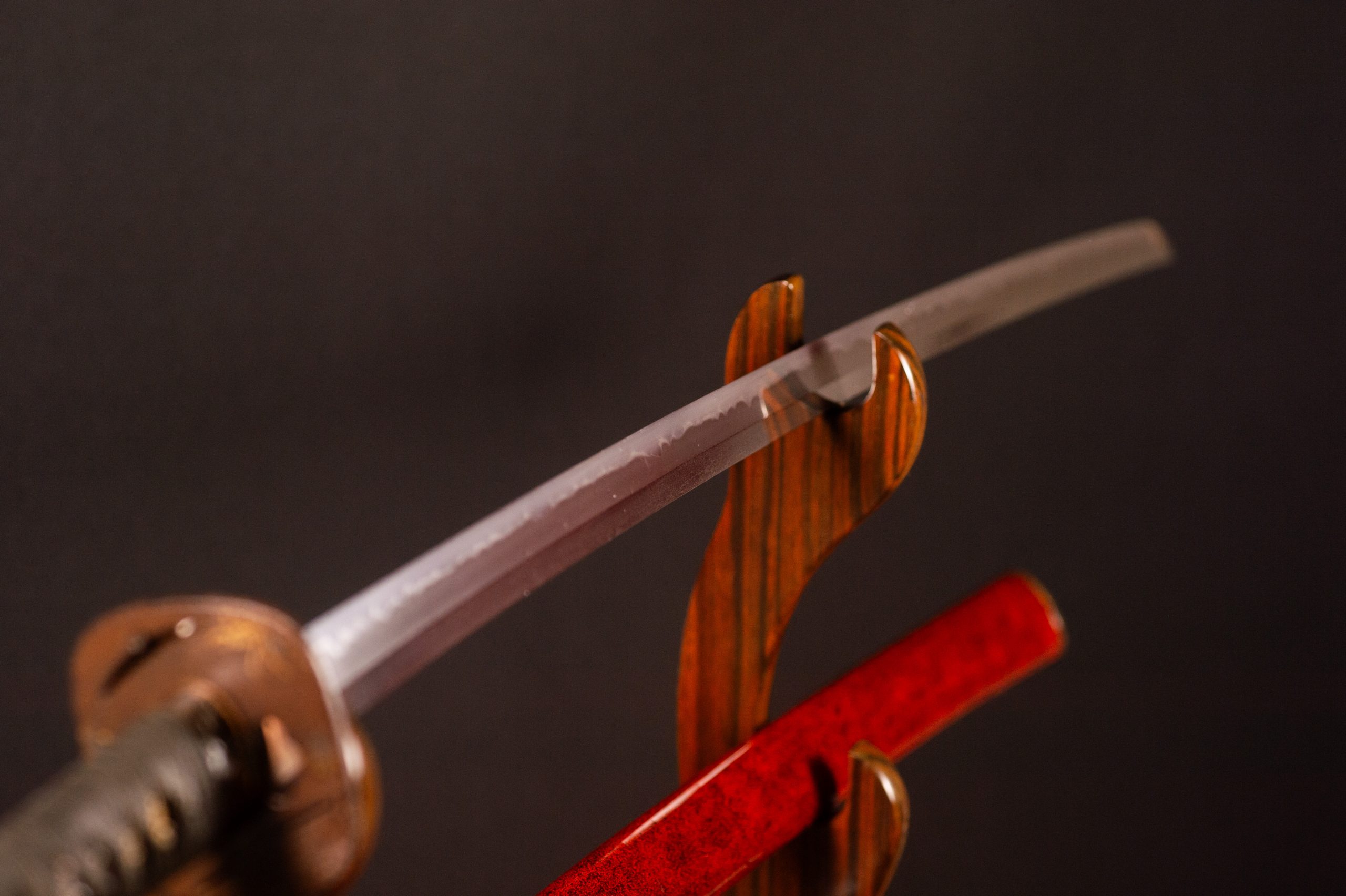
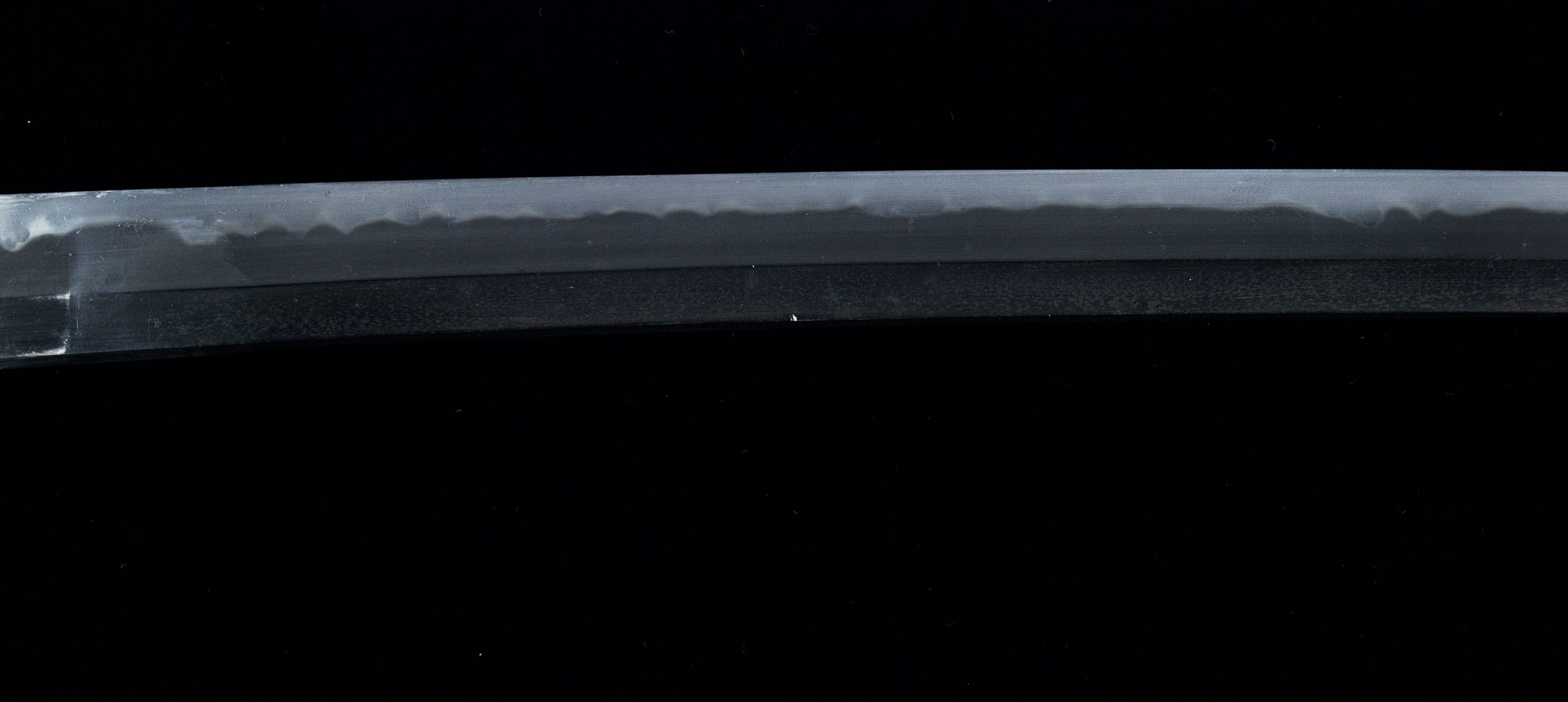
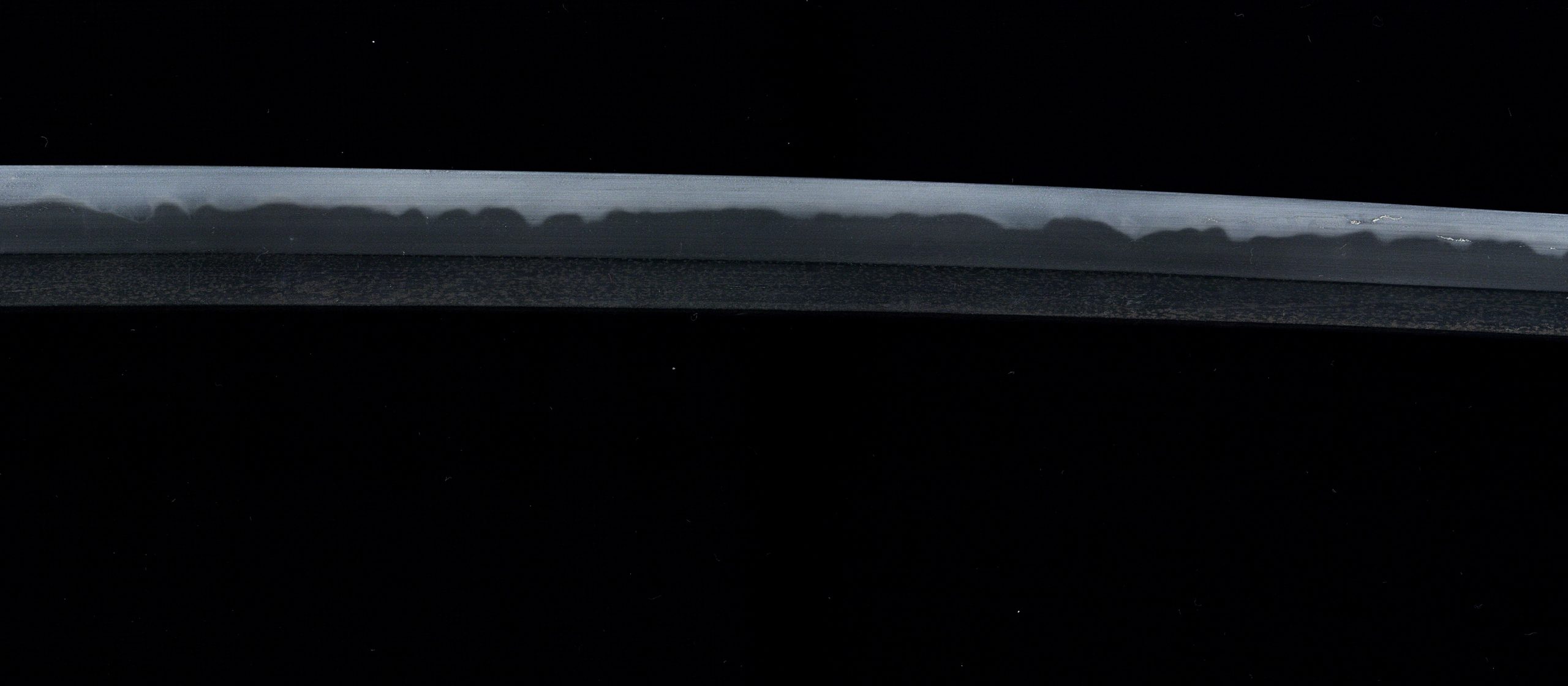
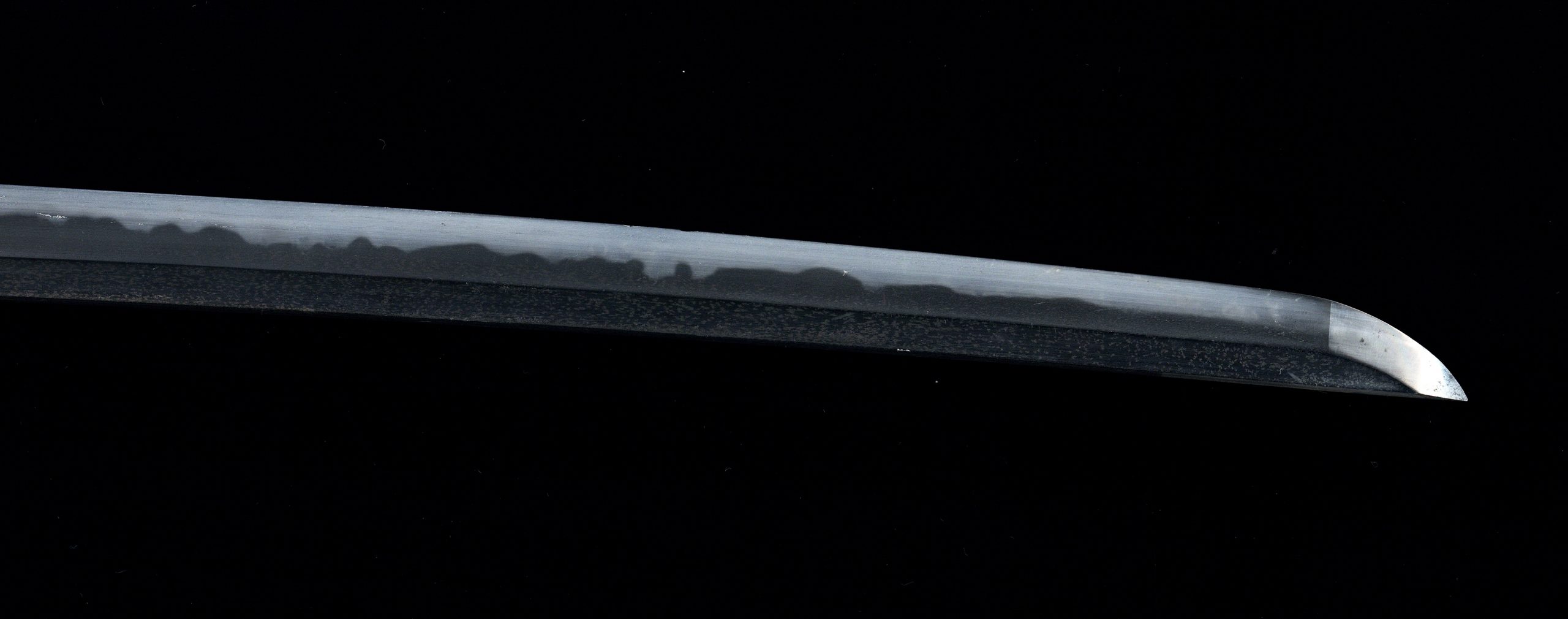
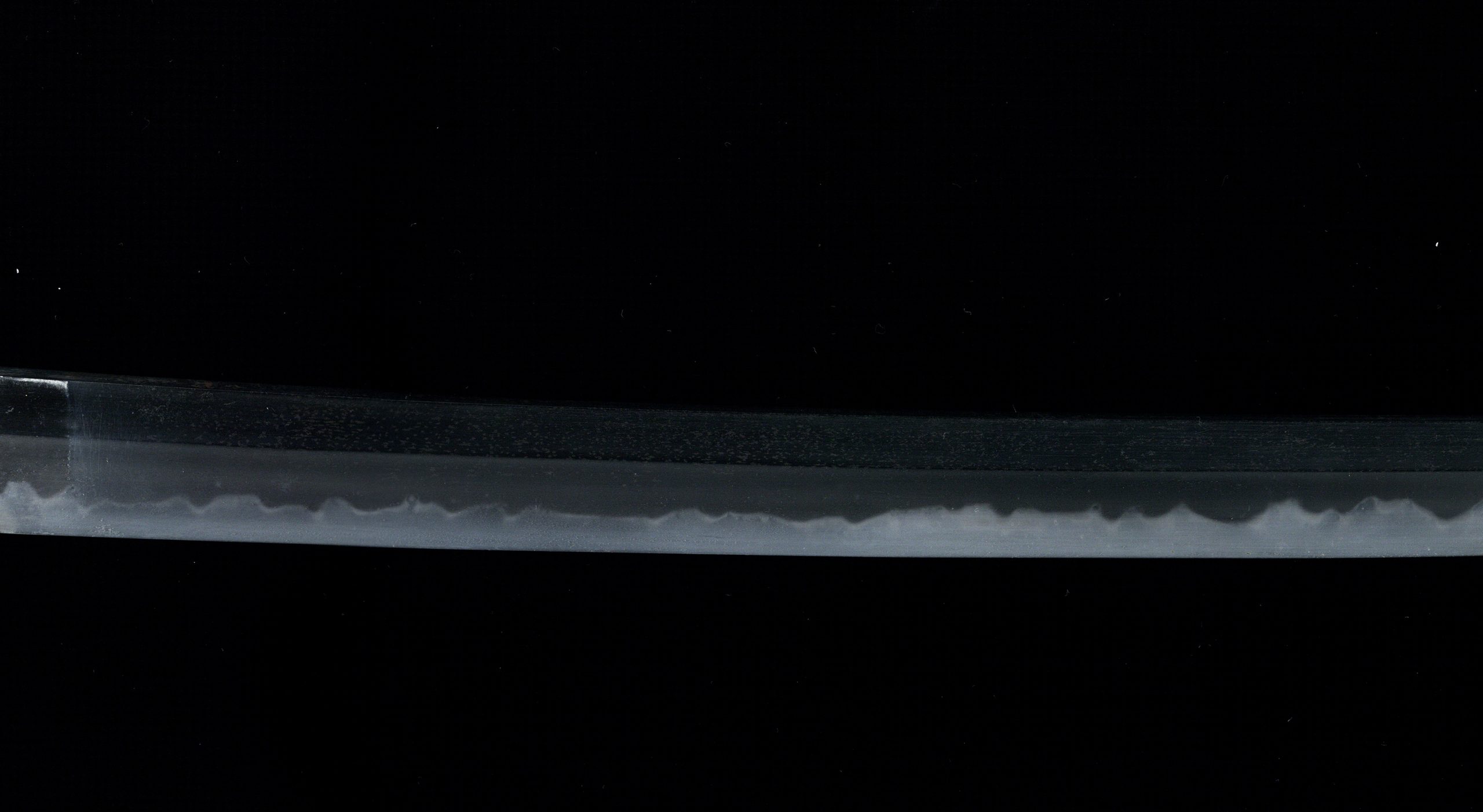
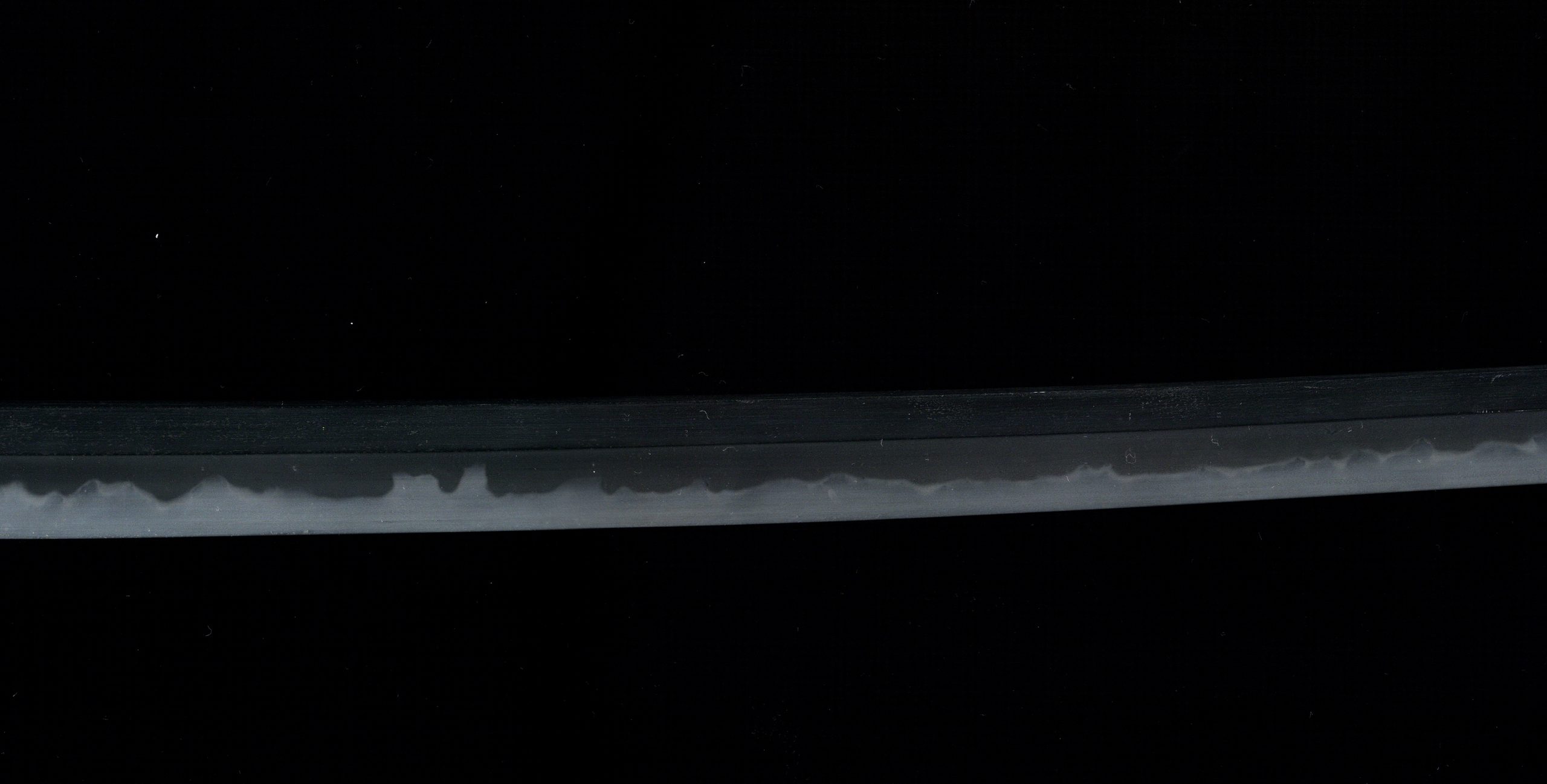
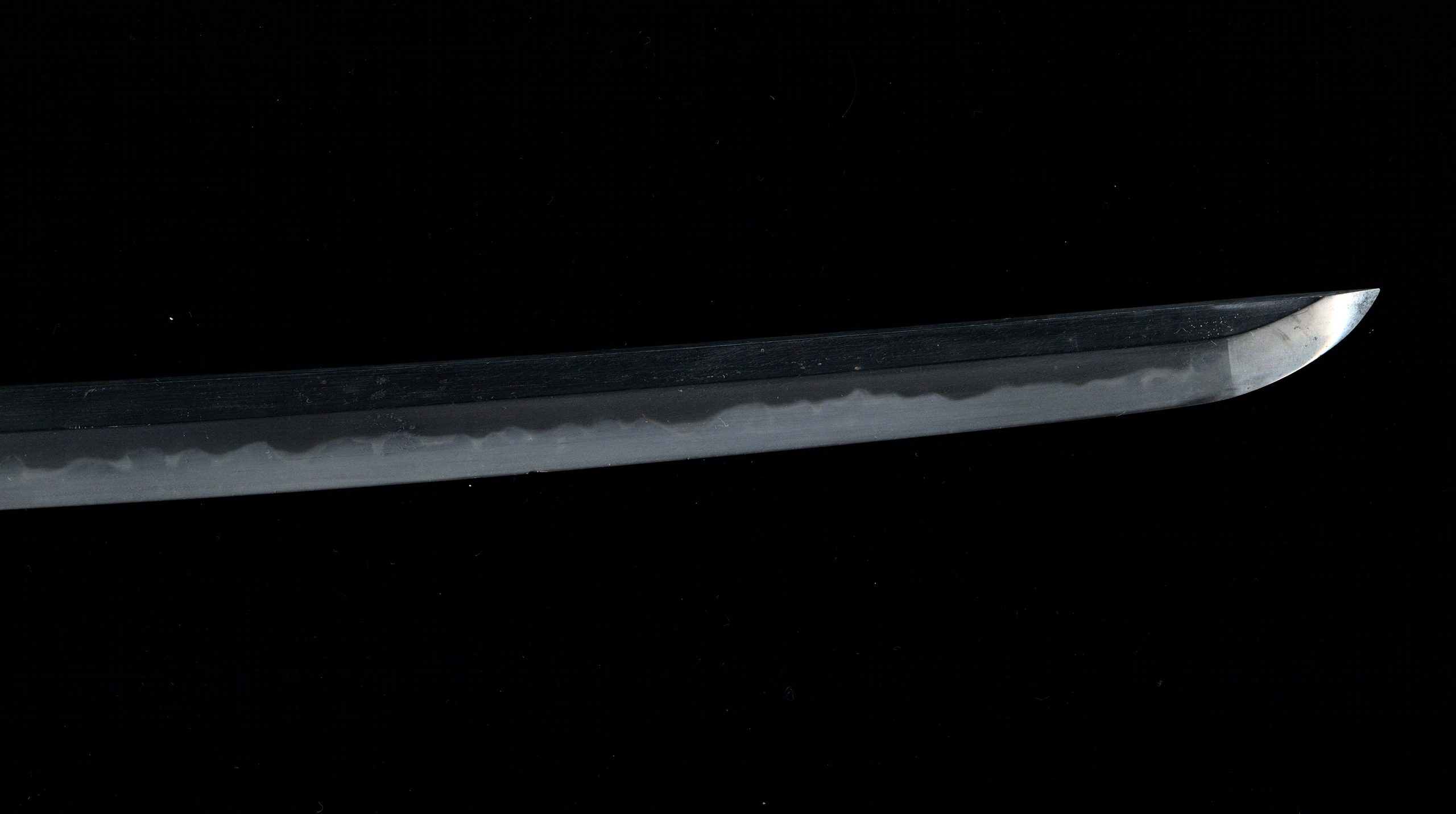
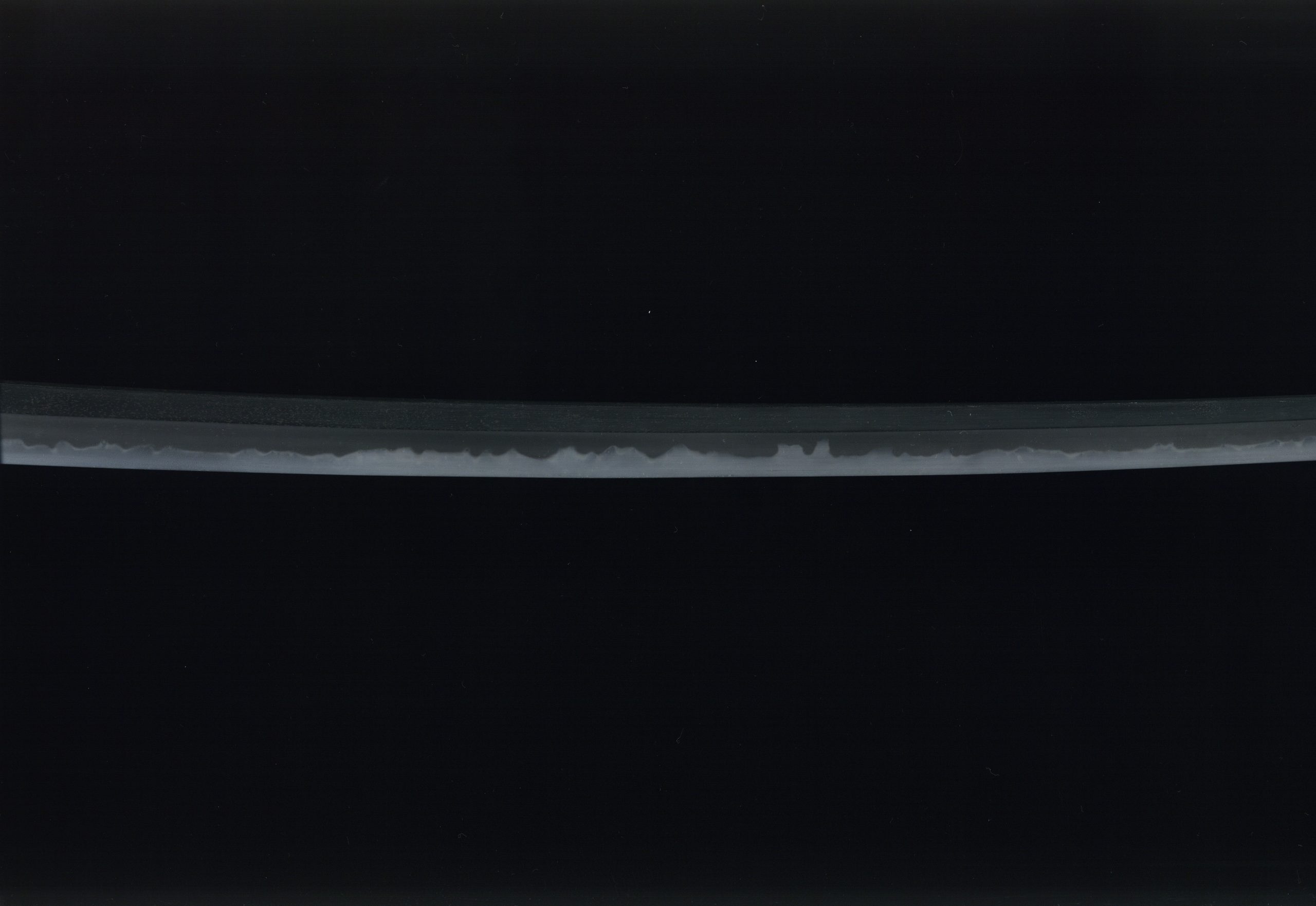
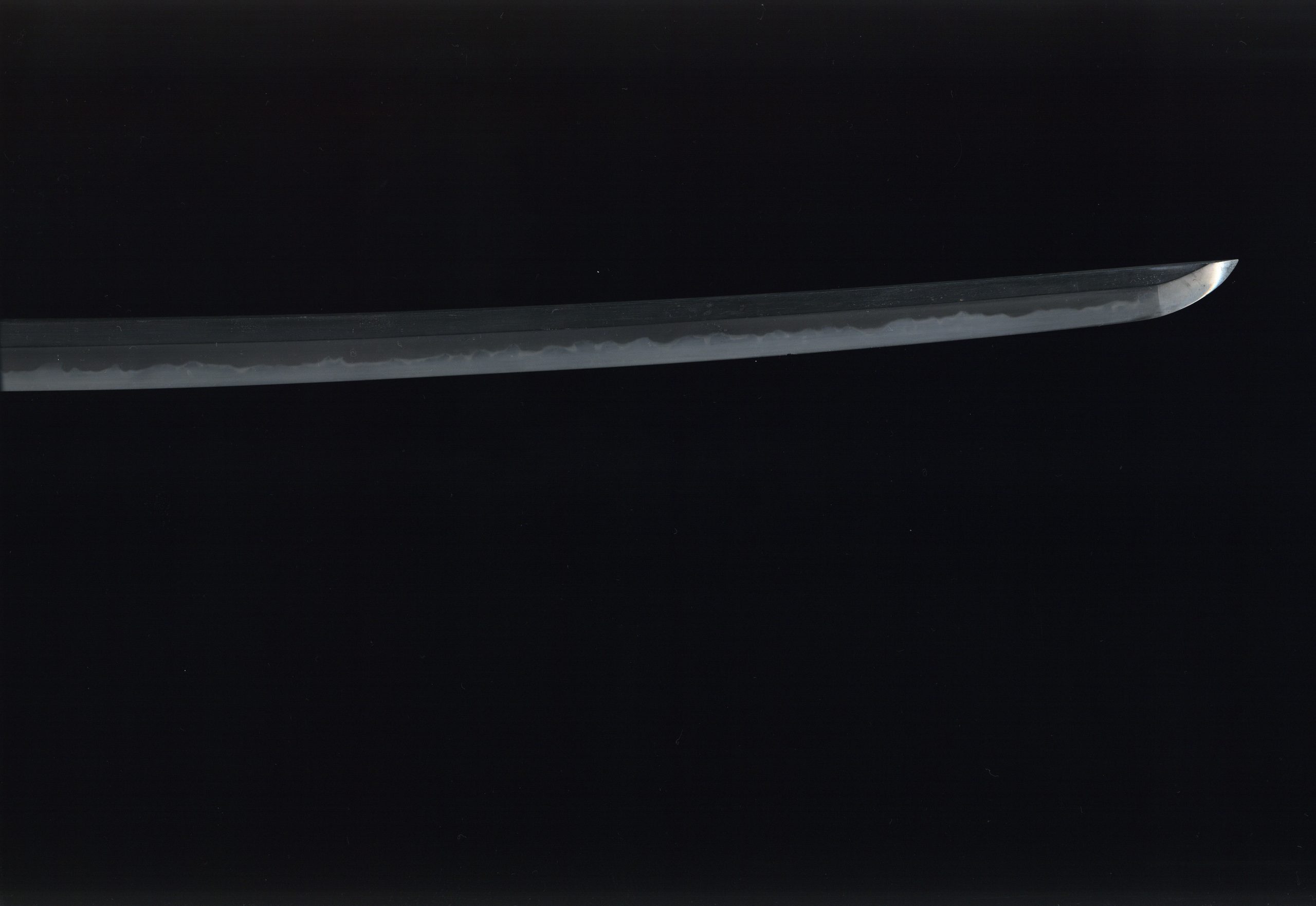
This is a katana of clean lines and harmonious presence, with moderate curvature and a well-proportioned kissaki. The visible hamon develops in an undulating notare mixed with gunome pattern, broad and continuous in appearance, with a pleasing irregular rhythm running along the edge. The tempered line reads clearly and attractively, giving the blade character while preserving visual balance.
The jihada is visible, showing a discernible itame texture in several areas, bringing life to the ji. Under proper light, the surface conveys an honest and well-worked steel structure.
The nakago bears an old patina, is clearly suriage in form, and has two mekugi-ana, consistent with the torokusho. The overall geometry remains well proportioned, and the blade presents the classic image of an antique katana mounted for samurai wear, appealing both for collecting and display.
Koshirae
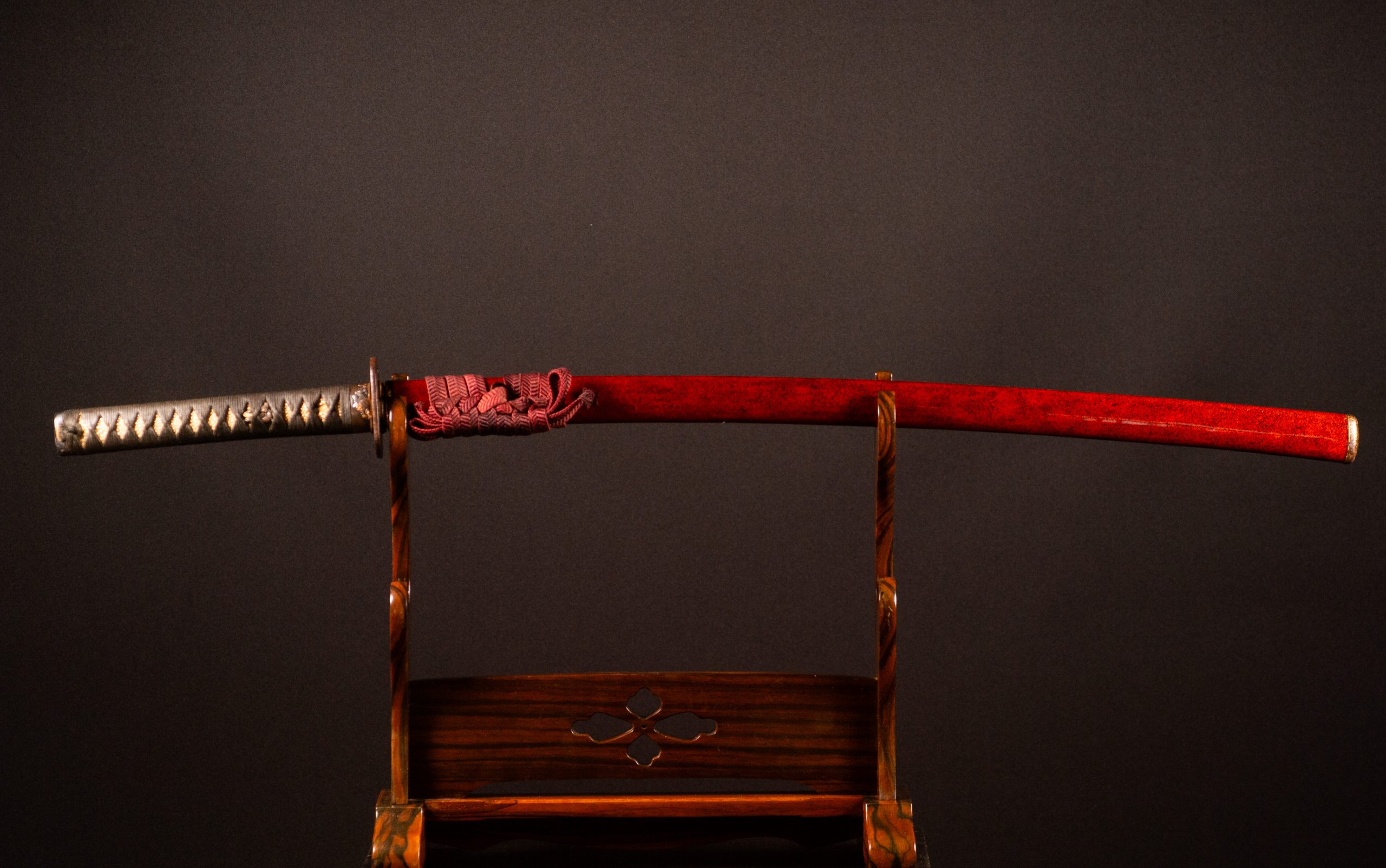
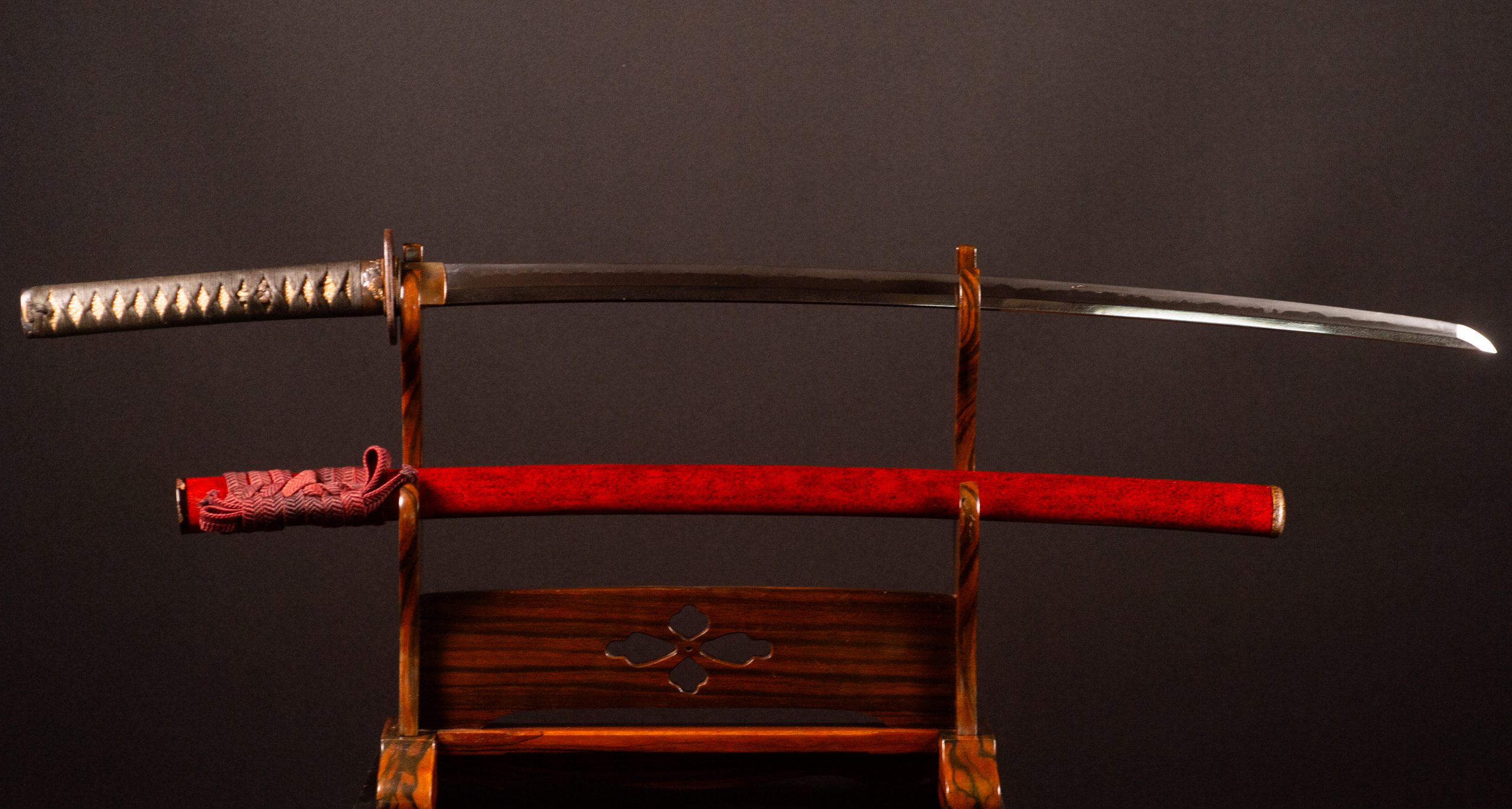
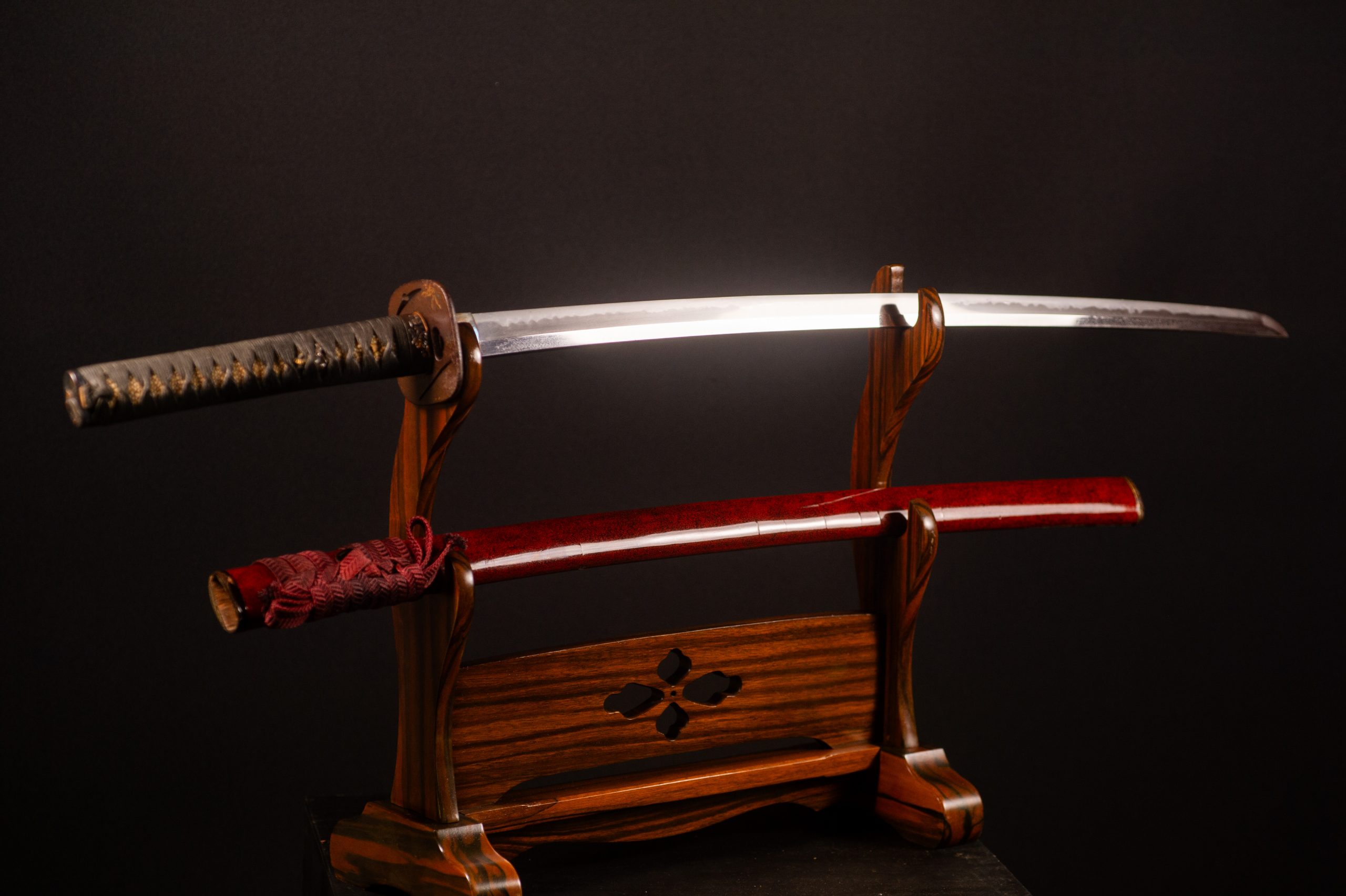
The sword is mounted in a particularly attractive koshirae, visually striking and highly coherent in decorative terms.
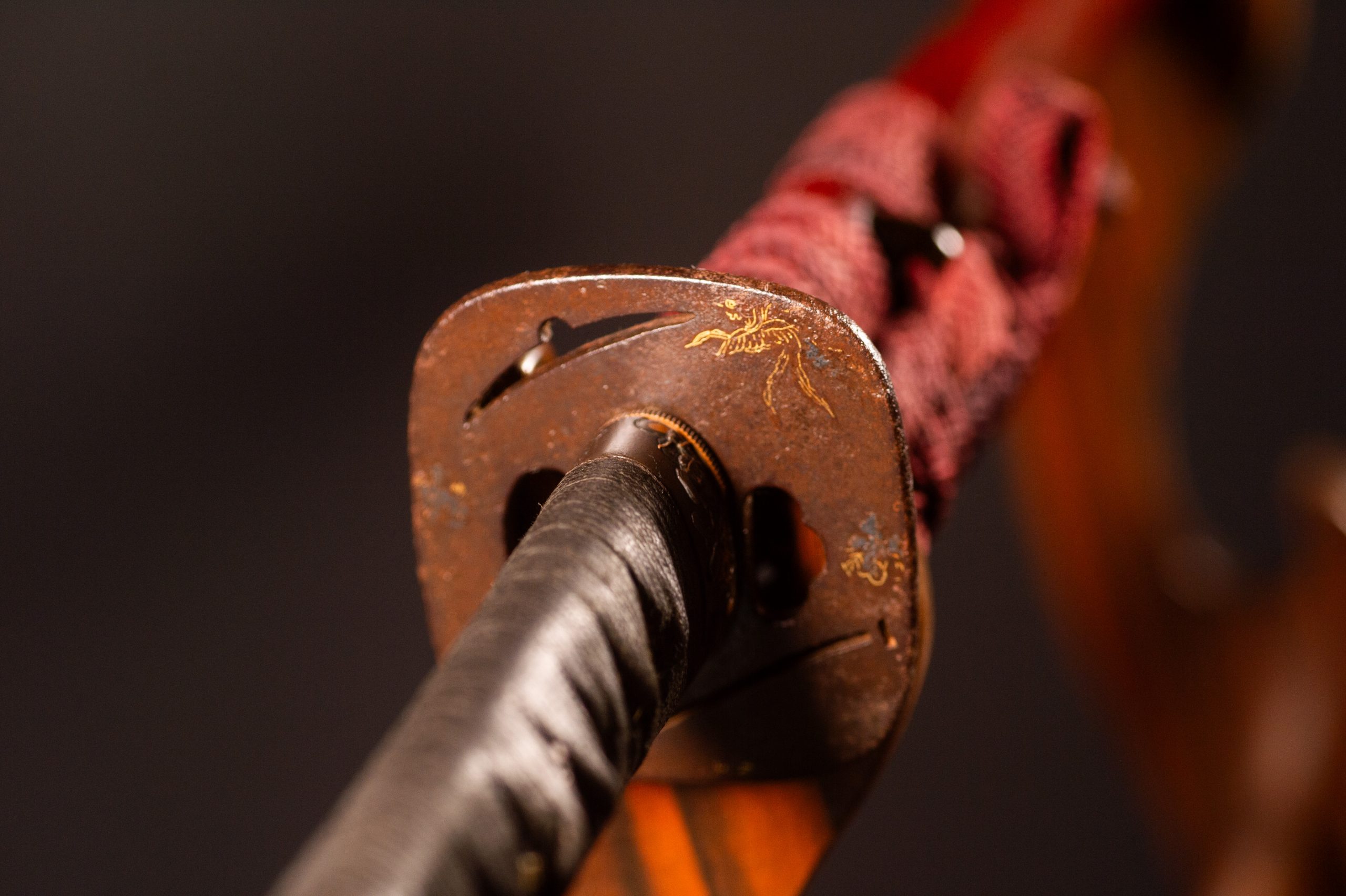
The saya, finished in a vivid vermilion red lacquer with dark speckling, gives the piece unusual presence and strong display appeal. The finish is lively and distinguished. The kojiri is completed in an aged golden-toned finish, integrating well with the mounting. The sageo, in a dark burgundy tone, complements the dominant color of the scabbard effectively.
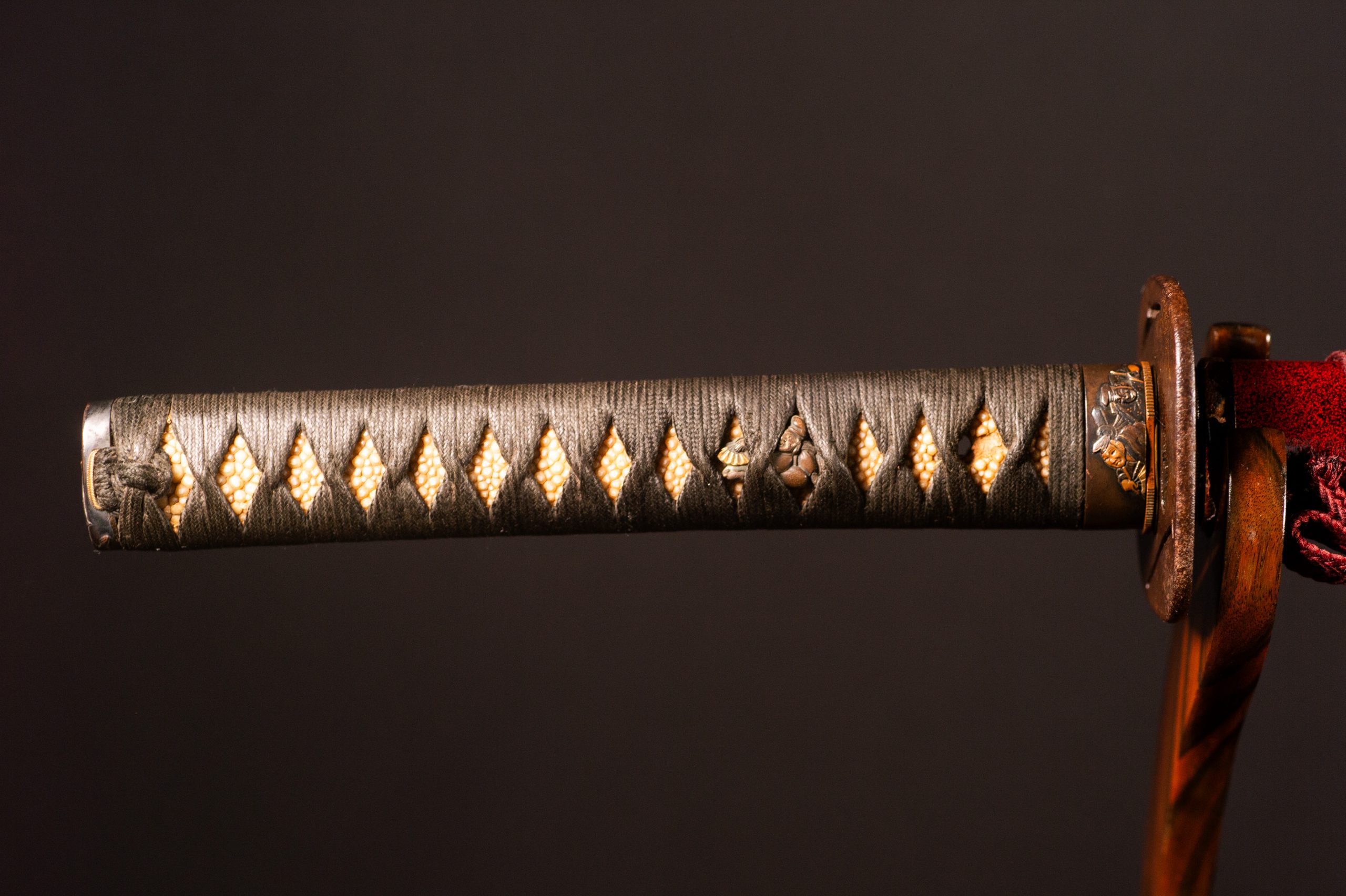
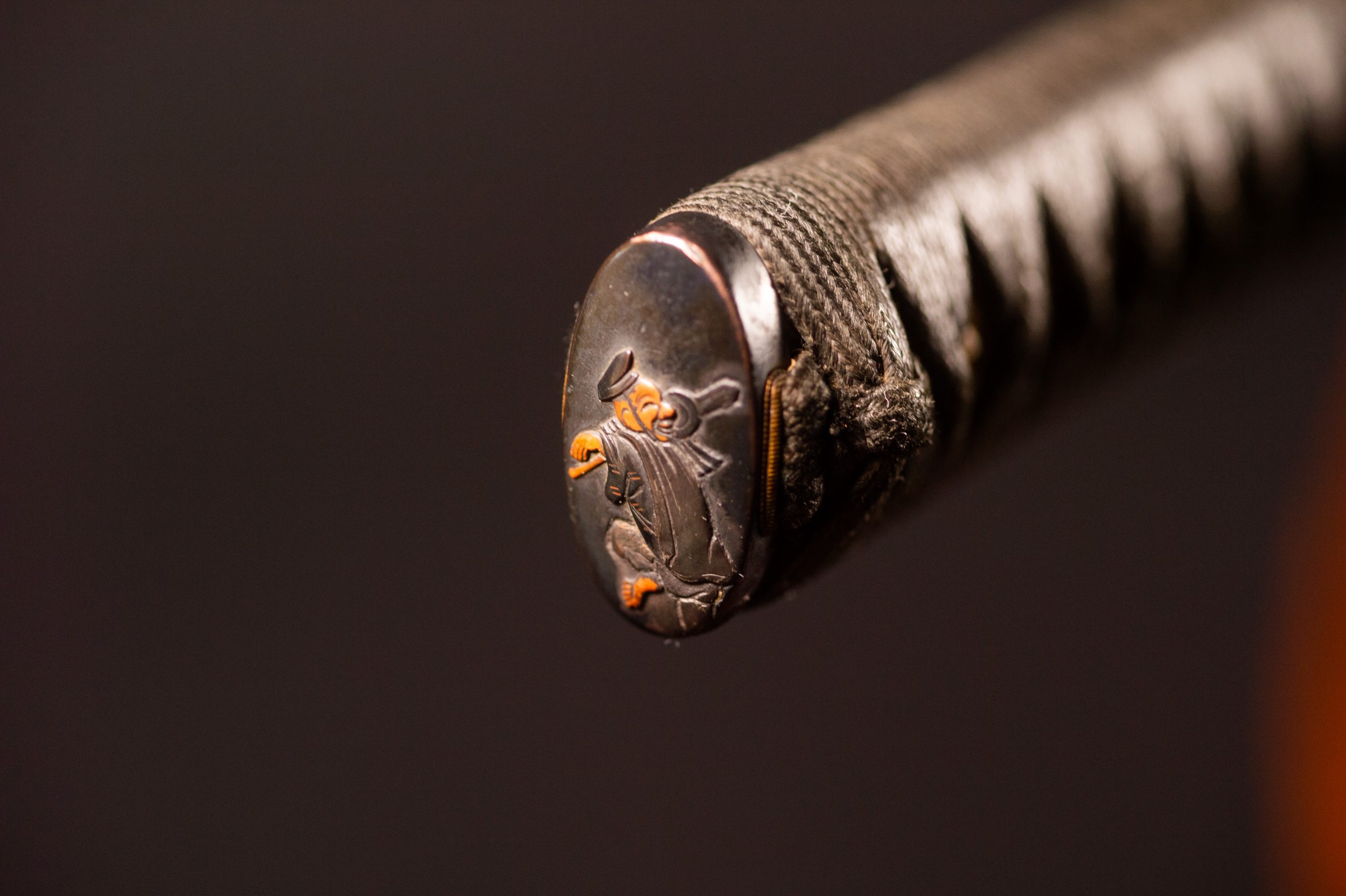
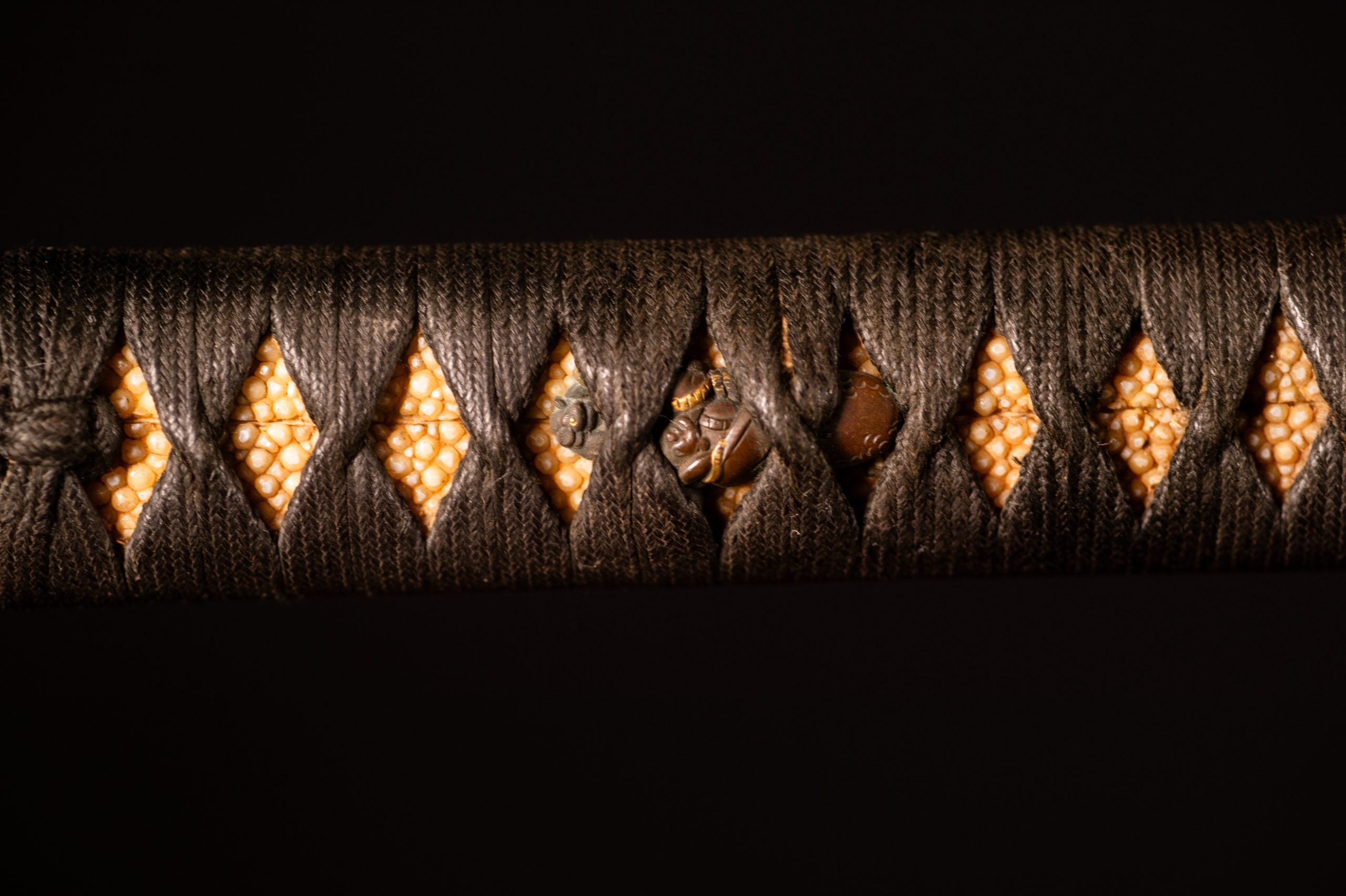
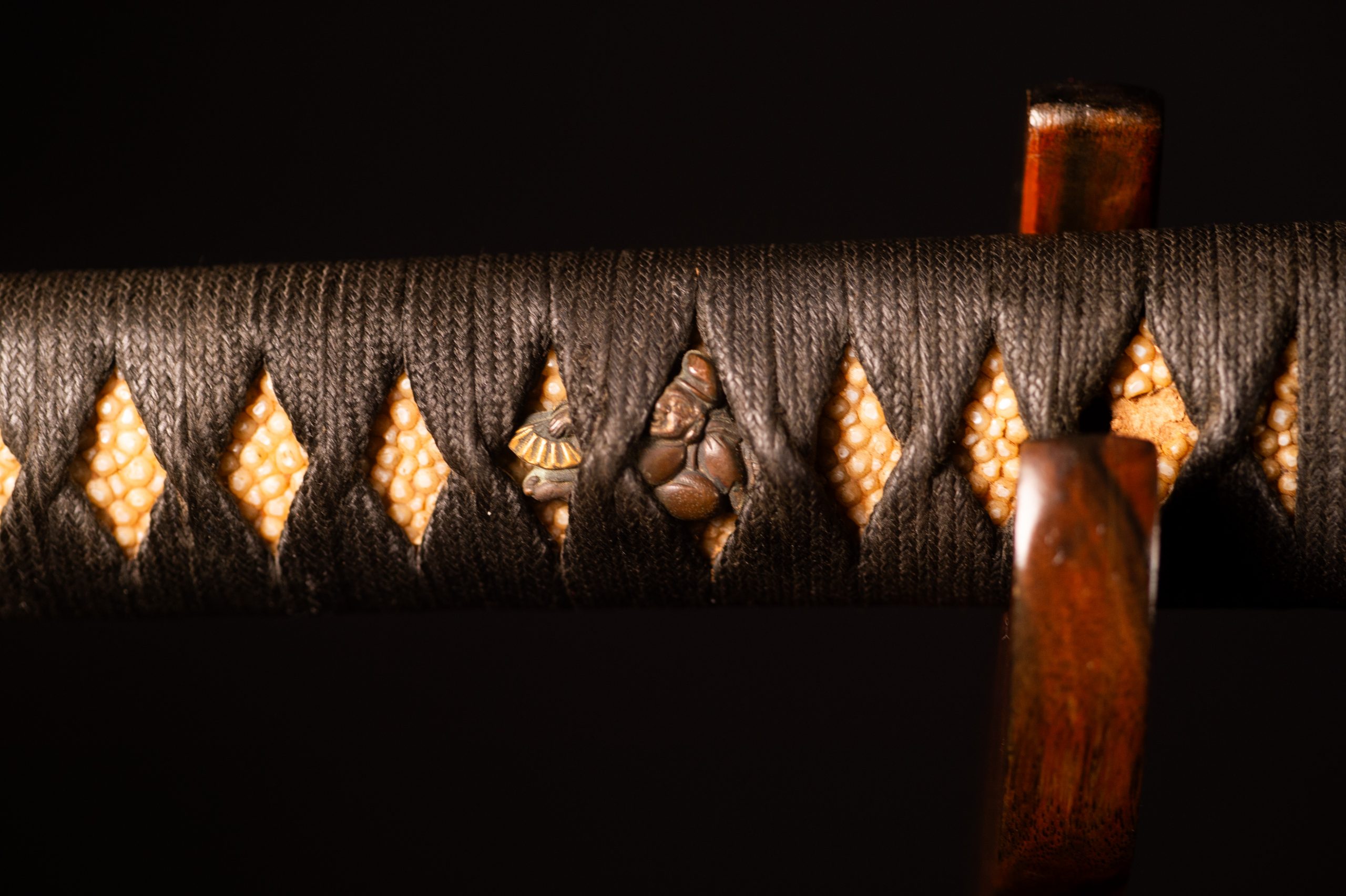
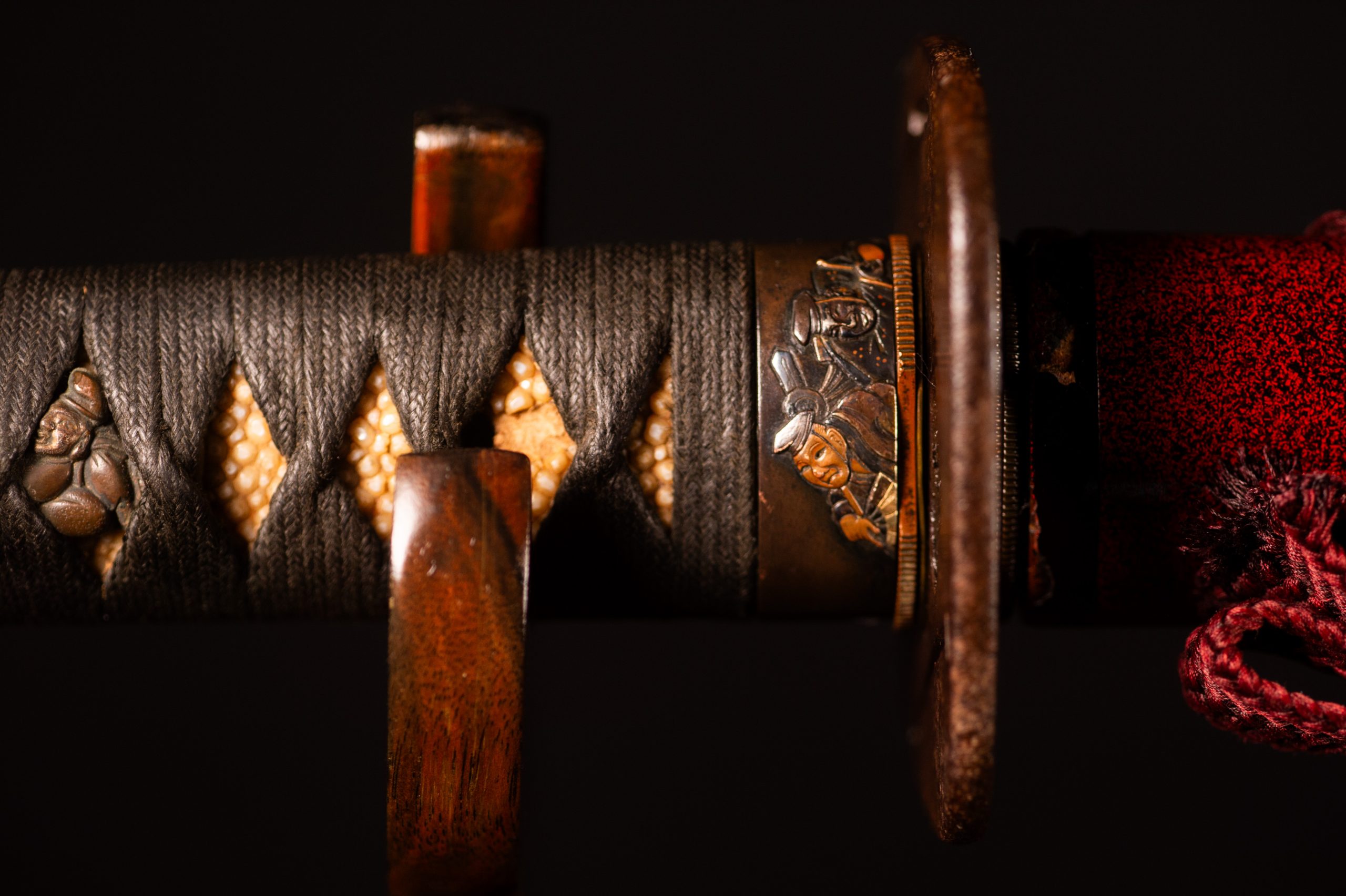
The tsuka is wrapped in black tsuka-ito over white samegawa, creating a classic and elegant contrast. The menuki are figurative relief elements, adding visual interest between the wrap diamonds. The fuchi-kashira is decorated with excelent quality narrative relief scenes and colored details, distinctly traditional in taste and very pleasing ornamentally.
The tsuba, of iron, has a softly squared outline with rounded corners, side openings, and delicate surface decoration. Its dark tone and patina work well with the rest of the mounting, reinforcing the restrained character of the hilt against the stronger chromatic statement of the saya.
The habaki, in gilded metal, completes the mounting with a clean and functional accent.
General description
This is an antique katana with strong visual presence, mounted in a koshirae of particular appeal due to the force of its red saya and the discreet richness of its figurative details. The blade, mumei and suriage, retains convincing aesthetic quality, with a clearly visible undulating hamon and a classical silhouette that works equally well on technical and decorative levels. It is a sword with personality, suited to the collector seeking an authentic Japanese blade with balanced proportions and a highly attractive mounting.
Technical sheet
Antique Japanese katana
Mumei, suriage
Nagasa: 69.1 cm
Sori: approx. 1.7 cm
Mekugi-ana: 2
Hamon: visible notare-gunome
Jihada: visible itame
Nakago: suriage, old patina
Koshirae: complete
Saya: vermilion red with dark speckled finish
Tsuka: black tsuka-ito over white samegawa
Fuchi-kashira: decorated with relief figures
Menuki: figurative
Tsuba: iron, softly squared form, with side openings
Habaki: gilded metal
Order above 1.000,00 € gets free shipping.
Secure and hassle-free payment process.
Hassle-free returns with a money-back guarantee.
Have questions? Contact us via WhatsApp.

© 2024 Created with Royal Elementor Addons