
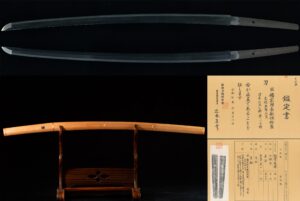
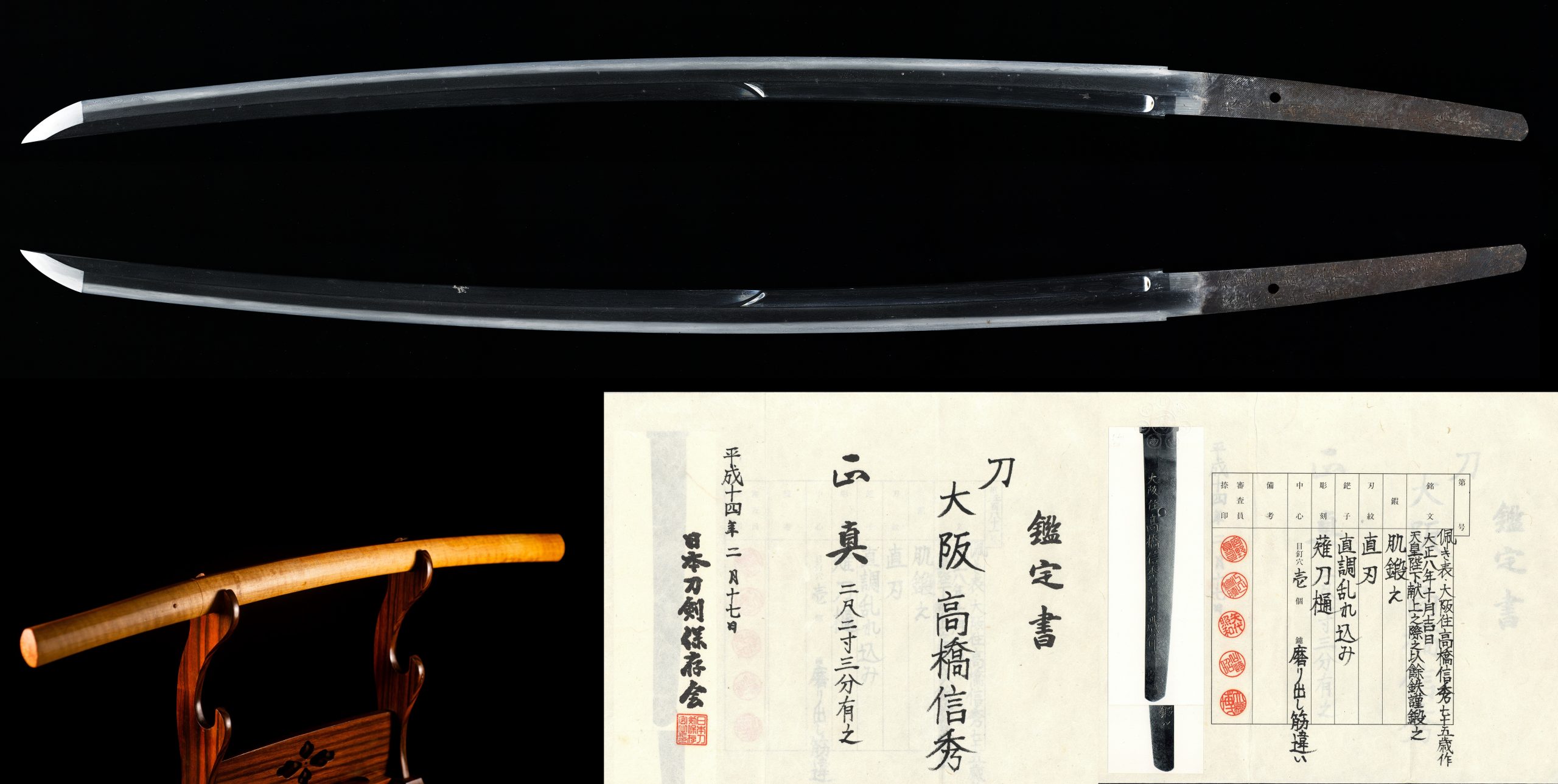


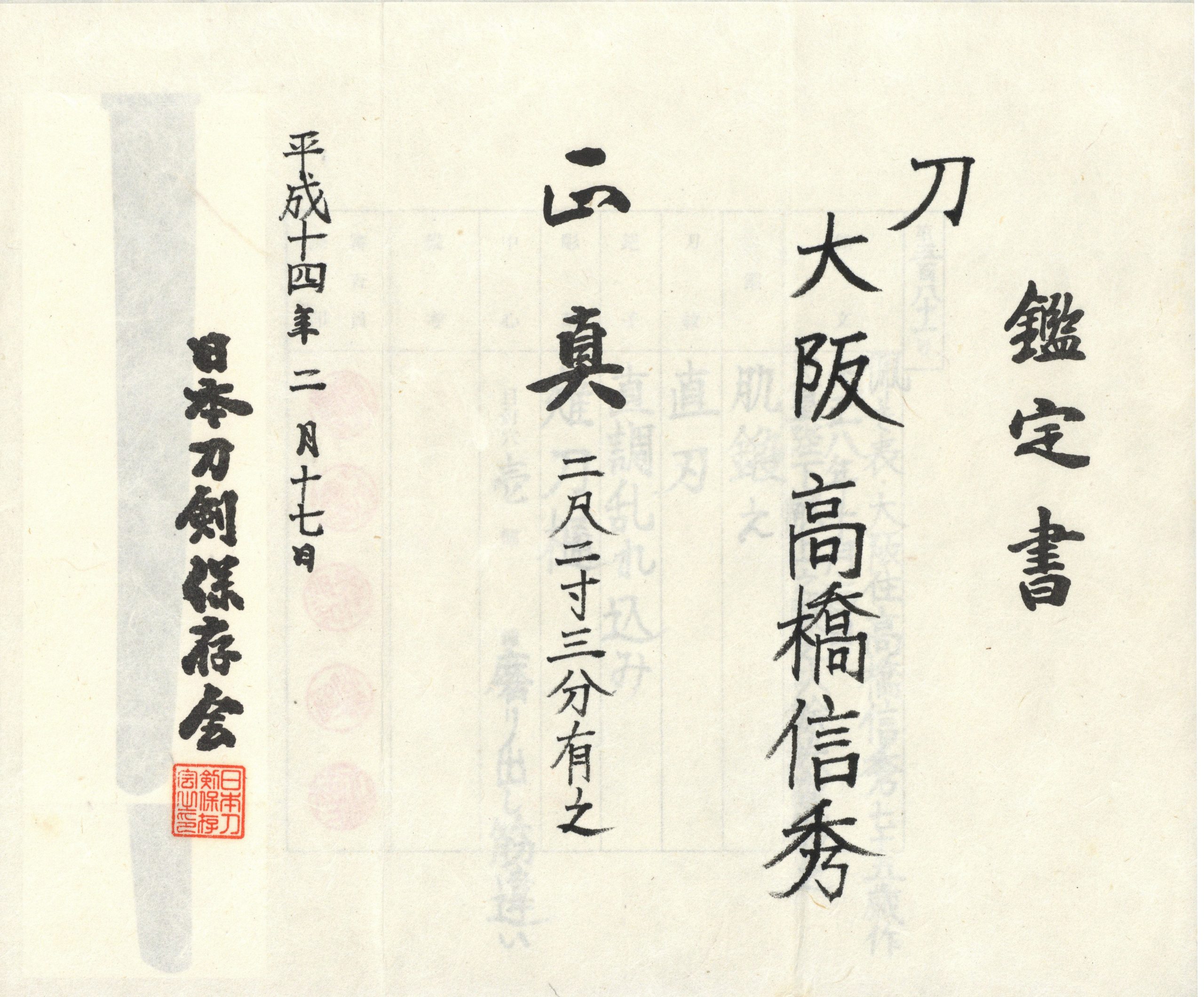
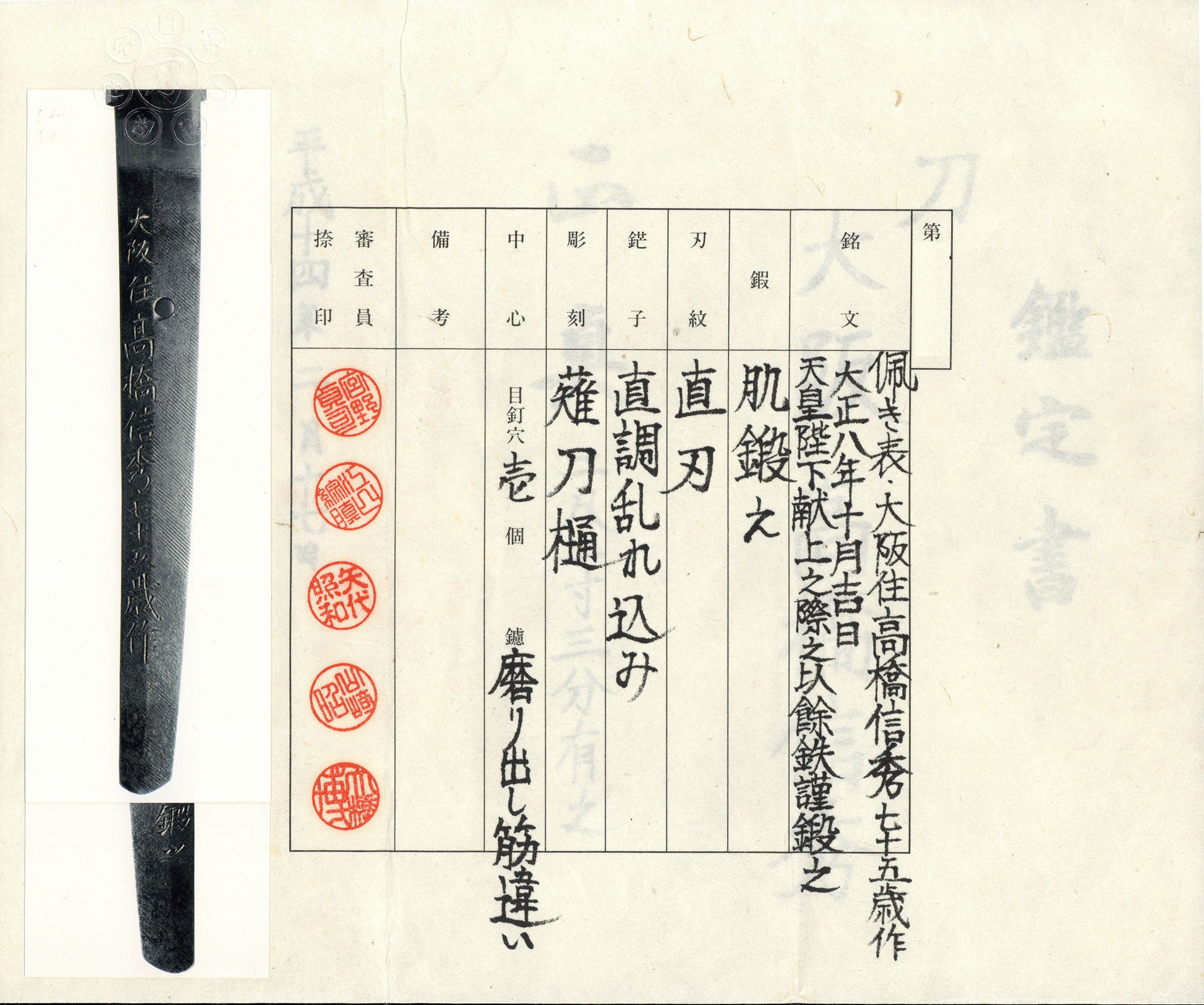




1) Kanteisho / Appraisal Certificate – 日本刀剣保存会
-
Translation:
-
“Appraisal certificate (sword).”
-
“Osaka – Takahashi Nobuhide (信秀).”
-
“Length: 2 shaku 2 sun 3 bu (equivalent to 67.6 cm).”
-
“17 February, Heisei 14 (2002).”
-
“Nihon Tōken Hozonkai (Japanese Sword Preservation Association).”
-
Forging/texture: “hada-kitae (肌鍛え).”
-
Hamon: “suguha (直刃).”
-
Bōshi: “sugu-chō midare-komi (直調乱れ込み).”
-
Carving/groove: “ganto-hi (雁刀樋).”
-
Mekugi-ana: “one.”
-
Yasurime: “suridashi sujikai (磨り出し筋違い).”
-
Inscription:
-
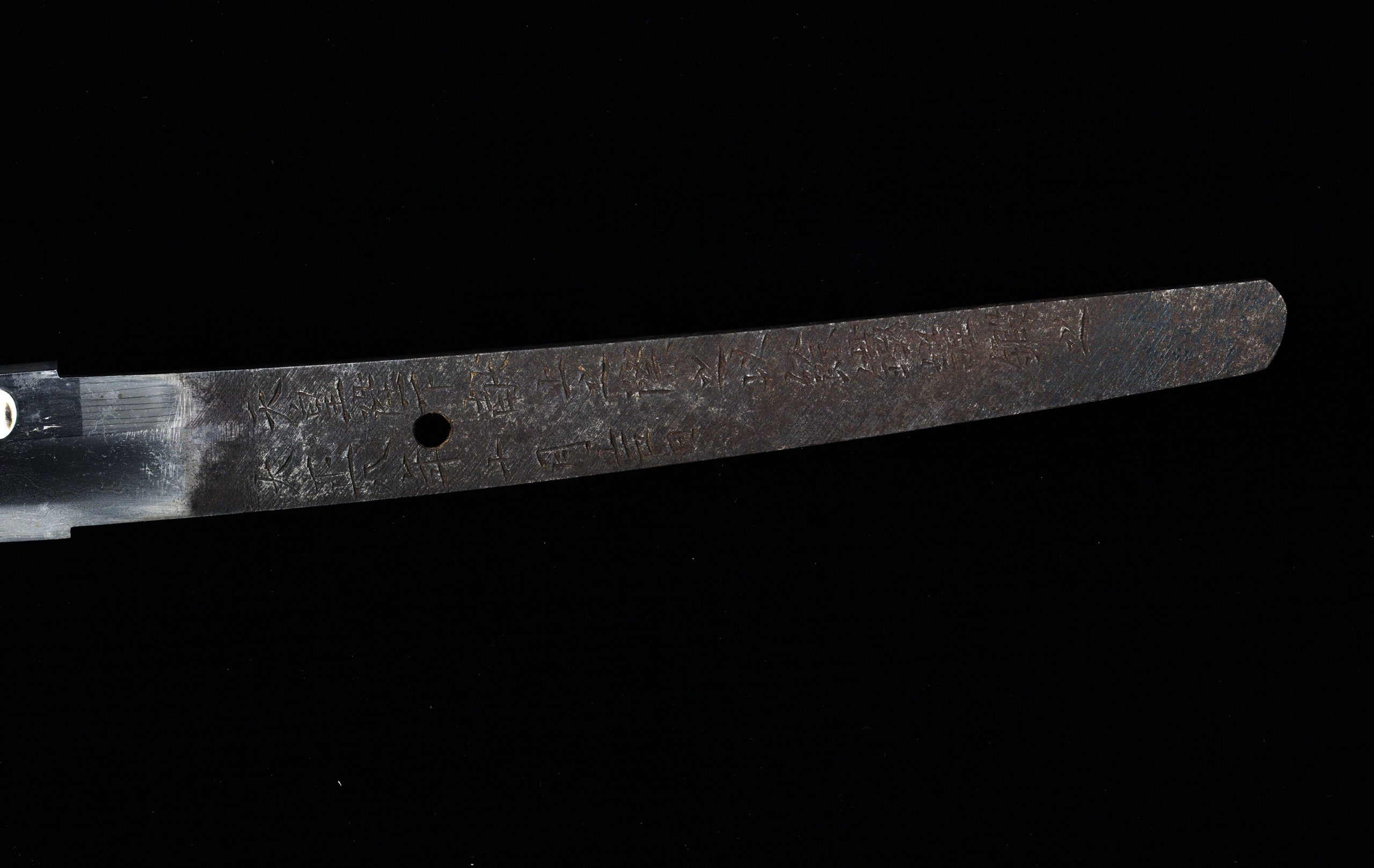
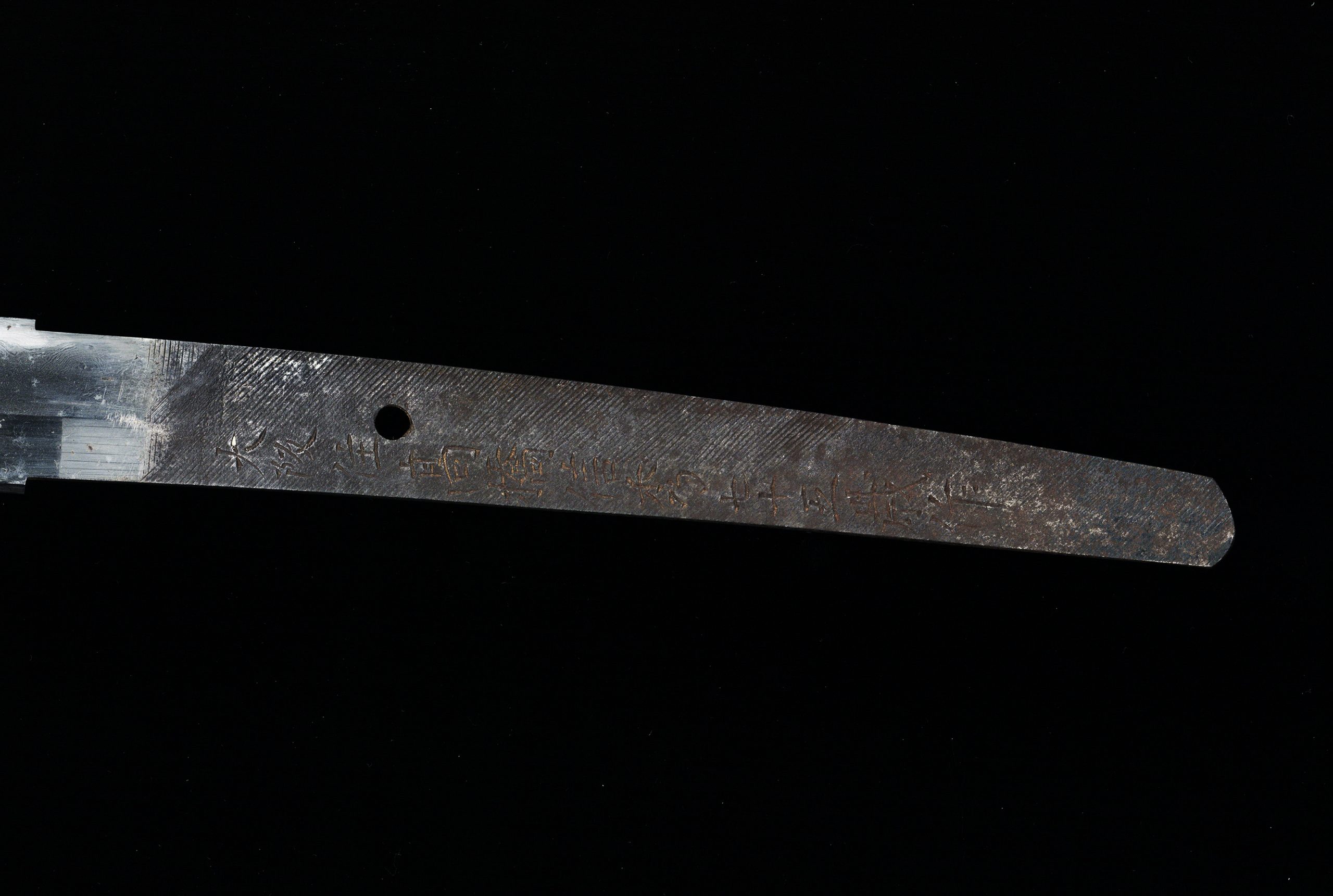
Wear-side omote: “Ōsaka-jū Takahashi Nobuhide (信秀), made at age 75.”
-
Wear-side ura: “On the occasion of a presentation to His Majesty the Emperor, forged using ‘yotetsu’, dated: an auspicious day in December, Taishō 8.”
-
-
2) 銃砲刀剣類登録証 (Torokusho / Registration)
-
Translation:
-
“Firearms and Swords Registration Certificate.”
-
“Category: tachi (たち).”
-
“Length: 67.6 cm.”
-
“Curvature: 1.7 cm.”
-
“Mekugi-ana: one.”
-
“Inscription (omote/ura):” repeats the same imperial presentation text and Taishō 8 date verbatim.
-
Smith, period, and significance
The blade is signed 大阪住 高橋信秀 (Ōsaka-jū Takahashi Nobuhide; sometimes rendered “Nobushide”) and dated 大正八年十二月吉日 (December 1919, Taishō 8). The nakago inscription adds an exceptionally uncommon, document-backed statement: “天皇陛下献上之際々…”, i.e., an explicit reference to an occasion of献上 (presentation/offering) to His Majesty the Emperor, together with the use of 余鉄 (yotetsu) in the forging. This is not modern marketing language: it appears both in the kanteisho and the official torokusho.
Takahashi Nobuhide is referenced as an active smith across the Meiji–Taishō–Shōwa transition, with high-level technical lineage (including association with the Gassan line) and works appearing in institutional/museum contexts in Japan.
From a collector’s perspective, this is the cluster of verifiable attributes that elevates a “good gendaitō” into a historically anchored piece: signed, age-stated, precisely dated, registered as tachi, and carrying an explicit imperial-presentation inscription supported by paperwork.
Technical description of the blade
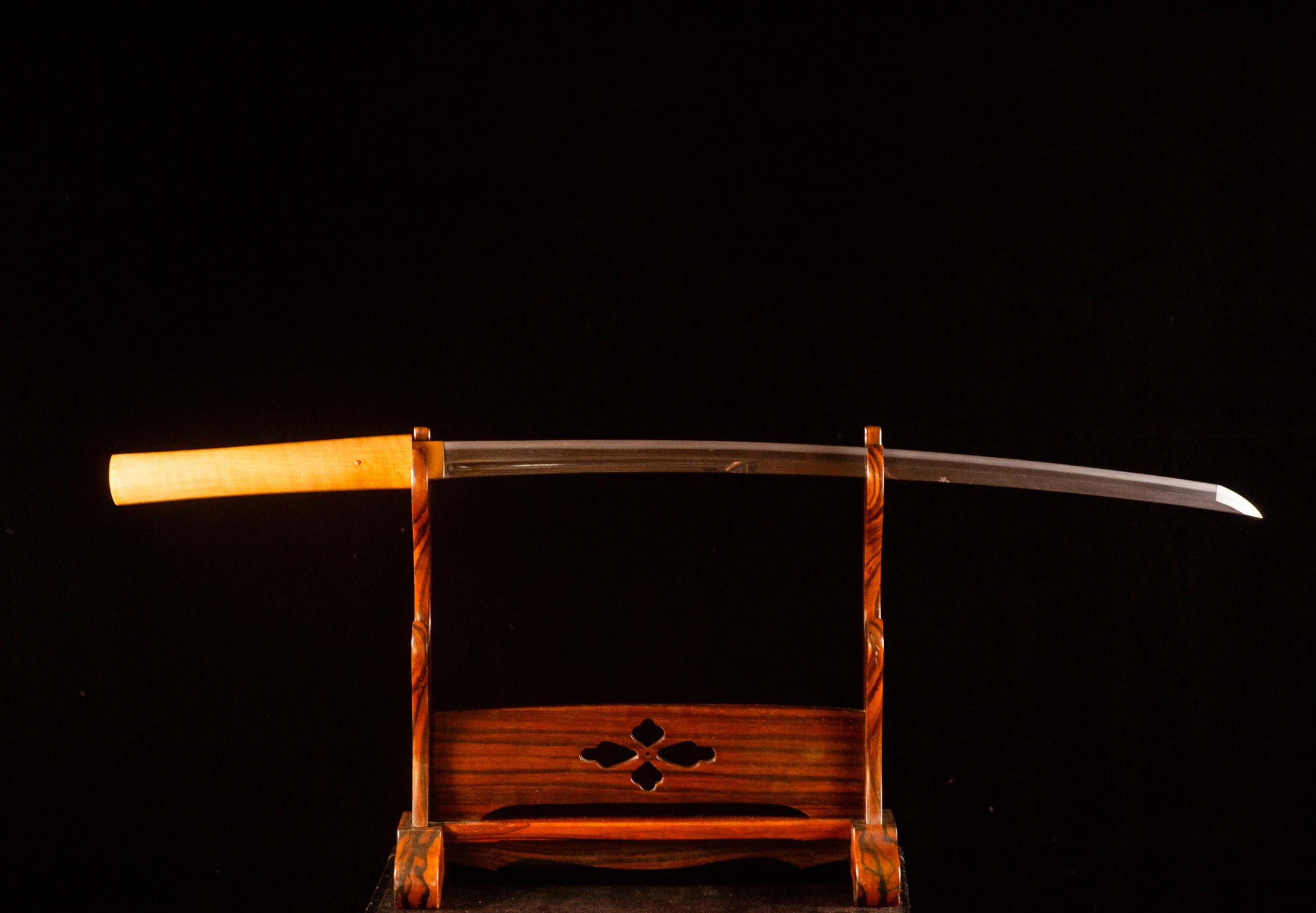
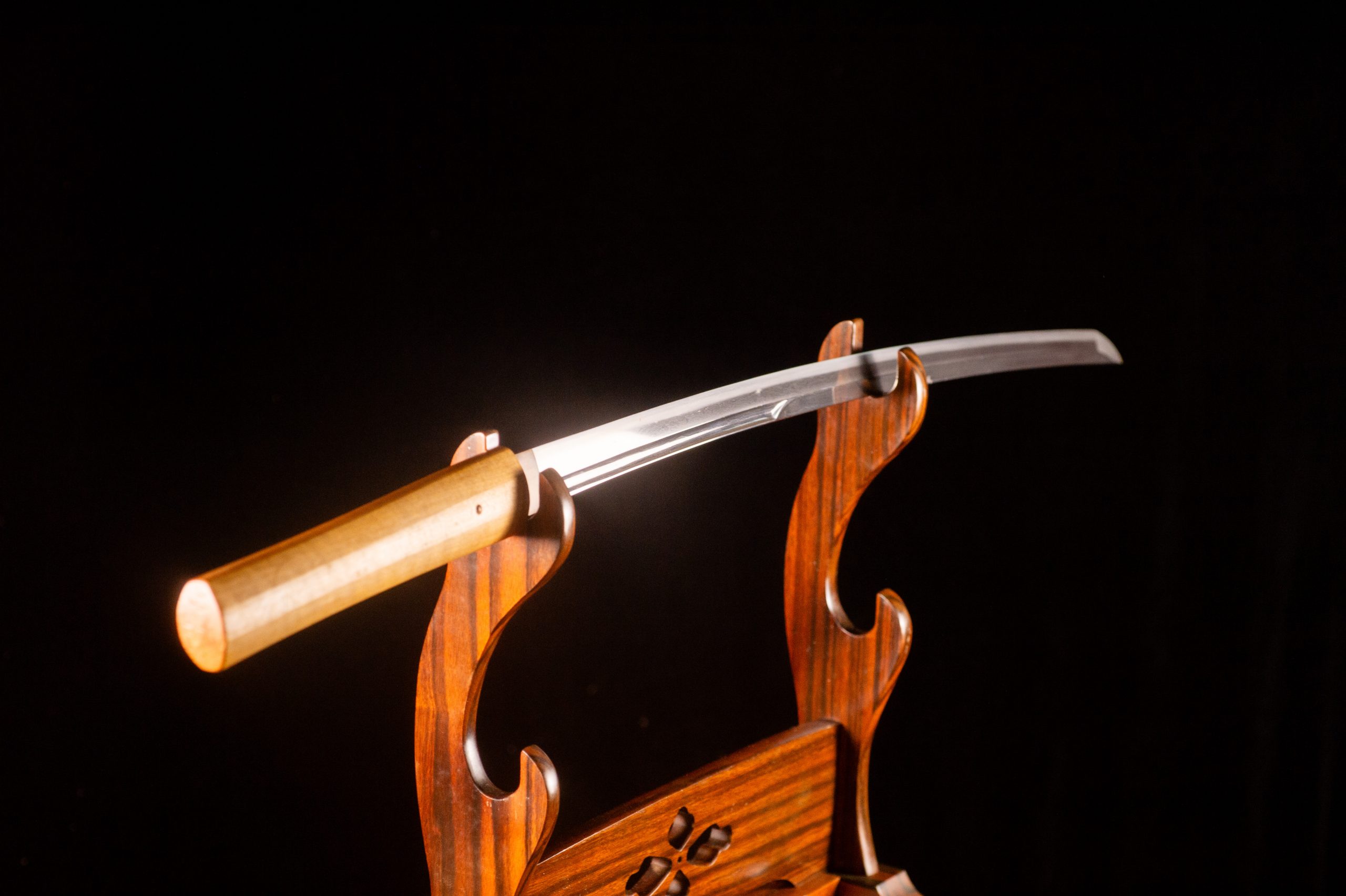
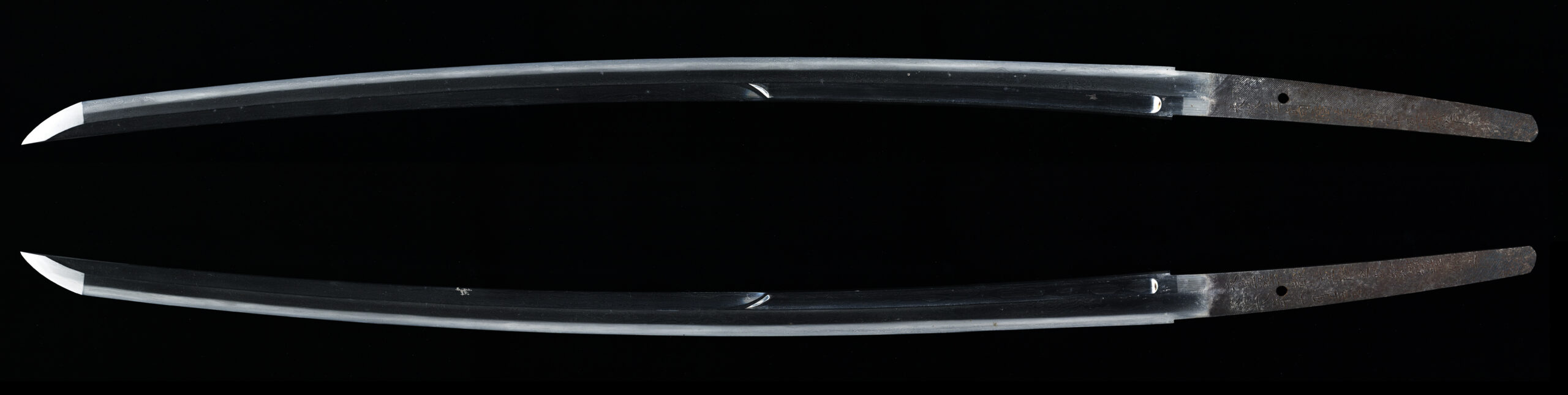
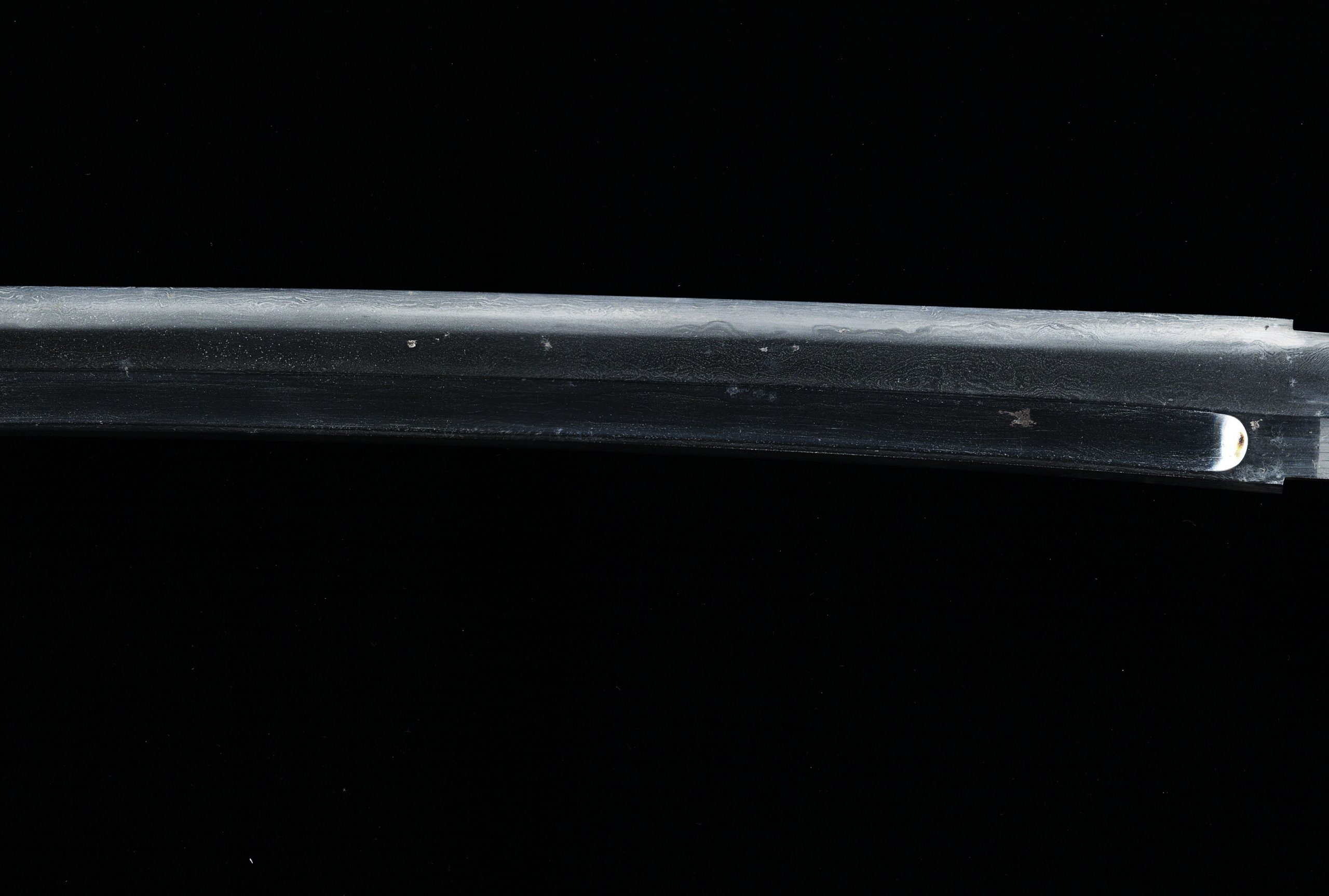
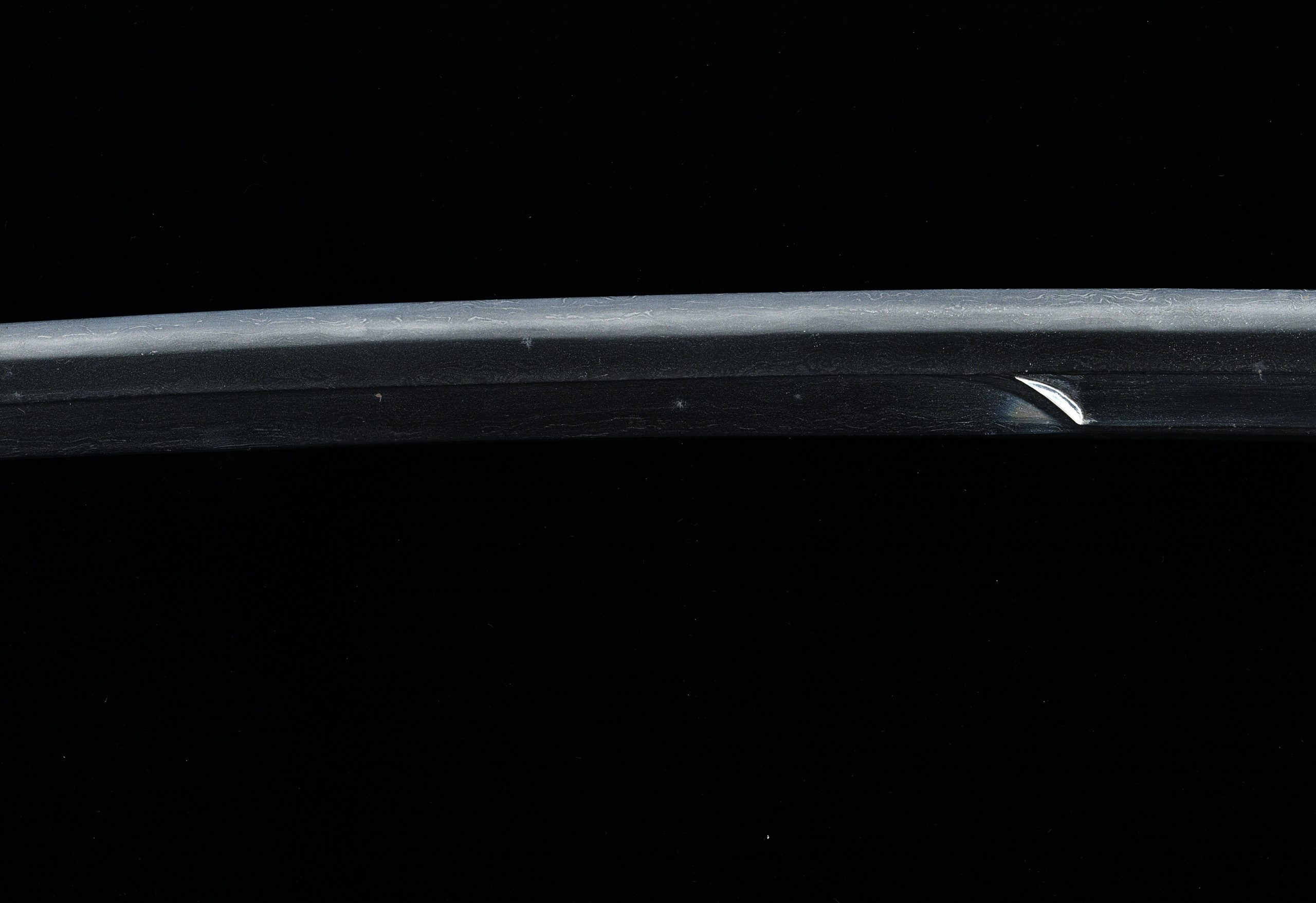
The sword is registered as a tachi (たち) and shows a long, elegant silhouette: nagasa 67.6 cm with sori 1.7 cm, a notably balanced proportion for an early-20th-century tachi-format blade.
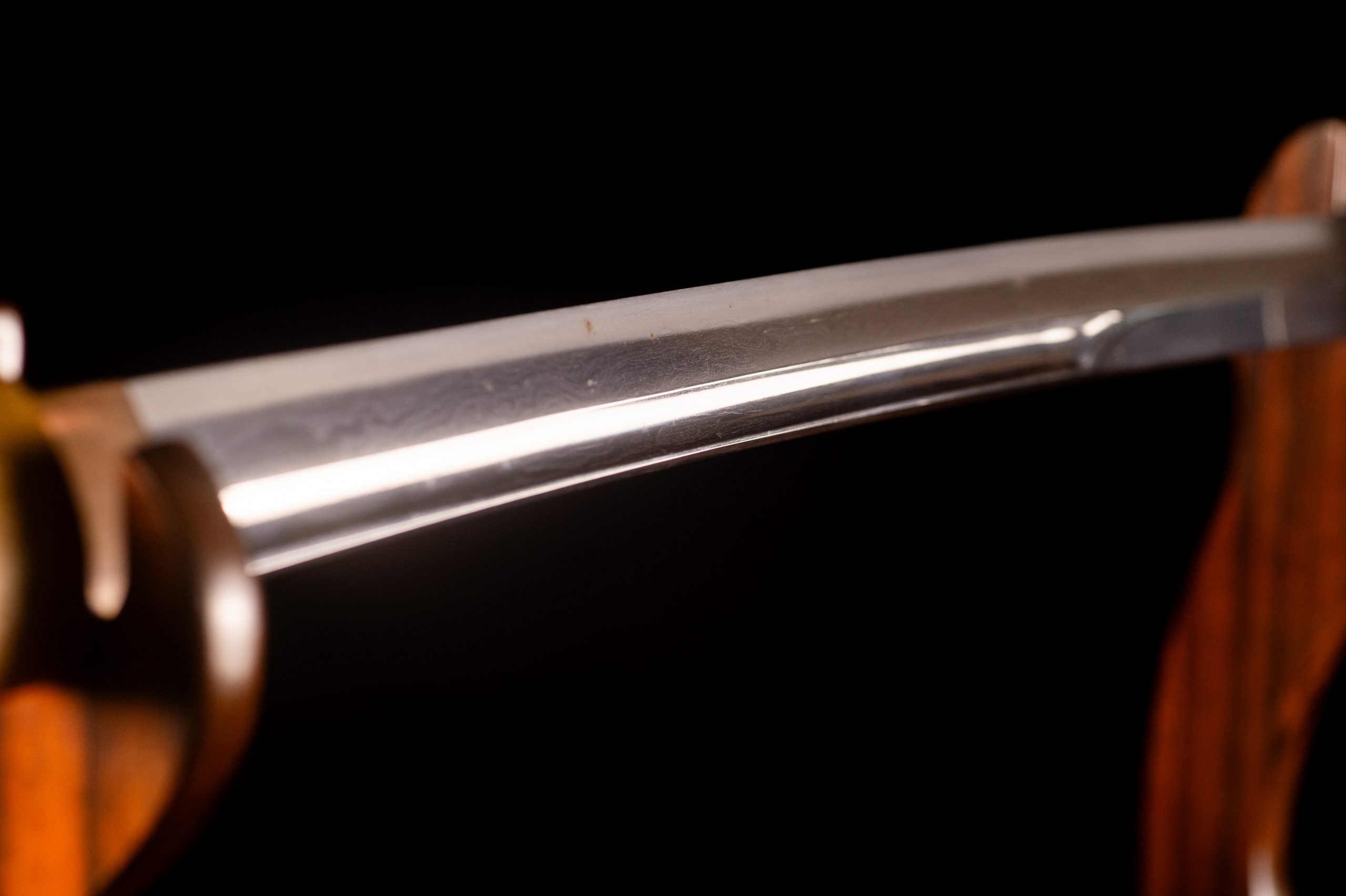
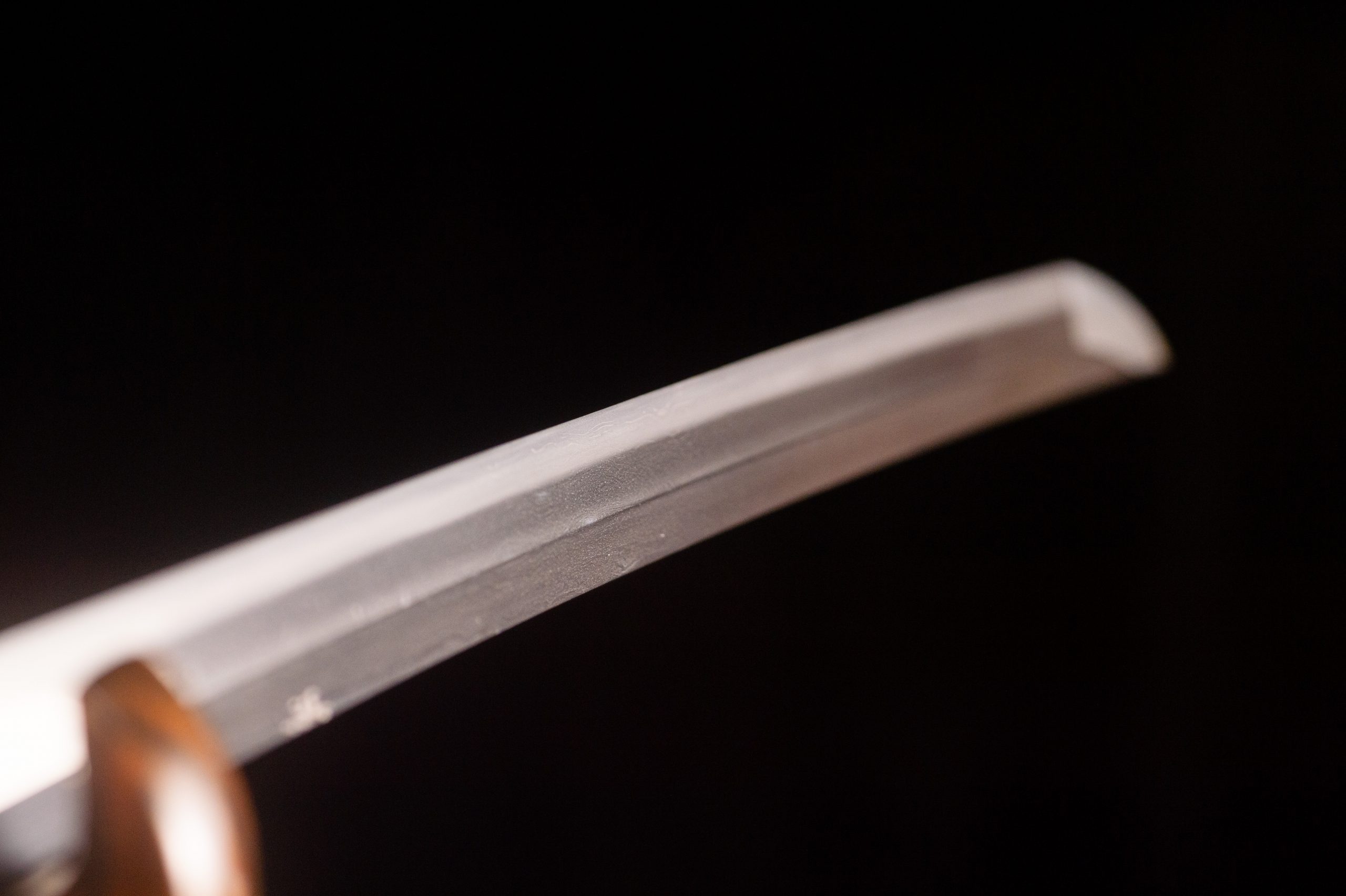
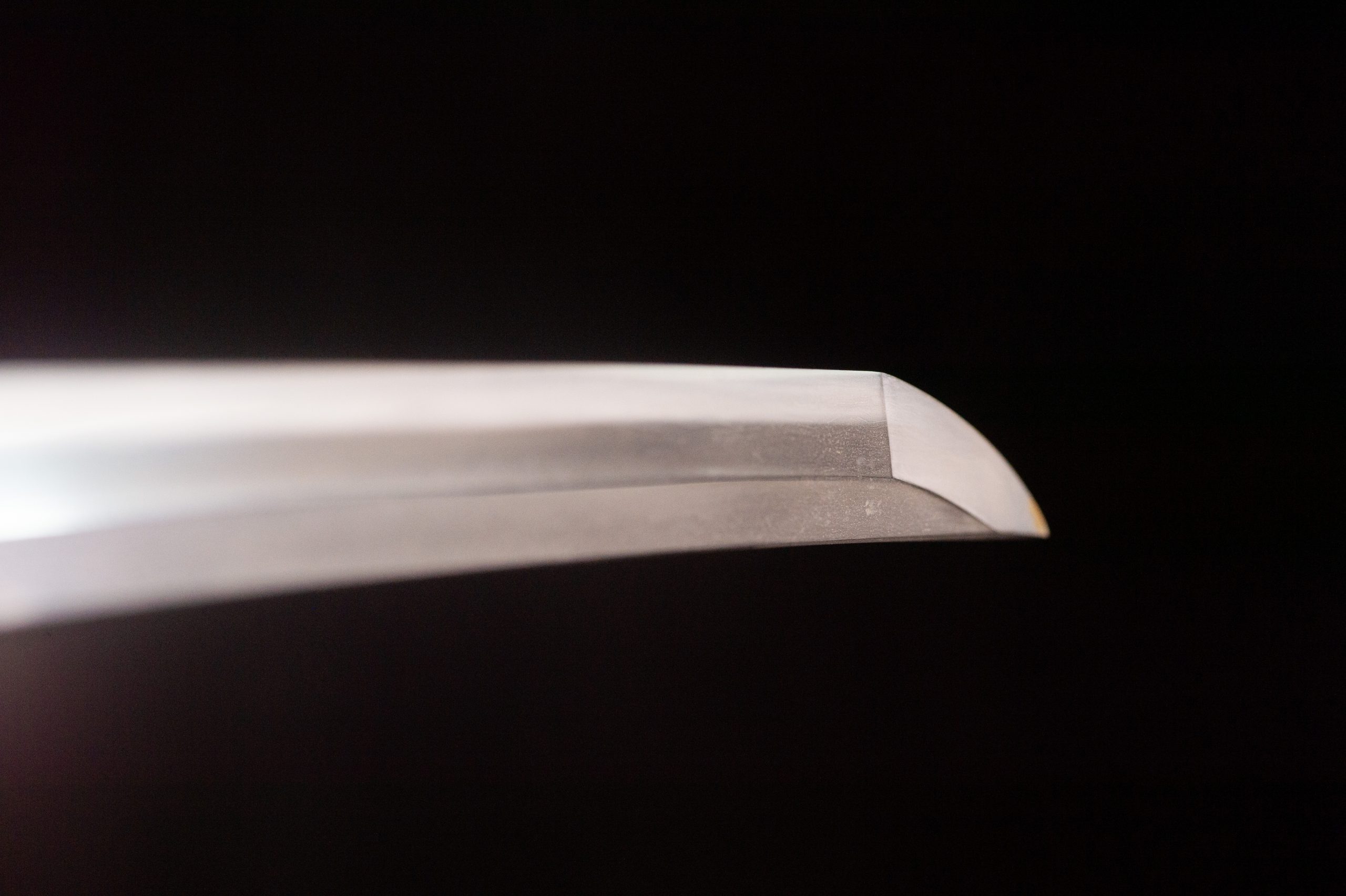
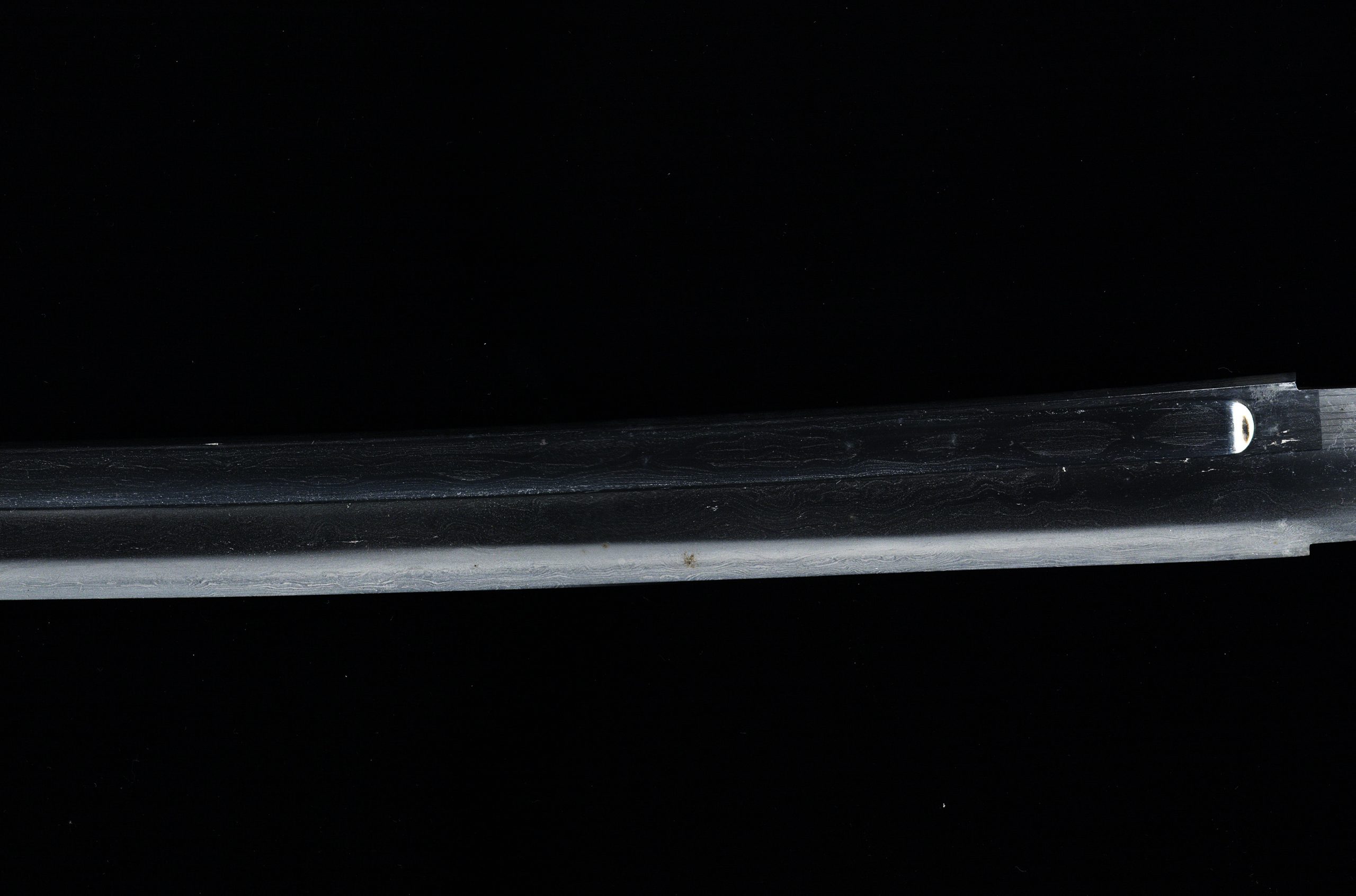
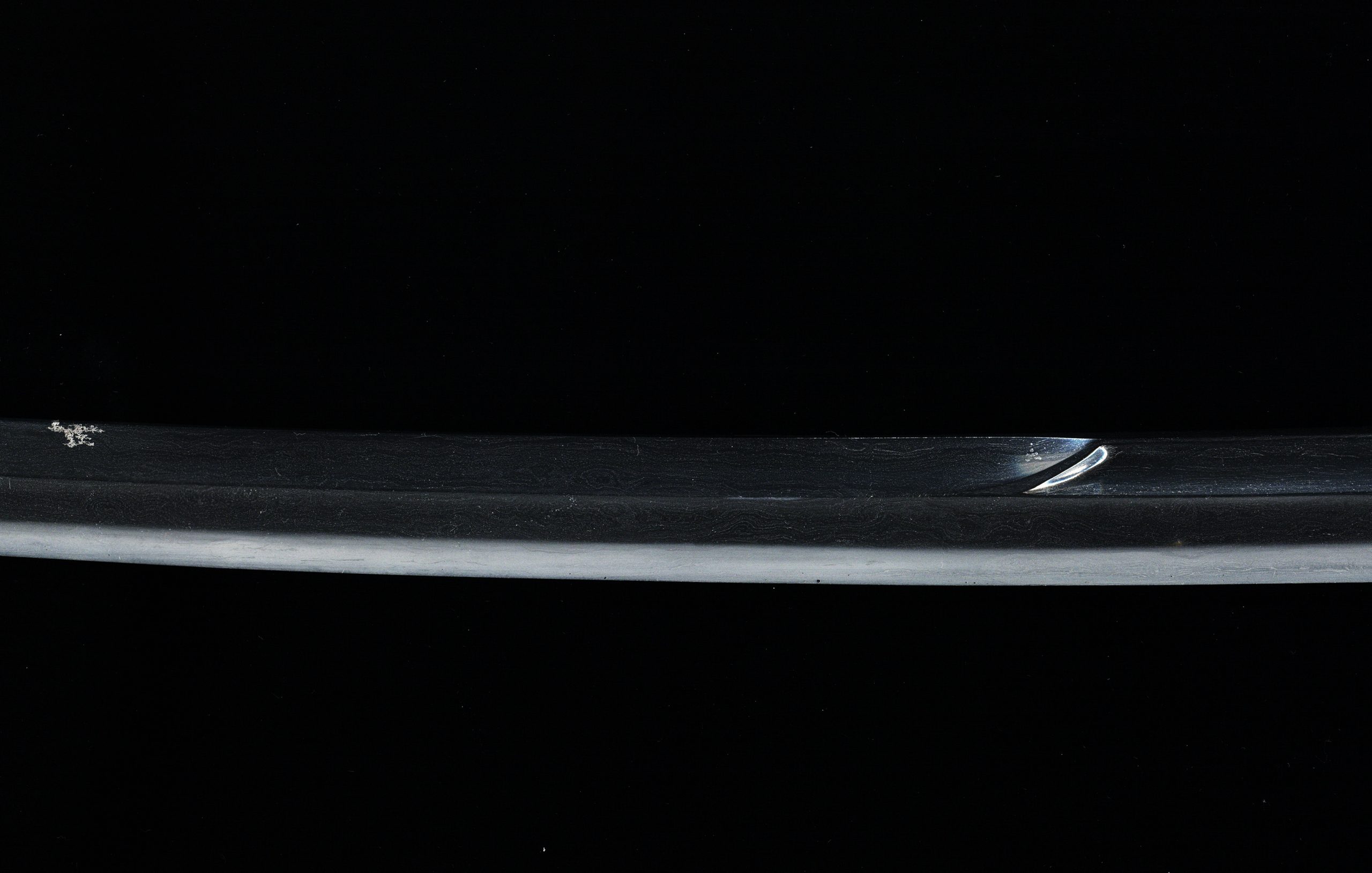
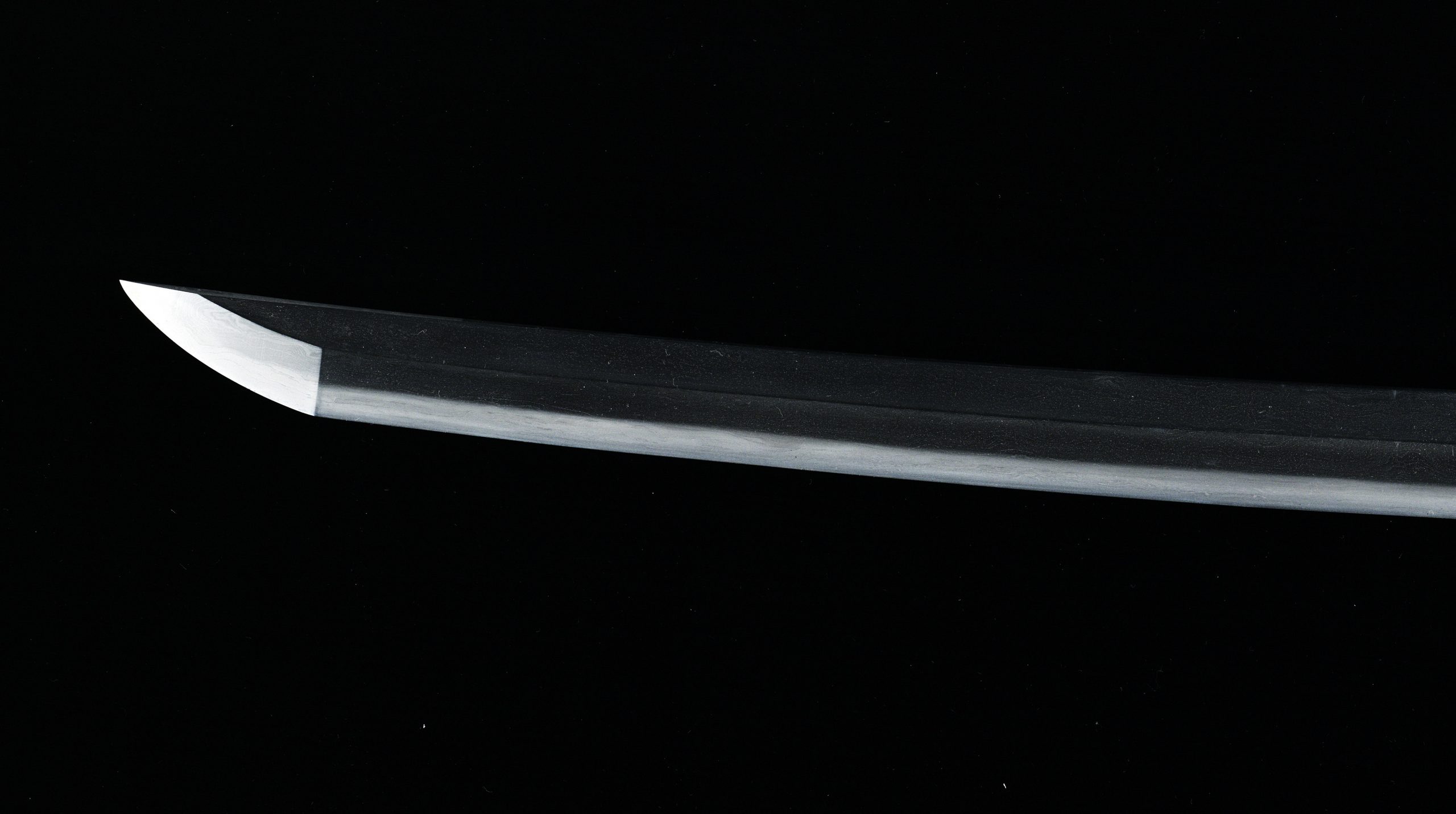
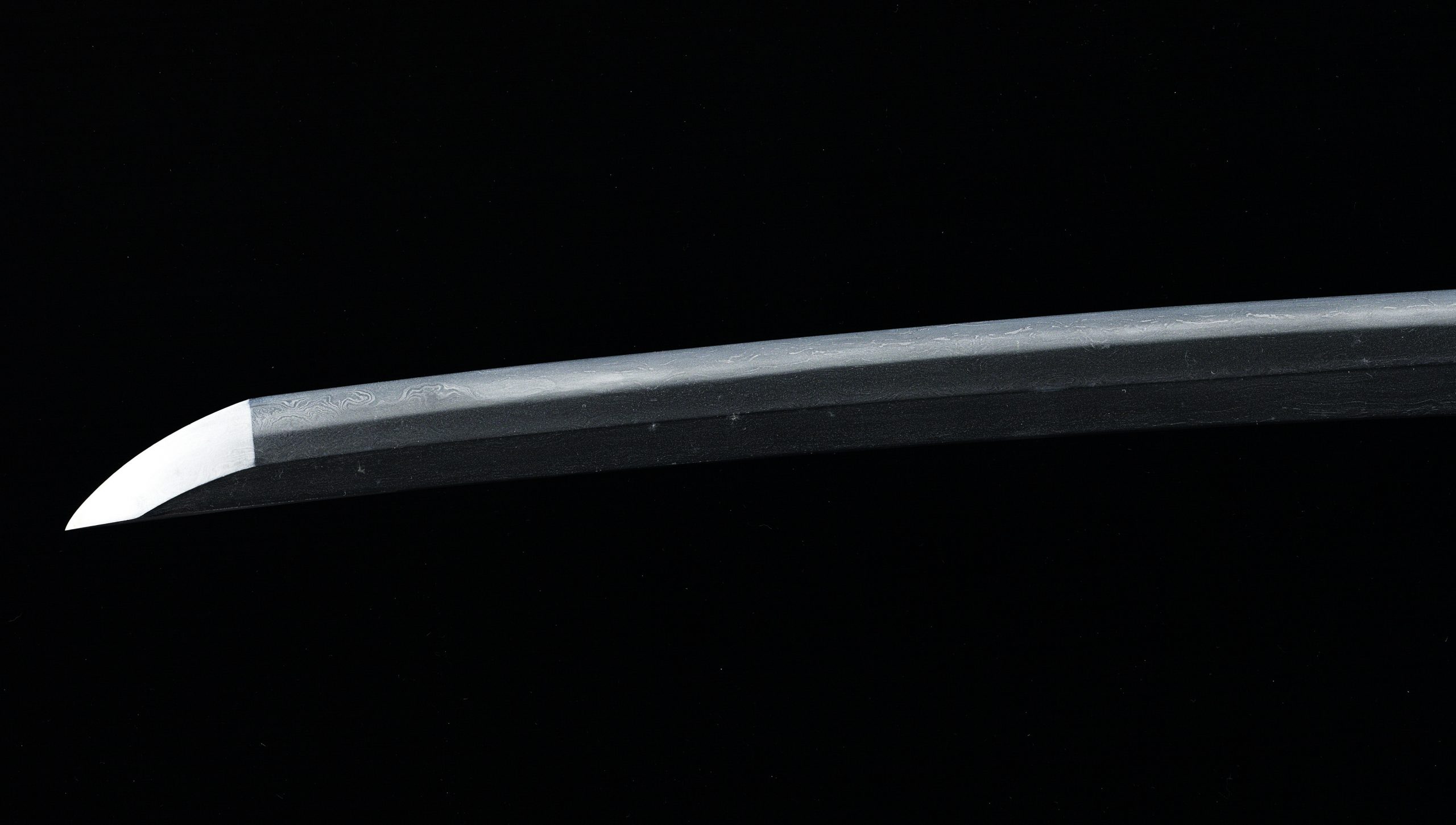
The hamon corresponds to 直刃 (suguha), clean and classical in reading, with a bōshi recorded in the appraisal as 直調乱れ込み (sugu-chō midare-komi), introducing controlled variation in the turn-back while preserving an overall restrained aesthetic.
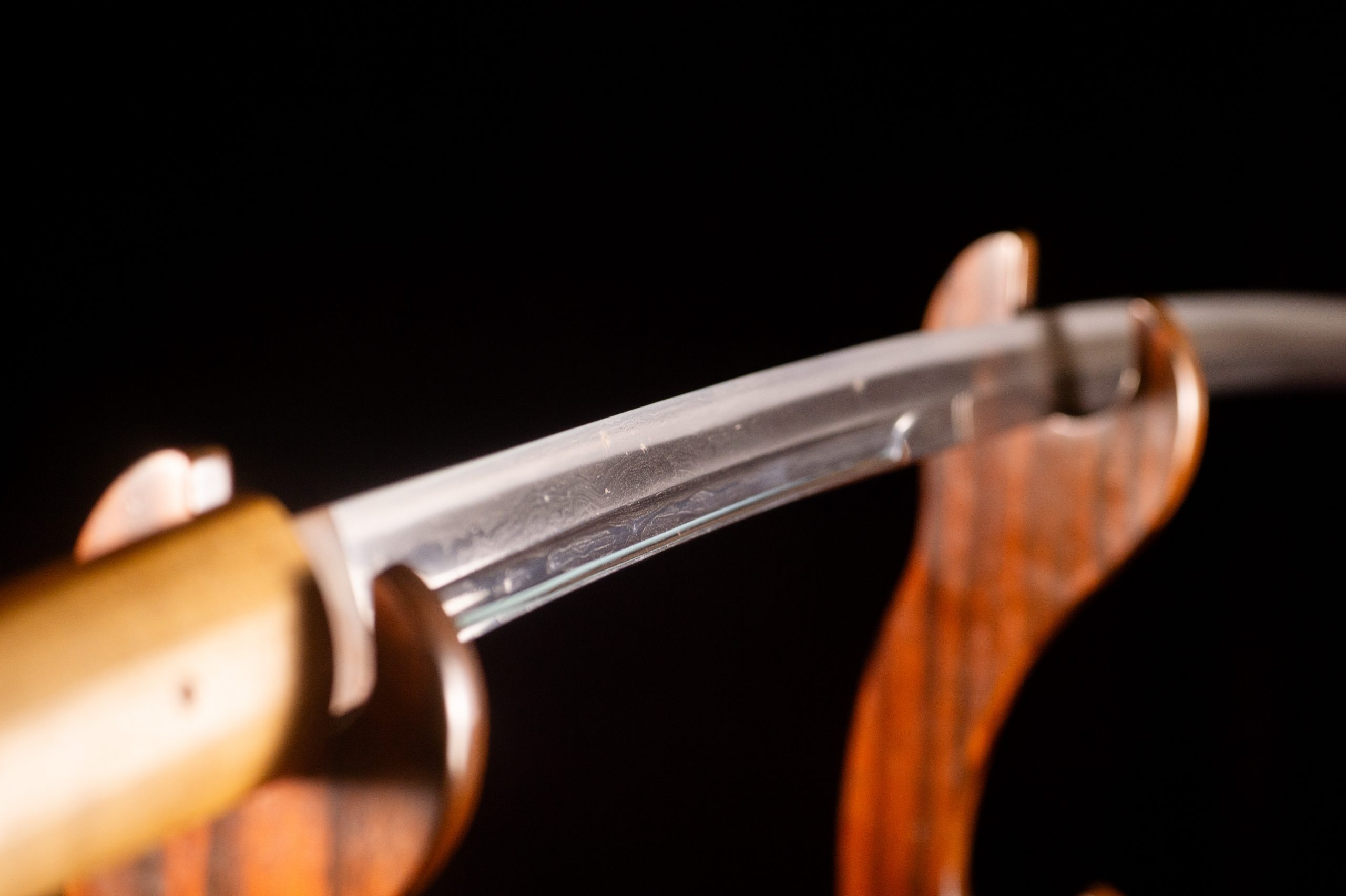
The jihada is a strong visual highlight in the photographs: the jigane displays a lively, flowing and well-contrasted grain, reading as itame/mokume with areas tending toward nagare, particularly appealing in gendai work when the steel surface presents this level of “organic” depth.
Regarding the nakago, it shows one mekugi-ana, a dark, stable patina, and yasurime recorded as 磨り出し筋違い (suridashi sujikai). The signature and extended inscription give the piece the character of a documented “presentation” work rather than routine output.
The blade includes 雁刀樋 (ganto-hi), a specific type of groove/hi noted in the appraisal, adding visual rhythm to the ji without tipping into showmanship.
Mounting
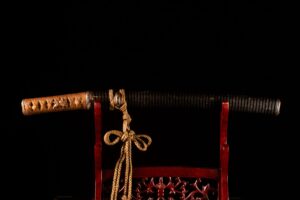
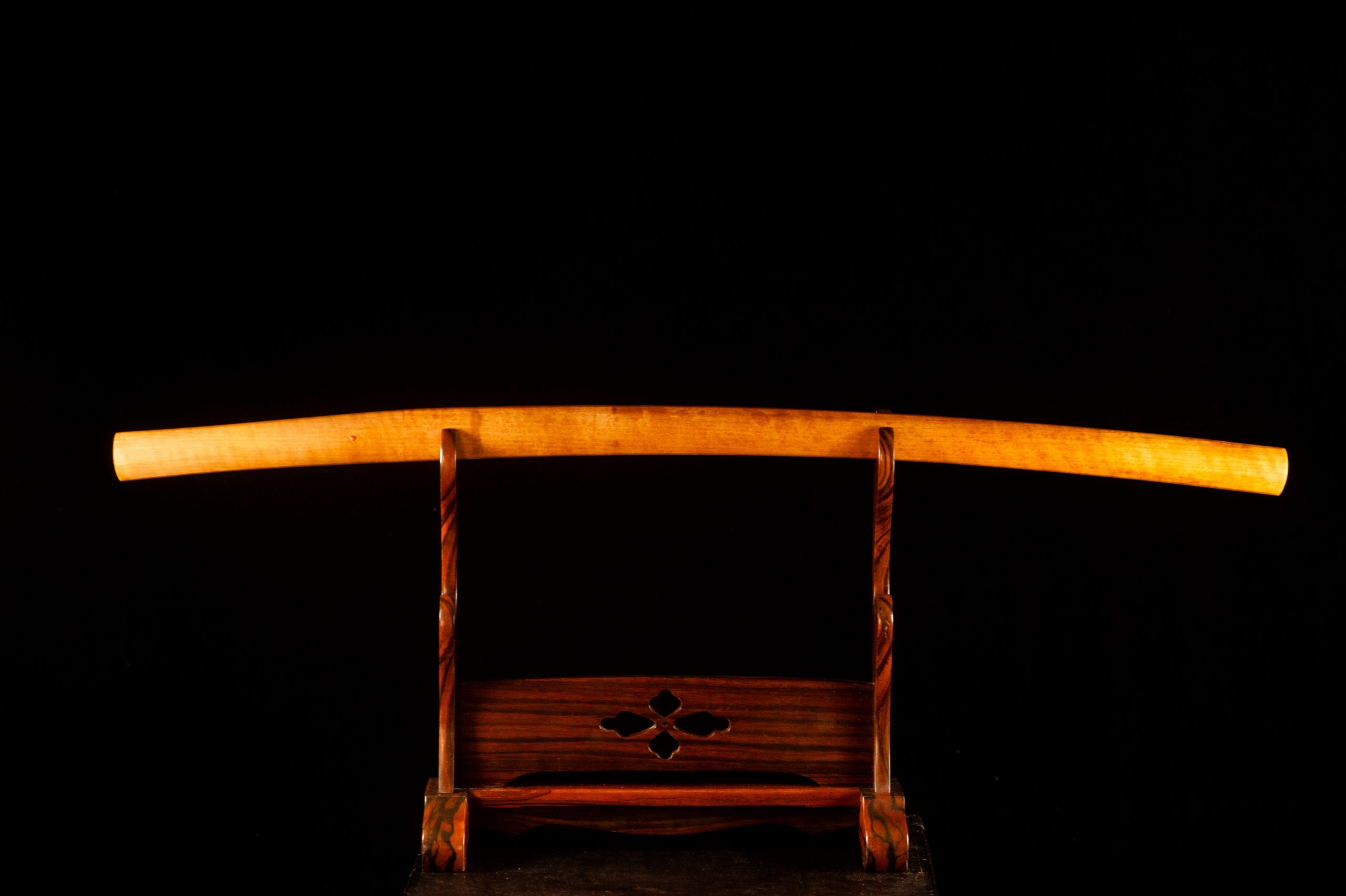
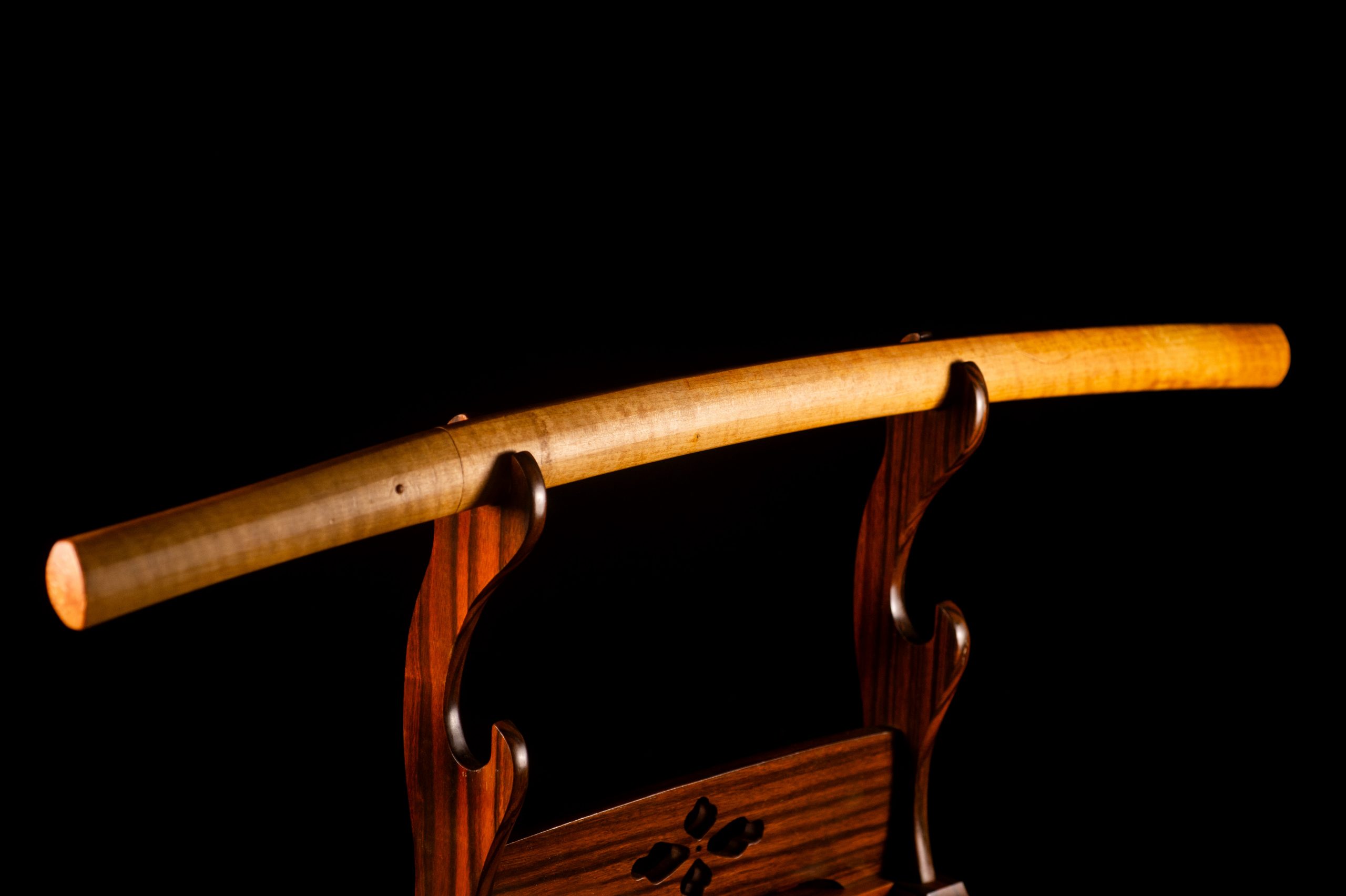
The blade is housed in shirasaya, the technically correct storage mount for preservation: it protects the steel, stabilizes fit, reduces unnecessary wear, and keeps the blade’s aesthetic “read” as a study object. For a signed, dated modern blade with this documentary weight, shirasaya is exactly what it should accompany.
Specification sheet
Type: Tachi (per torokusho)
Smith: Ōsaka-jū Takahashi Nobuhide (信秀)
Nakago date: Taishō 8 (1919), December, “auspicious day”
Nagasa: 67.6 cm
Sori: 1.7 cm
Mekugi-ana: 1
Hamon: Suguha (直刃)
Bōshi: Sugu-chō midare-komi (直調乱れ込み)
Horimono/Hi: Ganto-hi (雁刀樋)